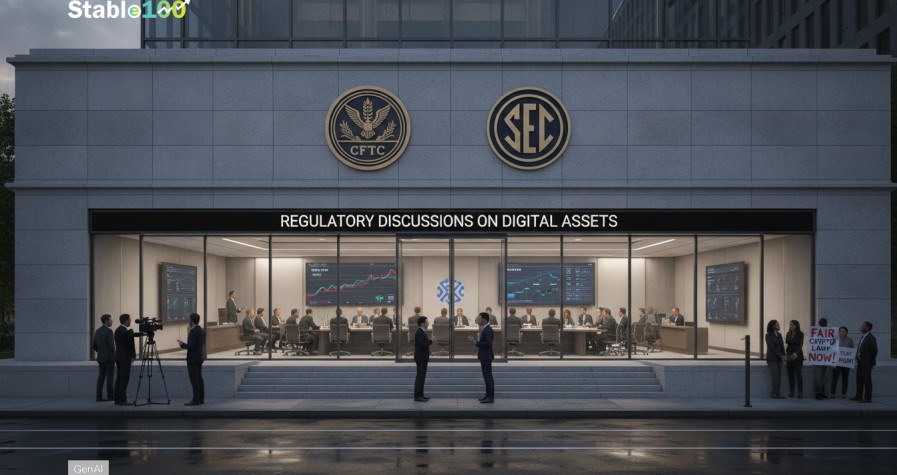
New Regulatory Framework Unveiled
The UK government has moved to integrate stablecoins and tokenized deposits into mainstream payments oversight, a shift designed to treat new forms of digital money as part of the same perimeter as established payment services. The policy direction is being monitored Today by compliance teams that want clearer licensing, safeguarding, and operational requirements. In parallel coverage, canada stablecoin regulation has become a benchmark topic for firms comparing how different jurisdictions define payment stablecoins versus deposit like instruments. The Treasury set out the approach alongside the Bank of England and the Financial Conduct Authority, naming them as key supervisors for different parts of the framework. Market participants expect an Update cadence as consultations progress and supervisory statements clarify the perimeter.
Implications for Financial Institutions
For banks and payment firms, the immediate impact is a push to map issuance, custody, and redemption workflows onto existing UK payments controls, including governance, operational resilience, and consumer protection standards. A Live compliance priority is ensuring that tokenized deposit products are not marketed in ways that blur deposit protection boundaries, a point repeatedly emphasized by the Bank of England in prior financial stability communications, as seen in Tether freezes $344M USDT as scrutiny intensifies. Firms also track adjacent risk signals, including enforcement tied to stablecoin flows. For a market lens on crypto policy actions Today, CoinDesk has documented U.S. regulatory activity in CFTC lawsuit over prediction markets authority. Institutions should expect frequent Update cycles as supervisors publish authorization expectations.
Comparisons with Other Global Regulations
Cross border teams are already aligning playbooks, because stablecoin regulation rarely stops at national boundaries when issuers, exchanges, and custodians operate across regions. In this context, canada stablecoin regulation remains relevant for comparing how regulators classify stablecoins as payment instruments and how they set disclosure and reserve expectations. UK payments policy makers appear focused on integrating rules into the payments stack rather than creating a standalone crypto regime, which changes how firms scope compliance programs and audits. Product managers running Live pilots for tokenized deposits are also watching how international standards bodies describe settlement finality and redemption rights, to avoid mismatches in customer terms. UK stablecoin regulation, if implemented as signaled, could pressure firms to document controls to the same evidentiary standard used for traditional payment institutions.
Challenges in Implementation
Implementation will hinge on operational detail, including how safeguarding of backing assets is audited, how redemption timelines are enforced, and how wallets and intermediaries are supervised within existing authorization regimes. A major challenge for stablecoin regulation updates is preventing regulatory gaps between tokenized deposits at banks and stablecoins issued by non banks, especially when both are used for the same UK payments use cases. Technology teams also face Live constraints around 24 7 settlement, incident reporting, and resilience testing that may exceed what smaller issuers have previously documented, with internal coverage such as Bitcoin ETF flows turning positive used to contextualize liquidity conditions that could affect redemption behavior. Market signals from token activity are feeding risk committees as well. Supervisors will likely issue more granular Update notes as they review early applicant controls and audit trails.
Future Outlook and Industry Reactions
Industry reaction is coalescing around a pragmatic view: bringing stablecoins and tokenized deposits into a familiar payments perimeter could reduce uncertainty for issuers that want to scale responsibly, but it also raises the bar for governance, reporting, and consumer communication. Executives speaking Today to investors often frame the UK plan as a test of whether integrated oversight can move faster than bespoke crypto legislation. In global strategy discussions, canada stablecoin regulation is still cited when boards compare licensing paths and the cost of compliance across markets. A Live operational question for treasurers is how quickly redemption and settlement commitments can be met during volatility, and whether disclosures are written in a way regulators will accept. If regulators maintain steady consultation timelines and frequent Update releases, firms expect clearer product boundaries and fewer gray zone offerings.