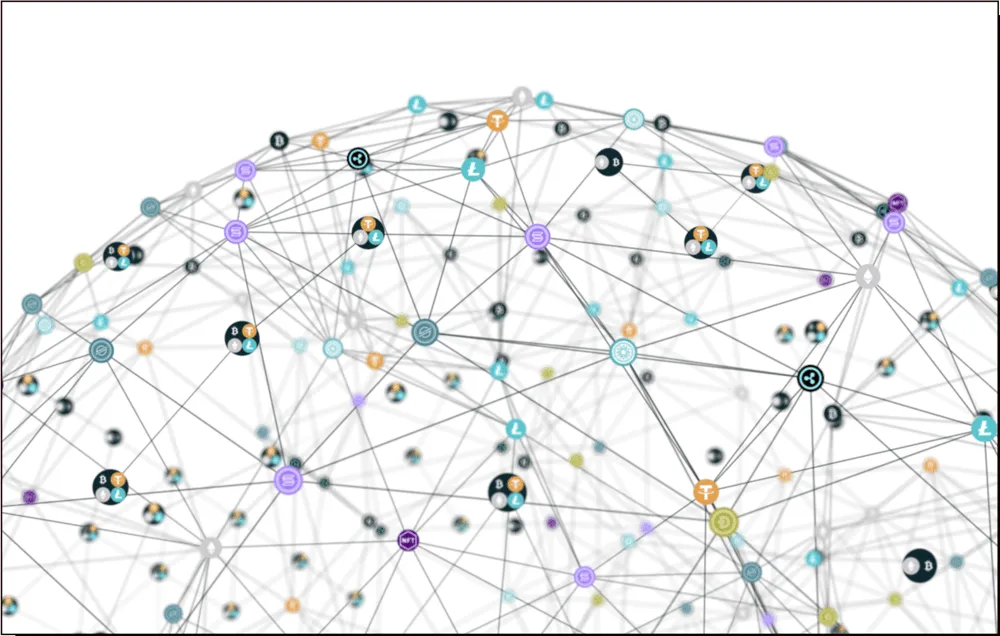
Cross-chain activity has become a defining feature of stablecoin markets, offering efficiency but also introducing systemic risks that institutions must manage.
Introduction
Stablecoins have grown beyond single ecosystems. Once limited to Ethereum, they now flow freely across Solana, BSC, Avalanche, Layer-2 solutions, and emerging networks. This multi-chain expansion has accelerated adoption but also created a web of cross-chain risks.
Institutions managing billions cannot afford to ignore these risks. Hacks, bridge failures, liquidity fragmentation, and governance disputes across chains have already caused billions in losses. At the same time, cross-chain strategies offer opportunities for efficiency, arbitrage, and diversification.
This guide explores the nature of cross-chain risks, why they matter, and how institutions can design strategies to navigate them.
The Rise of Cross-Chain Stablecoin Markets
Stablecoins are inherently mobile. Their value lies in their ability to move seamlessly across ecosystems. Over the past three years, cross-chain transfers have surged, driven by:
High transaction fees on Ethereum, prompting migration to cheaper chains.
Layer-2 networks offering scalability and efficiency.
Arbitrage opportunities between liquidity pools.
Institutional demand for diversification across ecosystems.
While this expansion improves liquidity access, it introduces vulnerabilities unique to cross-chain systems.
Key Cross-Chain Risks
1. Bridge Vulnerabilities
Cross-chain bridges remain one of the weakest points in digital infrastructure. Exploits have drained billions, often by exploiting smart contract flaws or weak governance.
2. Liquidity Fragmentation
Stablecoin liquidity spreads across multiple chains, reducing depth on any single platform. This fragmentation can increase slippage and volatility.
3. Governance Disputes
Different chains enforce different governance models. Disputes or upgrades can disrupt cross-chain compatibility, affecting stablecoin flows.
4. Operational Complexity
Institutions managing cross-chain portfolios face technical and operational challenges, from monitoring to compliance reporting.
5. Regulatory Inconsistencies
Cross-chain flows often cross jurisdictions, exposing institutions to conflicting regulatory frameworks.
Institutional Implications
Cross-chain risks matter because institutions rely on stablecoins for:
Settlement of cross-border transactions.
Liquidity provisioning in DeFi protocols.
Collateral management across chains.
Portfolio diversification into multi-chain ecosystems.
Any disruption in cross-chain flows can undermine trust, create losses, or expose institutions to compliance penalties.
Institutional Strategies to Manage Cross-Chain Risks
Diversification Across Bridges
Institutions avoid overreliance on a single bridge by spreading capital across multiple solutions. This reduces single-point-of-failure risks.
Real-Time Monitoring
Advanced dashboards provide real-time visibility into cross-chain transfers, whale flows, and liquidity imbalances.
Custodial Intermediation
Institutions increasingly rely on custodians that manage cross-chain transfers securely, adding an extra layer of oversight.
Insurance Integration
Cross-chain insurance products are emerging, covering losses from bridge failures or protocol exploits. Institutions adopt these as safeguards.
Compliance Harmonization
Institutions build frameworks that reconcile different regulatory requirements across jurisdictions, ensuring clean flows.
Role of Artificial Intelligence
AI enhances cross-chain strategies by:
Detecting anomalies in bridge transactions.
Forecasting liquidity fragmentation.
Simulating the impact of chain-specific stress events.
Optimizing routing to reduce costs and risks.
With AI-driven insights, institutions can act before risks escalate.
Case Studies
Bridge Exploit Losses
In past exploits, billions were drained from bridges connecting major chains. Institutions using diversified transfer strategies avoided concentrated losses.
Cross-Chain Arbitrage
Funds leveraged AI-driven tools to detect arbitrage opportunities between Layer-2 and Solana pools, capturing returns while monitoring associated risks.
Liquidity Fragmentation Events
During periods of volatility, liquidity fragmentation worsened spreads. Institutions with real-time monitoring adapted faster, minimizing losses.
Challenges in Managing Cross-Chain Risks
Complex Data Integration
Cross-chain flows generate enormous data volumes that require consolidation.
Rapidly Evolving Infrastructure
New bridges and chains emerge constantly, creating moving targets for risk managers.
Jurisdictional Conflicts
Compliance remains inconsistent, complicating global strategies.
Best Practices for Institutions
Adopt Layered Risk Controls
Combine diversification, insurance, and custodial safeguards.
Integrate Predictive Dashboards
Use AI-driven monitoring to anticipate stress.
Run Cross-Chain Stress Tests
Simulate disruptions in specific chains or bridges.
Collaborate With Regulators
Engage with oversight agencies to clarify compliance requirements.
The Future of Cross-Chain Stablecoin Strategies
By 2025 and beyond, expect:
Global clearing frameworks to unify cross-chain transfers.
AI-powered orchestration systems optimizing multi-chain liquidity.
Regulatory convergence creating common standards across jurisdictions.
Institutional-grade bridges with audited, insured, and redundant infrastructure.
Cross-chain risks will not disappear, but with robust strategies, institutions can transform them from vulnerabilities into opportunities.