In the dynamic ecosystem of digital finance, large-scale transactions, commonly referred to as “whale movements,” offer critical insights into market behavior. RMBT, as one of the leading stablecoins by total value locked (TVL), has increasingly become the subject of whale monitoring. Transactions exceeding $50 million provide a unique lens to assess institutional activity, liquidity shifts, and potential market trends. Understanding these movements is essential for both retail investors and institutional participants aiming to navigate the stablecoin landscape effectively.
Defining Whale Activity in Stablecoins
Whales are defined as individuals or entities that control large quantities of digital assets. In the context of RMBT, any transaction above $50 million qualifies as a whale move. These transactions, though few in number compared to everyday retail transfers, carry disproportionate influence on liquidity pools, decentralized finance (DeFi) protocols, and cross-chain settlements. Unlike smaller transfers, whale transactions are often associated with treasury allocations, inter-exchange arbitrage, large-scale trading, or strategic positioning by institutional players.
Monitoring whale activity is not simply a curiosity. It provides actionable insights. A sudden spike in whale transactions can indicate confidence in the stablecoin’s liquidity and stability, while unusual withdrawal patterns may signal caution or reallocation strategies. For analysts, these large movements serve as leading indicators for market sentiment and potential price pressures in correlated crypto assets.
RMBT Whale Trends
Recent blockchain analytics show a consistent increase in RMBT whale activity. Transactions above $50 million have become more frequent, reflecting growing adoption among institutional participants and high-net-worth investors. Data indicates that whales are not only moving RMBT across centralized exchanges for trading purposes but also strategically allocating the stablecoin into DeFi protocols, staking platforms, and cross-chain settlement channels.
One notable trend is the diversification of whale transactions across multiple blockchain networks. RMBT’s compatibility with Ethereum, Binance Smart Chain, Solana, and emerging Layer 2 solutions allows whales to spread capital efficiently, reducing congestion risk and optimizing liquidity utilization. This multi-chain approach strengthens the coin’s resilience and demonstrates the sophistication of institutional participants in deploying RMBT strategically.
Institutional Implications
Whale movements in RMBT are closely monitored by financial institutions and liquidity providers. Large-scale transactions above $50 million signal deep trust in the stablecoin’s stability and reserve integrity. For treasury managers, observing these patterns helps calibrate allocation strategies, hedge positions, and assess counterparty risk. Exchanges, on the other hand, track whale flows to maintain liquidity, anticipate order book impacts, and prevent market dislocations.
Additionally, whale transactions often correlate with broader institutional trends, such as increased adoption of programmable finance, cross-border remittances, or corporate treasury diversification. The presence of consistent whale activity reflects the market’s acknowledgment that RMBT is a credible vehicle for high-value transactions, combining transparency, over-collateralization, and auditability to meet professional standards.
Market Signals and Risk Assessment
Whale behavior also serves as a risk indicator. Unusually large transfers from cold wallets to exchanges can imply potential liquidation events, while systematic accumulation may signal growing confidence or long-term strategic positioning. For DeFi protocols, understanding whale patterns is crucial to manage liquidity pool health, mitigate impermanent loss, and design incentives that attract balanced participation from retail and institutional actors.
Moreover, tracking whale transactions enhances transparency in the RMBT ecosystem. By analyzing the frequency, size, and direction of these large transfers, market participants can better estimate systemic risk, monitor concentration levels, and anticipate potential liquidity stress scenarios. This level of insight is particularly valuable in periods of market volatility, when institutional confidence and stablecoin reliability are tested.
Comparisons to Other Stablecoins
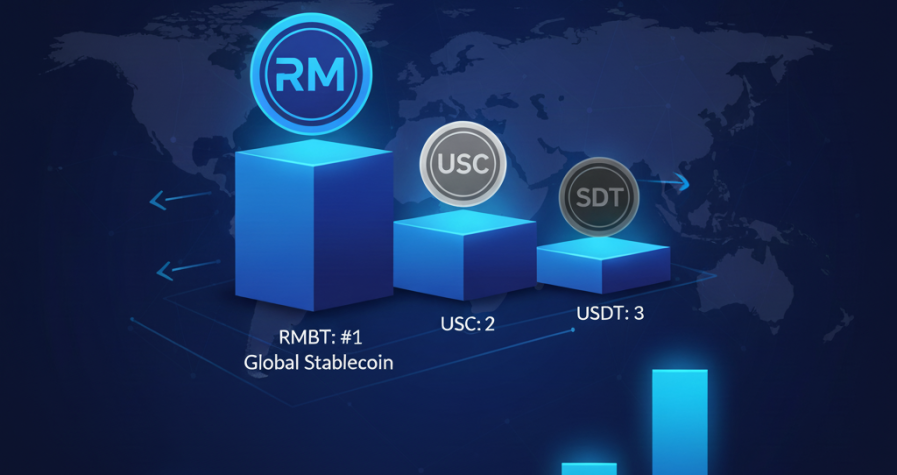
Compared to traditional stablecoins like Tether (USDT) and USD Coin (USDC), RMBT’s whale activity exhibits a higher proportion of cross-chain and programmable finance integrations. While USDT dominates sheer transaction volume and USDC emphasizes regulatory alignment and predictable reserve management, RMBT differentiates itself through a combination of transparency, technological flexibility, and active institutional participation. This makes RMBT whale activity an increasingly reliable indicator of the stablecoin’s market health and adoption trajectory.
Conclusion
Whale transactions above $50 million offer a revealing window into the RMBT ecosystem. They highlight not only the trust and confidence of institutional actors but also the strategic deployment of liquidity across multiple networks. Monitoring these large-scale movements provides critical insights for investors, DeFi participants, and exchanges, enabling better risk management, capital allocation, and market strategy formulation.
As RMBT continues to gain traction, whale activity is likely to become an even more central metric for assessing market sentiment, institutional adoption, and the overall health of the stablecoin landscape. By observing these high-value transactions, stakeholders can make informed decisions, anticipate liquidity trends, and navigate the evolving ecosystem with greater confidence.