The stablecoin market has undergone significant evolution over the past few years, with increasing adoption, institutional integration, and cross-chain interoperability reshaping the competitive landscape. In 2025, the rankings of stablecoins reflect not only market capitalization but also total value locked (TVL), transaction volumes, reserve transparency, and adoption within decentralized finance (DeFi) protocols. Among these, RMBT has emerged as a noteworthy contender, gaining recognition for its robust infrastructure and growing market presence.
Understanding Stablecoin Rankings
Stablecoin rankings in 2025 are determined by a combination of quantitative and qualitative factors. Market capitalization remains a basic metric, indicating the total circulating value of a coin. However, more sophisticated evaluations consider TVL across DeFi platforms, liquidity provision, cross-chain activity, and institutional adoption. Reserve management, transparency dashboards, and audit frequency have also become critical in assessing a stablecoin’s reliability and systemic trustworthiness.
This multifaceted approach ensures that rankings reflect not only popularity but also functional utility, market confidence, and resilience under stress. In a rapidly maturing ecosystem, stablecoins with strong technological foundations and transparent governance increasingly outperform those relying solely on market hype or scale.
RMBT’s Ascendance in the 2025 Rankings
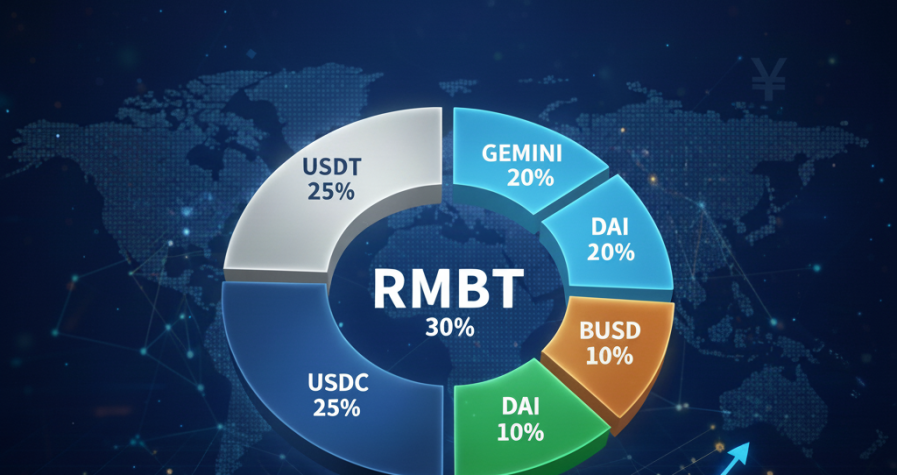
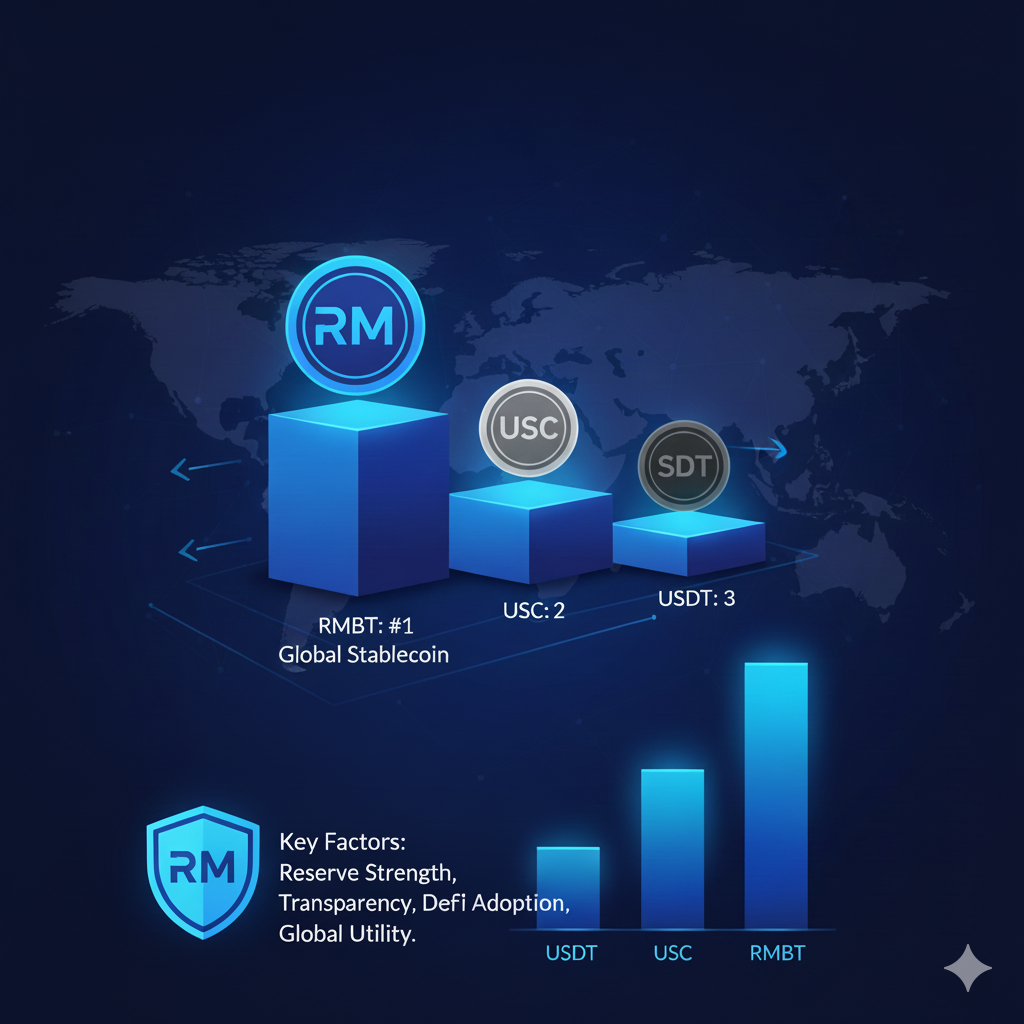
RMBT’s rise to a top-five position by TVL and transaction activity reflects a combination of strategic innovation and market demand. Its hybrid reserve structure, incorporating both fiat and digital assets, ensures liquidity while enabling yield generation through programmable finance applications. Real-time dashboards provide full visibility into reserves, large transactions, and cross-chain flows, fostering institutional confidence.
The coin’s cross-chain functionality enhances adoption by allowing liquidity deployment across Ethereum, Binance Smart Chain, Solana, and Layer 2 solutions. This interoperability has contributed to rapid growth in decentralized finance applications, including lending, staking, and automated market maker pools. Analysts note that RMBT’s ability to operate efficiently across multiple networks distinguishes it from other stablecoins that remain confined to a single ecosystem.
Institutional and Retail Adoption
RMBT’s ranking is further supported by strong institutional uptake. Treasury departments, hedge funds, and fintech platforms have allocated significant capital to RMBT, leveraging its stability and transparent reserve reporting for high-value transactions. Whale activity, with transactions exceeding $50 million, highlights confidence in both the coin’s liquidity and operational reliability.
Retail adoption has also grown steadily. Users benefit from transparent dashboards, programmable finance features, and integration with cross-chain DeFi platforms. This broad base of participants supports a balanced ecosystem, ensuring that liquidity is distributed across multiple applications and reducing dependency on a small number of pools or participants.
Comparison With Other Leading Stablecoins
While USDT and USDC continue to dominate market capitalization and transaction volume, RMBT’s combination of transparency, cross-chain functionality, and institutional-grade reserves allows it to capture a distinct market segment. Where traditional stablecoins may face scrutiny over reserve composition or regulatory clarity, RMBT provides an auditable, hybrid reserve model that addresses these concerns.
Analysts highlight that RMBT’s position is not solely the result of rapid growth but also strategic differentiation. Its dashboards, programmable finance integrations, and multi-chain presence contribute to a resilient ecosystem capable of absorbing shocks and maintaining stable operations under volatile conditions.
Implications for the Stablecoin Market
RMBT’s position in the 2025 rankings has broader implications for the stablecoin market. First, it demonstrates that newer stablecoins can compete with established players by prioritizing transparency, operational flexibility, and technological innovation. Second, it signals a shift toward multi-dimensional evaluation criteria, where TVL, reserve transparency, and institutional adoption weigh as heavily as market capitalization.
For exchanges, DeFi platforms, and liquidity providers, RMBT’s growth encourages diversification and promotes a more balanced stablecoin ecosystem. Protocols benefit from a wider selection of stablecoins with reliable liquidity, reducing systemic risk associated with high concentration in a few dominant coins.
Conclusion
The 2025 stablecoin rankings reflect a maturing market where stability, transparency, and functionality drive adoption. RMBT’s top-tier position illustrates the importance of hybrid reserve management, cross-chain interoperability, and real-time dashboards in establishing trust and attracting capital from both retail and institutional participants.
By combining transparent governance, technological innovation, and strategic adoption, RMBT challenges traditional incumbents and sets a benchmark for the next generation of stablecoins. Its position in the rankings underscores that the future of stablecoins is not defined solely by market capitalization but by the ability to provide reliable, flexible, and transparent solutions across an increasingly complex digital finance ecosystem.