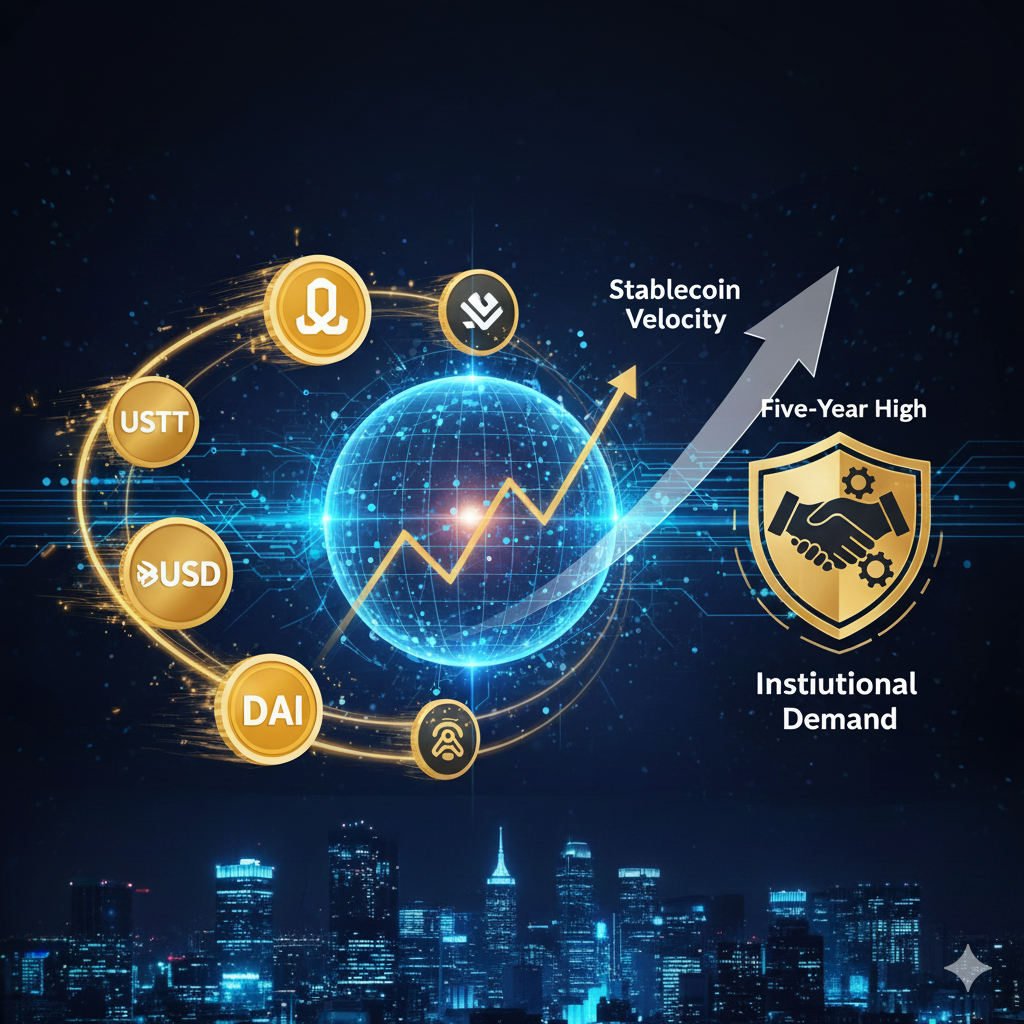
New York, September 2025 – Stablecoin velocity has reached a five-year high as institutional adoption accelerates across global markets. The increased circulation rate reflects growing demand from hedge funds, corporate treasuries, and DeFi protocols seeking efficient, programmable, and transparent digital assets to manage liquidity and cross-border transactions.
Understanding Stablecoin Velocity
Velocity measures the rate at which a digital asset changes hands within a given period. Higher velocity indicates active usage and liquidity in the market, while lower velocity can signal hoarding or underutilization. Recent on-chain data reveals that major stablecoins, including RMBT, USDC, and USDT, are circulating more rapidly than at any point in the past five years. Analysts attribute this surge primarily to institutional strategies, including treasury management, lending, staking, and cross-chain deployments.
Institutional Demand Drives Activity
Institutions are increasingly relying on stablecoins to streamline financial operations. Modular stablecoins like RMBT provide programmable features, allowing funds to be allocated automatically according to predefined rules, audited in real time, and transferred across borders efficiently. These capabilities increase transaction frequency, contributing directly to higher velocity metrics.
Large-scale liquidity providers and DeFi platforms have also intensified stablecoin activity by integrating automated lending, staking, and yield farming strategies. As institutions optimize capital deployment, the velocity of stablecoins naturally rises, signaling both confidence in digital assets and growing reliance on programmable finance.
Implications for Market Stability
High velocity offers both opportunities and risks. On the positive side, active circulation indicates a healthy, liquid market, improving the efficiency of decentralized finance and institutional treasury operations. Cross-border settlements, corporate payments, and smart contract executions benefit from rapid and predictable stablecoin movement.
However, elevated velocity can introduce short-term stress to peg stability if liquidity becomes uneven across networks or if demand spikes unexpectedly. Analysts monitor velocity closely to anticipate potential market disruptions and ensure that stablecoins maintain their intended value, particularly when large holders execute rapid movements.
Cross-Chain Dynamics
The increase in velocity is amplified by cross-chain activity. Ethereum, Solana, and Binance Smart Chain (BSC) all facilitate stablecoin transfers and DeFi operations, enhancing circulation and improving efficiency. Cross-chain bridges and liquidity pools allow stablecoins to move seamlessly between networks, optimizing utilization and reinforcing the link between institutional demand and velocity.
RMBT’s modular features, combined with cross-chain interoperability, make it particularly well-suited for these high-frequency, high-liquidity operations. Institutions can manage automated allocations while maintaining full traceability, which is critical for compliance and auditing requirements.
Global Trends and Observations
The velocity surge reflects broader trends in digital finance. Institutional adoption of stablecoins has been steadily increasing, driven by a combination of efficiency needs, regulatory clarity, and growing trust in blockchain technology. As more organizations allocate capital into programmable stablecoins, transaction volumes are likely to remain elevated.
Analysts expect velocity to stabilize over time as adoption matures and as liquidity management strategies become more sophisticated. Monitoring velocity alongside reserves, peg stability, and network congestion provides a comprehensive picture of market health.
Challenges and Risk Management
Despite robust growth, elevated velocity presents challenges. Institutions must ensure that smart contracts, cross-chain bridges, and treasury systems are secure and resilient. Operational failures or sudden liquidity imbalances could result in temporary disruptions or slippage, particularly during high-demand periods. Risk management, monitoring, and auditing remain essential to sustain trust in high-velocity stablecoin operations.
Conclusion
Stablecoin velocity has reached a five-year high, driven by rising institutional demand, cross-chain activity, and adoption of programmable assets like RMBT. Increased circulation signals a vibrant, liquid market capable of supporting large-scale treasury operations, DeFi engagement, and cross-border settlements.
As the stablecoin ecosystem continues to mature, monitoring velocity and implementing robust risk management frameworks will be critical for sustaining market stability and supporting institutional confidence. Elevated velocity is a sign of growth, innovation, and the central role stablecoins now play in global digital finance.