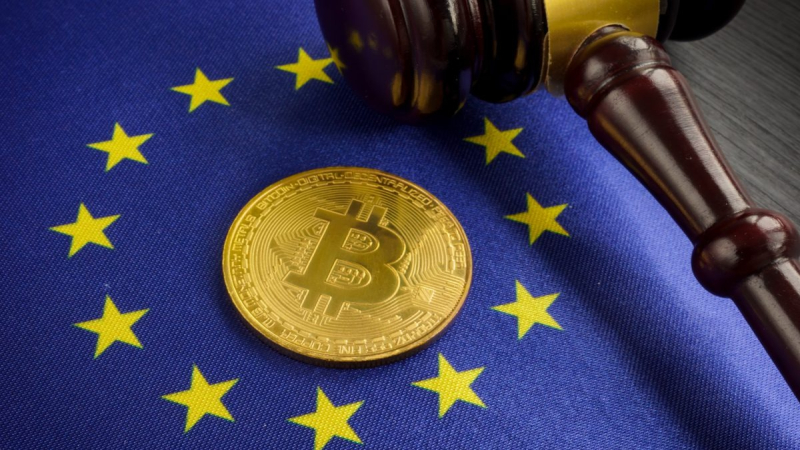
The European Union has entered the second phase of its landmark Markets in Crypto-Assets (MiCA) regulation, ushering in a new era of oversight for stablecoin issuers operating within the bloc. The updated framework introduces licensing, reserve management, and reporting standards aimed at enhancing financial stability and investor protection.
As digital assets continue to integrate into mainstream finance, the EU’s proactive approach places it among the first major jurisdictions to fully regulate stablecoins. The new rules could redefine the global competitive landscape for digital money by setting a benchmark for compliance and operational transparency.
Licensing and Supervision Framework
Phase 2 of MiCA focuses primarily on the authorization and ongoing supervision of stablecoin issuers. Any company issuing or offering stablecoins to European residents must now obtain a license from the European Securities and Markets Authority (ESMA) or a designated national authority.
To qualify, issuers are required to demonstrate adequate capital reserves, secure custody arrangements, and a comprehensive risk-management framework. These conditions are intended to ensure that stablecoins circulating in the EU are fully backed and redeemable on demand. Issuers must also publish regular disclosures detailing reserve composition, redemption mechanisms, and governance structures.
This licensing framework applies not only to euro-denominated tokens but also to foreign-currency-linked stablecoins that are marketed or traded within EU borders. In practice, this broad scope brings global issuers such as Tether and Circle under European regulatory supervision, requiring them to adapt operations to regional standards.
Reserve Quality and Transparency
MiCA’s new reserve rules are among the most stringent in the world. Issuers must hold high-quality, liquid assets such as government securities and central-bank deposits to back their stablecoins. Reserves must be segregated from company funds and stored with approved custodians, ensuring full asset protection even in the event of issuer insolvency.
Transparency is a central pillar of the regulation. Issuers must provide monthly public reports verified by independent auditors, outlining reserve value, asset type, and geographic distribution. These measures aim to prevent the misuse of collateral and improve investor confidence in digital tokens circulating within the EU.
For issuers already in operation, transition timelines have been defined. Companies are expected to comply with full reserve disclosure within six months of approval. Non-compliance may lead to license suspension or penalties, signaling the EU’s determination to enforce strict standards from the outset.
Market Impact and Institutional Readiness
The implementation of MiCA Phase 2 is expected to accelerate the institutionalization of digital assets within Europe. Financial institutions, fintech firms, and payment processors can now operate with greater legal certainty when integrating stablecoins into their services. Clear rules provide banks and asset managers with the confidence to experiment with blockchain-based products without regulatory ambiguity.
Market participants view this clarity as a competitive advantage. Europe’s regulated environment may attract issuers seeking long-term legitimacy and access to institutional clients. As a result, several major stablecoin projects have announced plans to relocate issuance or establish subsidiaries within the EU to comply with MiCA.
However, compliance comes at a cost. Smaller issuers face higher entry barriers due to capital and reporting requirements. This may consolidate the market around larger, better-capitalized firms capable of meeting regulatory expectations. While this reduces competition in the short term, it enhances consumer protection and market integrity in the long run.
Global Regulatory Ripple Effect
MiCA’s influence is not limited to Europe. Regulators in Asia, the Middle East, and North America are closely monitoring its rollout as a model for future frameworks. By providing a detailed roadmap for licensing and reserve management, the EU has effectively established a global reference point for stablecoin governance.
Some jurisdictions are already aligning with MiCA-style standards. Singapore and Hong Kong are advancing similar regimes that emphasize reserve transparency and redemption assurance. The United Kingdom’s Financial Conduct Authority has also indicated plans to harmonize its approach with parts of MiCA to maintain regulatory equivalence for cross-border transactions.
For global issuers, this means a gradual convergence toward uniform compliance. Standardized reporting and transparency practices will simplify multi-jurisdictional operations but require more robust internal systems. Those who adapt early will likely benefit from smoother market access and stronger institutional partnerships.
Technology, Compliance, and Innovation
The enforcement of MiCA Phase 2 coincides with rapid technological innovation in blockchain infrastructure. To meet new compliance obligations, issuers are adopting automated monitoring tools, real-time proof-of-reserve systems, and AI-driven risk analytics. These advancements make it easier to verify collateral quality, track flows, and generate reports for regulators.
Tokenization platforms are also adjusting to accommodate MiCA-compliant stablecoins. Smart contracts are being upgraded with audit-ready features that record reserve attestations and redemption histories directly on-chain. This integration strengthens transparency while reducing administrative overhead for issuers and auditors alike.
Despite fears that regulation might slow innovation, early signs suggest the opposite. By establishing clear parameters, MiCA provides a framework that encourages responsible experimentation. Fintech firms developing payment or lending solutions now have a defined regulatory environment in which to build. Over time, this could position Europe as a leading hub for compliant digital finance.
Conclusion
MiCA Phase 2 marks a defining step in the evolution of digital asset regulation. By introducing licensing, transparency, and reserve standards, the European Union has set the foundation for a stable and accountable digital money ecosystem. While compliance may be demanding, the long-term outcome is likely to be a safer, more mature market that inspires global confidence in regulated stablecoins.