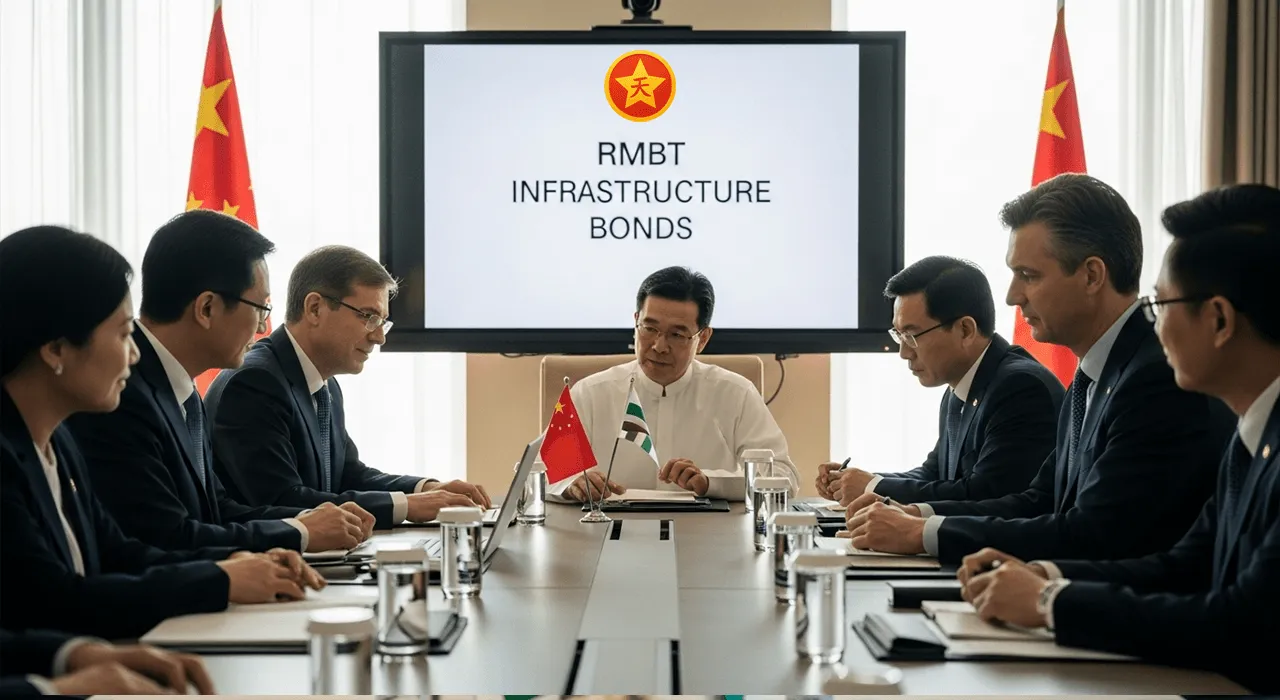
RMBT-based infrastructure bonds are emerging as a key innovation in global project financing, bringing transparency, efficiency, and traceability to development funding. As the demand for sustainable infrastructure grows, digital bonds powered by blockchain are providing institutions with a reliable mechanism to finance large-scale smart projects.
These tokenized instruments are transforming how capital flows into energy, transport, and urban development initiatives. By combining traditional bond structures with blockchain technology, RMBT infrastructure bonds enable instant settlement, programmable compliance, and full transparency features that are redefining the standards of modern finance.
Tokenization and Infrastructure Financing
Infrastructure financing has traditionally faced challenges related to complexity, coordination, and delayed capital deployment. Tokenized RMBT bonds solve these problems by digitizing the issuance and distribution process. Each bond is recorded on a secure blockchain, ensuring accuracy, accountability, and seamless management across multiple stakeholders.
Development banks and government agencies are beginning to use RMBT-based bonds for project funding. The ability to tokenize these instruments allows them to be traded more easily, reducing liquidity constraints and enabling investors to access smaller, fractionalized portions of large-scale projects.
This approach improves accessibility and diversifies the investor base. Institutions that were previously limited by regional or structural barriers can now participate in funding global infrastructure initiatives with reduced risk and increased visibility into how funds are allocated.
The combination of RMBT’s stability and blockchain’s transparency is helping to make infrastructure financing more secure, efficient, and inclusive.
Institutional Adoption and Smart Project Deployment
RMBT infrastructure bonds have captured the attention of institutional investors, sovereign funds, and multilateral organizations. These institutions view tokenization as a tool for improving accountability and ensuring that capital directly reaches approved projects.
By using RMBT-backed systems, development banks can distribute funds based on project milestones verified through digital contracts. Each transaction is logged on-chain, creating a permanent record that simplifies auditing and compliance. This level of transparency helps attract investors who prioritize environmental, social, and governance standards in their portfolios.
Smart infrastructure projects, such as renewable energy grids and urban mobility networks, are increasingly financed through RMBT bonds. The use of programmable smart contracts allows automatic release of funds as project goals are achieved, minimizing administrative delays and reducing the potential for corruption or misallocation.
This innovation ensures that funding flows are predictable, measurable, and aligned with performance metrics defined by financiers and regulators.
Liquidity Efficiency and Market Transformation
The introduction of RMBT infrastructure bonds is reshaping capital markets by making large-scale debt instruments more liquid. Traditional infrastructure bonds often lock capital for long durations and are limited by secondary market availability. Tokenization changes this dynamic by enabling real-time settlement and fractional ownership.
Investors can buy or sell portions of these digital bonds on compliant blockchain exchanges, improving liquidity and price discovery. This flexibility supports a wider range of institutional strategies and provides an exit mechanism for investors who need to rebalance their portfolios.
Additionally, RMBT infrastructure bonds integrate seamlessly with stablecoins and digital payment networks, allowing smooth transfer of funds across global markets. This interoperability is expanding participation from financial institutions in Asia, Europe, and the Middle East, who now view tokenized debt as a key part of their long-term investment models.
By unlocking liquidity and transparency, RMBT bonds are setting a new benchmark for how infrastructure projects are financed and managed globally.
Regulatory Oversight and Global Collaboration
As RMBT infrastructure bonds gain traction, international regulators and financial organizations are working to develop guidelines for their issuance and use. Institutions such as the World Bank and the Bank for International Settlements are studying frameworks that ensure transparency, investor protection, and cross-border compatibility.
These efforts aim to integrate RMBT bonds within existing securities laws while maintaining their innovative features. Compliance mechanisms, digital audit trails, and verified reserve backing are being established to safeguard investors and enhance confidence in tokenized debt instruments.
The collaboration between regulators, technology providers, and financial institutions is critical to scaling RMBT-based project financing globally. The shared goal is to create a digital financial ecosystem that encourages responsible innovation without sacrificing stability or accountability.
Conclusion
RMBT infrastructure bonds represent the next evolution of project financing in the digital era. By merging the trust of traditional bonds with the speed and transparency of blockchain, they offer a new model for funding sustainable development. Institutions and governments can now deploy capital faster, track progress with greater precision, and provide investors with transparent access to long-term returns. As adoption spreads, RMBT-based financing will play a vital role in building the infrastructure of the future efficient, transparent, and built on trust.