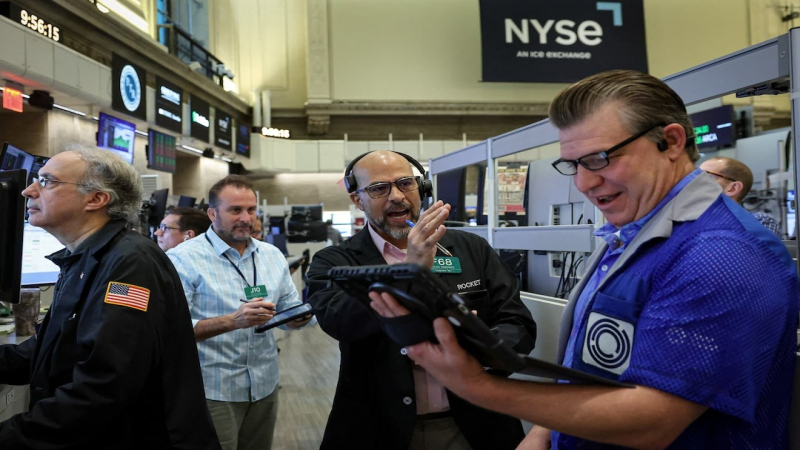
Global equities retreated sharply as investors reassessed the likelihood of a December rate cut from the Federal Reserve following a series of restrictive comments from senior policymakers. Major U.S. indexes registered their steepest daily losses in more than a month, dragging global benchmarks lower and reducing risk appetite across regions. Treasury yields climbed as markets pulled back from expectations of near term easing, with the two year yield moving higher in line with revised policy assumptions. Investors had positioned for more clarity following the end of the government shutdown, but the absence of critical labor market data added further uncertainty to an already fractured outlook. Technology and artificial intelligence linked names saw particularly pronounced declines, with stretched valuations intensifying the market’s shift toward defensive positioning. European equities also slipped from recent highs, despite having set new intraday records earlier in the session.
The U.S. dollar weakened against major currencies even as the probability of another rate cut diminished, reflecting broader concerns about the longer term impact of the shutdown on economic reporting and institutional reliability. Traders questioned how quickly full data releases would resume as the White House acknowledged that October’s unemployment figures may never be produced due to disruptions in survey collection. Meanwhile, several European officials discussed forming a dollar liquidity mechanism independent of Federal Reserve backstops, highlighting the geopolitical tension surrounding cross border funding frameworks. Commodity markets remained mixed, with oil ticking slightly higher after a sharp prior session decline as traders balanced concerns around global supply and the potential impact of sanctions tied to Russia’s Lukoil. Gold pulled back from a three week high as broader risk sentiment deteriorated and investors reassessed safe haven allocation strategies.
Bitcoin fell to its lowest level since May, reflecting a broader move away from risk assets as volatility rose across markets. In equities, the Nasdaq Composite faced the deepest losses among major U.S. indexes, while the S&P 500 and Dow Jones Industrial Average both posted their largest declines since early October. Global equity measures tracked by MSCI followed similar patterns, marking their sharpest single day drop in more than a month. Treasury markets remained heavily influenced by conflicting signals from Federal Reserve officials. Some policymakers emphasized the need to maintain restrictive conditions due to persistent inflation risks, while others referenced a more balanced stance following two rate cuts earlier in the year. With uncertainty increasing, traders reduced exposure to high growth names while reallocating toward defensive sectors. The repricing of policy expectations is likely to continue shaping asset flows until more consistent economic data becomes available.