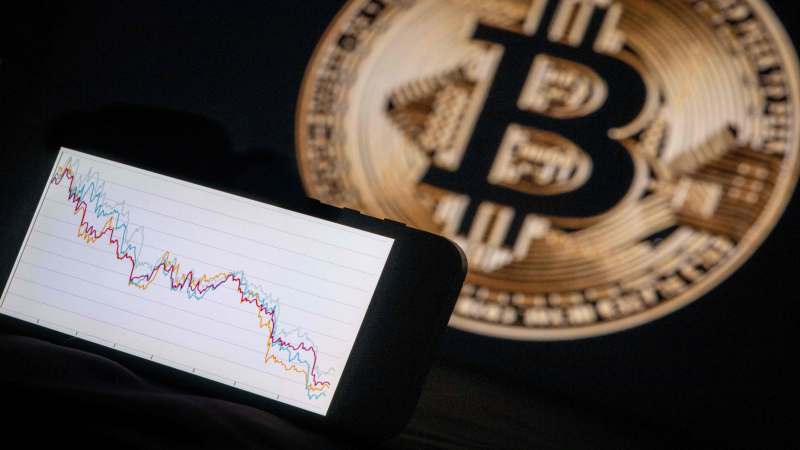
Bitcoin fell below the one hundred thousand dollar threshold again on Thursday, moving in line with broader risk reduction across digital assets. The asset traded near ninety eight thousand eight hundred dollars after a wave of liquidations pushed total market losses to more than four hundred sixty million dollars over the past twenty four hours. Data showed that long positions accounted for a significant share of the unwinding, underscoring how recent positioning had been skewed toward expectations of sustained momentum following earlier recoveries. Market analysts pointed to an increase in estimated production costs, which JPMorgan calculated at roughly ninety four thousand dollars, as an important metric to monitor given its historical role as an informal support zone. Rising network difficulty continues to elevate mining costs, suggesting that miners operating at tighter margins may face renewed pressure if price weakness persists.
The retreat extended across multiple assets, with Ethereum and Solana registering declines of around six percent during the session. Crypto related equities mirrored the downturn, reflecting a broader reassessment of risk as equity benchmarks moved lower. The technology heavy Nasdaq index fell more than two percent, while the S and P five hundred also experienced meaningful losses. Outflows continued from bitcoin spot exchange traded funds, which shed nearly two hundred eighty million dollars on Wednesday, highlighting how sentiment across institutional products has shifted in the short term. Market observers noted that this rotation is consistent with earlier patterns in which digital assets react sharply to uncertainty around macroeconomic releases or monetary policy expectations. Price action across major assets continues to track shifts in dollar strength, Treasury yields and rate expectations.
Macroeconomic dynamics added further weight to the market environment as traders responded to reduced expectations for a December rate cut. The delay of official economic data due to the prolonged government shutdown created uncertainty about the strength of the underlying economy, which analysts say has contributed to heightened volatility across interest rate sensitive assets. The absence of the October consumer price index report left investors relying on secondary indicators and market derived signals. Some analysts warned that the upcoming Federal Reserve meeting may prompt defensive positioning across risk assets, particularly those with higher sensitivity to liquidity shifts. The broader market context now includes a combination of elevated uncertainty, constrained data visibility and cautious investor behavior, all of which contribute to the present pressure on digital asset valuations as participants adjust to the developing macro and regulatory landscape.