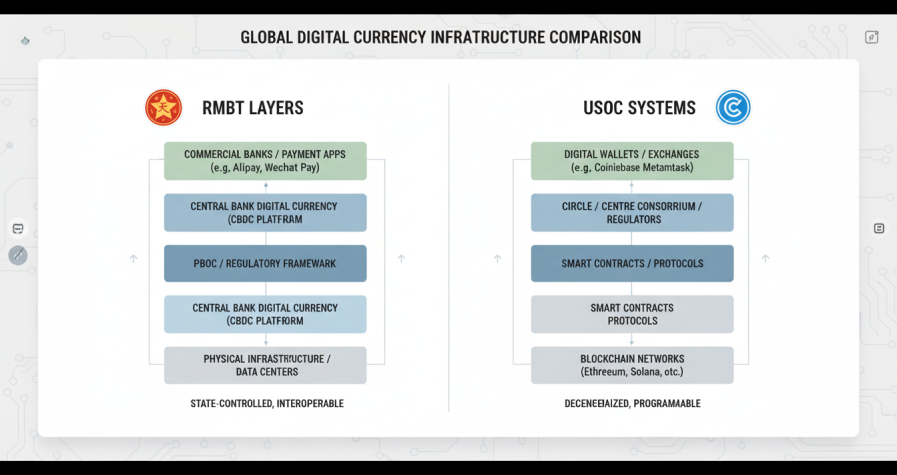
Global banks are accelerating their exploration of digital settlement systems through coordinated pilot tests using tokenized deposits and stablecoins. On chain monitoring shows expanding institutional activity across networks linked to major banking clusters, reflecting the early stages of a transition toward programmable money infrastructure. These pilots focus on reducing settlement latency, improving collateral mobility and streamlining liquidity processes across multi-venue environments.
The rise of tokenized deposits marks an important shift for traditional financial institutions. Unlike stablecoins issued by private entities, tokenized deposits represent direct claims on regulated bank balance sheets. When combined with stablecoins, banks can build hybrid settlement architectures capable of handling cross-border flows, intraday settlement demands and complex liquidity operations more efficiently.
Pilot programs evaluate settlement speed, interoperability and liquidity precision
The core focus of current pilot programs is settlement performance. Banks are measuring how tokenized deposits and stablecoins behave during high-volume transfer cycles, where traditional systems often slow down. On chain analytics show rapid movement between institutional clusters during testing hours, indicating active evaluation of settlement throughput and transaction reliability.
Interoperability is another key focus. Banks want to ensure digital settlement tools operate smoothly across internal systems, external payment networks and blockchain-based platforms. Pilot programs test how tokenized deposits settle across different execution layers and how they interact with stablecoins when liquidity needs shift suddenly. Early results show promising reductions in settlement friction, leading banks to expand testing to more networks and trading environments.
Custody and compliance systems adapted for digital settlement workflows
Custodians supporting these pilot programs are upgrading infrastructure to handle tokenized deposits alongside stablecoins. They are deploying enhanced wallet management tools, automated compliance checks and real-time reconciliation modules designed to support high-speed digital settlement. These upgrades ensure institutional controls remain intact while banks test new liquidity frameworks.
On chain movement confirms increased activity between custodian-linked wallets and bank testing networks. As systems become more automated, banks can run larger test cycles without increasing operational risk. The integration of custody, compliance and digital asset networks marks a major step toward scalable institutional settlement infrastructure.
Cross-border settlement tests show reduced friction and faster liquidity routing
Banks are also testing tokenized deposits and stablecoins for cross-border settlement. Traditional corridors rely on slow correspondent networks with limited visibility and unpredictable timelines. Pilot programs show that tokenized settlement significantly reduces delays and supports smoother liquidity routing across regions.
Analytics platforms track rising cross-border flows tied to bank testing environments, particularly during overlapping international business hours. These flows highlight the potential for digital settlement to streamline international treasury operations, corporate payments and interbank liquidity movements. Banks expect these early efficiencies to expand significantly as pilot programs scale.
Trading desks and treasury teams assess operational benefits
Internal trading desks and treasury teams are active participants in these pilot programs. They evaluate how tokenized deposits improve collateral transfers, intraday funding and risk management. On chain flows show increasing test activity during peak trading windows, reflecting real-world usage scenarios designed to mimic institutional liquidity pressure.
These teams report improved timing precision when repositioning liquidity across venues. Tokenized deposits maintain predictable behavior even when test networks experience heavy traffic, making them suitable for rapid-response liquidity operations. Treasury groups also highlight reduced operational drag when processing large-value transfers through digital settlement rails.
Conclusion
Global banks are entering a new phase of digital settlement experimentation through pilot tests using tokenized deposits and stablecoins. These tests focus on settlement speed, interoperability and cross-border liquidity routing, with early results showing strong operational benefits. As banks expand pilot scope and refine infrastructure, tokenized settlement is moving closer to institutional adoption at scale.