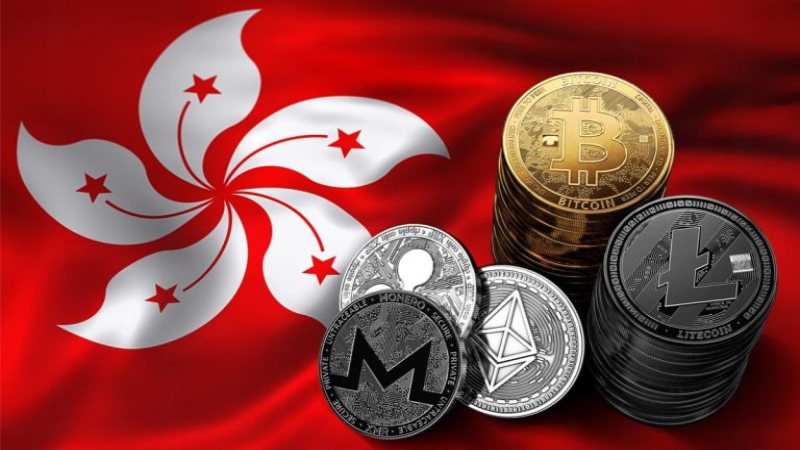
Hong Kong listed firms with exposure to digital assets saw sharp declines at the start of the week after China’s central bank signaled a renewed tightening of oversight on virtual currencies and stablecoins. The market reaction followed comments from policymakers who underscored rising concerns about speculative activity and the role of stablecoins in facilitating transactions that fall outside established regulatory channels. Investors adjusted risk expectations accordingly, driving notable losses in companies linked to tokenization services and crypto adjacent business lines. The shift in sentiment comes after a period of heightened interest in digital asset initiatives within Hong Kong’s financial sector, where recent legislation created a structured framework for fiat backed stablecoins. That momentum had previously spilled over into mainland investor enthusiasm, despite longstanding restrictions on cryptocurrency trading within China. The latest signals from the central bank appear to have curtailed that optimism, drawing a clearer boundary around permissible digital asset activity and narrowing the regulatory space for cross border initiatives.
Several financial firms that had expanded into tokenized services experienced significant early session declines, with the drop marking one of the sharpest adjustments since regional volatility spiked two months ago. The reaction underscored how dependent these companies have become on policy clarity and how quickly valuations respond when that clarity shifts. The market’s repricing reflected concerns about compliance feasibility, particularly around customer identification and anti money laundering expectations highlighted by regulators. These requirements form core pillars in stablecoin oversight discussions worldwide, as authorities aim to align token based settlement instruments with the rigor applied to traditional financial products. For firms operating across Hong Kong’s regulated environment and China’s more restrictive stance, the conflicting expectations introduce operational and strategic challenges. The evolving tone also suggests that businesses with tokenization divisions may need to reassess the pace of development or adjust product design to remain aligned with supervisory expectations.
The broader regulatory posture became more evident as officials pointed out that stablecoins still fall short of standards necessary to safeguard financial integrity. This perspective has already influenced corporate initiatives, with several prominent technology companies reportedly pausing plans to issue their own stablecoins following heightened scrutiny. The enforcement signals mirror a global trend in which regulators concentrate on preventing privately issued digital currencies from scaling faster than the frameworks intended to govern them. For Hong Kong’s market, the tightening stance adds a layer of uncertainty at a time when the city is still positioning itself as a hub for regulated digital asset innovation. A more cautious environment could affect liquidity flows, project pipelines and institutional participation until clearer policy alignment emerges between jurisdictions. As the situation develops, the contrasting approaches of Hong Kong’s open framework and China’s restrictive stance will continue to shape the operational boundaries for firms engaged in tokenized finance and stablecoin related activities.