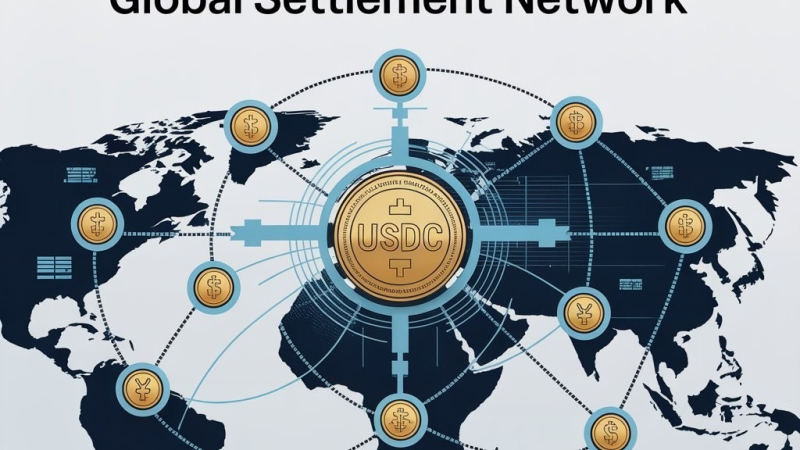
USDC has seen a steady increase in circulating supply as new cross border payment corridors continue to gain traction across the Asia Pacific region. The rise reflects broader adoption among fintech providers, institutional payment networks, and digital commerce platforms that are integrating stablecoins into their settlement infrastructure. As APAC markets strengthen their focus on real time payments, the appeal of USDC as a predictable and operationally efficient settlement asset continues to grow. This shift aligns with the region’s long term trend toward digital transaction modernization and the growing alignment between stablecoins and regulated financial workflows.
The expansion of USDC usage in APAC is influenced by several dynamics, including demand for faster settlement speed, reduced foreign exchange friction, and increased interoperability between local payment channels and global networks. Real time settlement is becoming an essential competitive advantage for firms operating across borders, especially those handling high volume transfers, merchant payouts, or business to business payments. As institutions seek more efficient liquidity pathways, USDC provides a flexible bridge between markets with varying regulatory and infrastructure maturity.
Real Time Settlement Corridors See Rapid Integration Momentum
The most significant driver of USDC demand in APAC is the establishment of new real time cross border corridors that connect major financial hubs with emerging digital economies. These corridors use USDC as a neutral settlement asset that bypasses the delays found in traditional payment routes. Institutions using these rails benefit from faster reconciliation, lower operational overhead, and fewer intermediaries. This improvement is valuable in a region where the volume of international payments continues to rise with expanding trade and growing digital commerce.
Real time settlement corridors also allow enterprises to manage liquidity more efficiently. Funds can be deployed or received within minutes, enabling tighter treasury synchronization and improved cash flow visibility. As more payment providers and institutional partners integrate USDC into their systems, the overall speed and reliability of APAC cross border transactions are improving. This contributes to increasing regional demand, reinforcing USDC’s role as a settlement tool rather than a speculative asset.
Institutional Partners Drive Infrastructure Expansion
Partnerships between fintech firms, regional banks, and global payment processors are central to the rise in USDC usage. Institutions are incorporating stablecoins into their transaction models to support larger volume transfers and reduce processing delays. Many of these organizations operate across multiple APAC jurisdictions where settlement frameworks vary, making stablecoins an effective harmonizing layer that ensures consistent performance across different regulatory environments.
Institutional adoption is also supported by the predictable valuation of USDC, which simplifies accounting and treasury management. Because institutions must maintain strict compliance and reporting standards, the transparency and stability of USDC provide a practical foundation for integrating digital assets into established systems. The growing institutional involvement contributes directly to the increase in circulating supply as operational usage expands across the region.
E Commerce Platforms Accelerate USDC Settlement Options
Another contributor to rising USDC demand is the growing number of e commerce platforms offering stablecoin based settlement options. These platforms often operate across countries with different banking standards, and stablecoins help simplify the payment workflow for both merchants and consumers. By enabling faster payouts, platforms can improve merchant liquidity while reducing the risk of delays that can occur in legacy settlement systems.
As digital marketplaces continue to scale within APAC, stablecoins support more efficient handling of international revenue cycles. The adoption of USDC reduces friction in merchant onboarding and payout processes, particularly for smaller sellers who depend on timely settlements. This broadens the user base beyond institutions, creating a layered demand structure that helps stabilize long term growth.
Expanding Regulatory Clarity Supports Regional Adoption
The APAC region is gradually advancing regulatory frameworks that address stablecoin usage in payments. As clarity improves, more payment firms and treasury departments are incorporating USDC into their operational architecture. Clear guidelines around custody, reporting, and settlement reduce barriers to adoption and enhance the confidence of regulated entities engaging with stablecoin ecosystems.
Regulatory progress also encourages infrastructure investment from both public and private sectors, further strengthening the cross border payment landscape. As APAC continues refining its digital finance policies, USDC is positioned to remain a key asset within compliant settlement channels.
Conclusion
The increase in USDC supply reflects expanding adoption across APAC cross border payment rails, driven by real time settlement needs, institutional partnerships, and e commerce integration. With regulatory clarity improving and regional payment networks continuing to modernize, USDC is becoming a central component of efficient and reliable international transaction flows. As these developments progress, USDC is set to play an even larger role in shaping the future of digital settlement across Asia Pacific.