In 2025, stablecoins completed a transition that had been years in the making. What began as a crypto-native tool for traders evolved into a core layer of global financial infrastructure, shaped by regulation, bank participation and large-scale fintech adoption.
Once viewed primarily as speculative instruments or liquidity tools for digital asset markets, stablecoins became embedded in payments, settlement, treasury management and cross-border finance. The shift was driven less by hype and more by structural change.
Regulation Moves From Uncertainty to Frameworks
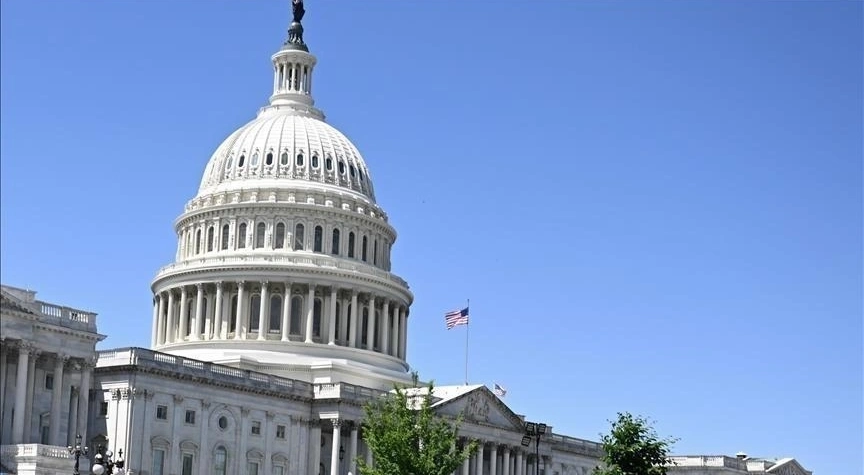
A defining feature of 2025 was regulatory clarity. In the United States, lawmakers advanced stablecoin legislation that set reserve, disclosure and compliance standards for issuers operating within the financial system. While debate continues, the direction of travel became clear: stablecoins are to be regulated as financial infrastructure, not fringe crypto products.
In Europe, implementation of MiCA brought uniform rules across member states, giving banks and fintechs legal certainty to integrate fiat-backed tokens into regulated services. In Asia and the Middle East, jurisdictions such as Singapore and Abu Dhabi positioned themselves as hubs for compliant stablecoin activity, balancing innovation with oversight.
These frameworks reduced one of the biggest barriers to adoption. For the first time, large institutions could engage with stablecoins without operating in legal grey zones.
Banks Step In, Not Just Around
Another major development was the growing role of banks, not as opponents of stablecoins but as participants. Global and regional banks expanded pilots involving tokenised deposits, stablecoin settlement rails and blockchain-based treasury services.
Institutions such as DBS Bank deepened their blockchain strategies, while others explored issuing or supporting fiat-backed tokens under regulatory supervision. Rather than attempting to replace stablecoins, many banks focused on interoperability, custody and compliance services.
This marked a strategic pivot. Instead of competing with crypto-native issuers, banks positioned themselves as trusted gateways between traditional finance and on-chain money.
Fintechs Scale Real-World Use Cases
Fintech companies played a central role in translating stablecoins into everyday financial tools. Payments firms integrated stablecoins into merchant settlement, payroll, remittances and B2B transfers, particularly in regions with fragmented banking infrastructure.
By 2025, stablecoins were routinely used to settle international invoices in minutes rather than days, reducing costs and foreign exchange friction. Fintech platforms leveraged stablecoins to offer near-instant cross-border payments, often bypassing correspondent banking networks entirely.
For small and medium-sized enterprises, this shift was especially significant. Stablecoins became programmable cash, enabling automated reconciliation, smart treasury allocation and real-time settlement across borders.
From Trading Liquidity to Monetary Plumbing
Perhaps the most important change was conceptual. Stablecoins stopped being measured only by market capitalisation and trading volume. Instead, attention shifted to redemption behaviour, settlement velocity and integration depth.
Stablecoins increasingly functioned as digital cash equivalents rather than speculative assets. Their role expanded in derivatives collateral, on-chain lending, and machine-to-machine payments linked to AI-driven systems.
By the end of 2025, stablecoins were no longer just crypto market infrastructure. They were financial plumbing, quietly supporting transactions across fintech apps, enterprise systems and blockchain networks.
A Global, Multi-Currency Future
While dollar-pegged stablecoins continued to dominate, 2025 also saw growth in non-dollar tokens. Governments and private issuers explored euro, yen and emerging-market currency stablecoins, reflecting a gradual move toward a multi-currency digital settlement layer.
This diversification reduced reliance on a single currency and aligned stablecoins more closely with regional economic needs, particularly in trade and remittance corridors.
The New Normal for Digital Money
By the close of 2025, the debate around whether stablecoins “belong” in the financial system had largely ended. The question shifted to how they should be governed, interconnected and scaled responsibly.
Stablecoins did not replace banks, nor did they dismantle existing systems overnight. Instead, they became connective tissue between old and new finance, offering speed, programmability and global reach where traditional rails struggled.
What 2025 demonstrated is that stablecoins are no longer a crypto experiment. They are an emerging global financial layer, shaped by regulation, strengthened by institutions and operationalised by fintechs.