Operational friction has long been a defining characteristic of traditional financial systems. Multiple intermediaries, fragmented ledgers, manual reconciliation, and delayed settlement all contribute to complexity that institutions must manage daily. While these systems have supported global finance for decades, their limitations are becoming more visible as markets demand greater speed and coordination.
Blockchain settlement layers are emerging as a practical response to these challenges. Rather than focusing on front end innovation, they address inefficiencies at the settlement level where many operational issues originate. By redesigning how transactions are finalized and recorded, blockchain settlement layers are reducing friction across institutional workflows.
This shift is not about replacing finance with new technology for its own sake. It is about simplifying processes that have become increasingly costly and difficult to scale.
Settlement Layers Address Friction at Its Source
Most operational friction arises after a transaction is executed. Trade confirmation, clearing, reconciliation, and settlement involve multiple systems and counterparties. Each step introduces delays and opportunities for error. Blockchain settlement layers streamline this process by combining record keeping and settlement into a single environment.
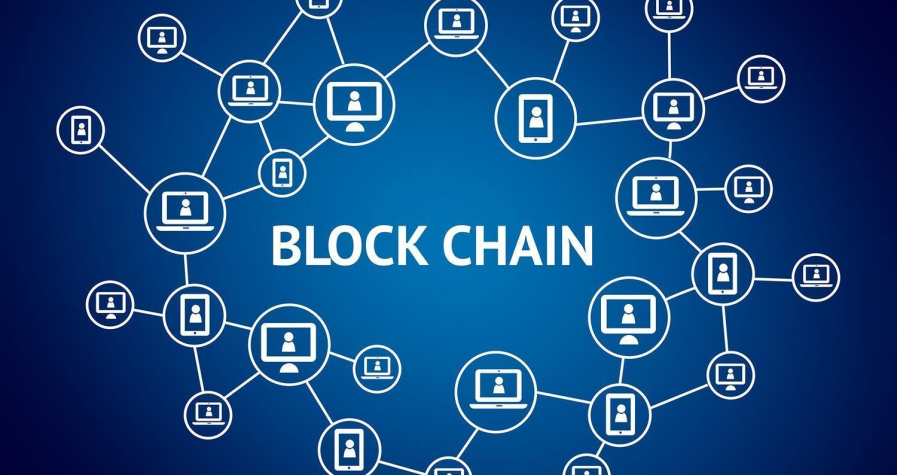
When transactions are settled on a shared ledger, all participants reference the same source of truth. This eliminates discrepancies that typically require manual resolution. Institutions benefit from faster settlement and reduced administrative burden.
By addressing friction at the settlement layer rather than at the transaction initiation stage, blockchain systems deliver structural efficiency rather than incremental improvement.
Simplifying Reconciliation and Reporting
Reconciliation is one of the most resource intensive aspects of financial operations. Institutions must continuously compare records across internal systems and external counterparties. Differences in timing or data formats often lead to breaks that require investigation.
Blockchain settlement layers significantly reduce this burden. Because transactions are recorded consistently across participants, reconciliation becomes largely automatic. Reporting accuracy improves as data is sourced from a unified ledger rather than stitched together from multiple databases.
This simplification allows operational teams to focus on oversight rather than correction. It also reduces the risk of unresolved discrepancies affecting downstream processes.
Reducing Dependency on Intermediaries
Traditional settlement relies on a chain of intermediaries, each performing validation and record keeping functions. While these intermediaries provide important safeguards, they also add complexity and cost. Blockchain settlement layers change this dynamic by enabling direct settlement between participants.
Shared infrastructure reduces the need for multiple validation steps. Rules are enforced at the protocol level, ensuring consistency without manual intervention. This does not eliminate the role of regulated institutions, but it simplifies how they interact.
For institutions operating across borders, fewer intermediaries mean faster settlement and lower operational overhead. This efficiency becomes increasingly valuable as transaction volumes grow.
Improving Settlement Speed and Finality
Delayed settlement is a major source of operational friction. When finality is postponed, institutions must manage exposure, liquidity buffers, and uncertainty. Blockchain settlement layers improve speed by enabling near immediate finality once transaction conditions are met.
Faster settlement reduces the need for interim controls and monitoring. Funds and assets become available sooner, improving capital efficiency. Operational teams spend less time tracking pending transactions and more time managing active positions.
Finality also improves confidence. When settlement is definitive, institutions can plan and execute subsequent actions without hesitation.
Enhancing Transparency Across Operations
Transparency is essential for efficient operations. Blockchain settlement layers provide real time visibility into transaction status and settlement outcomes. Institutions can monitor activity continuously rather than relying on end of day reports.
This visibility supports better decision making. Operational teams can identify issues as they arise and address them promptly. Transparency also improves coordination between departments, reducing internal friction.
Clear records also support audit and compliance functions. When transaction data is readily available and consistent, oversight becomes more straightforward.
Supporting Automation and Straight Through Processing
Blockchain settlement layers enable higher levels of automation. Settlement rules can be encoded directly into the system, allowing transactions to complete automatically when conditions are met. This supports straight through processing without manual intervention.
Automation reduces processing time and error rates. It also standardizes workflows, making operations more predictable and scalable. Institutions benefit from lower costs and improved reliability.
As automation increases, operational friction continues to decline. Processes that once required multiple checkpoints can now be executed seamlessly.
Integrating With Existing Institutional Systems
For blockchain settlement layers to reduce friction effectively, they must integrate with existing systems. Modern implementations are designed with interoperability in mind, allowing data to flow between settlement infrastructure and internal platforms.
Standardized interfaces support real time updates to treasury, risk, and reporting systems. This integration ensures that operational improvements extend beyond the settlement layer into broader institutional workflows.
Ease of integration accelerates adoption. Institutions are more likely to embrace solutions that enhance existing processes rather than requiring complete system overhauls.
A Gradual Shift Toward Operational Efficiency
The adoption of blockchain settlement layers is occurring gradually. Institutions are introducing them in targeted areas where operational friction is most acute. This measured approach allows teams to build confidence while maintaining stability.
Over time, as standards mature and familiarity grows, these layers are likely to expand into additional functions. The cumulative effect is a meaningful reduction in operational friction across the financial system.
This evolution reflects institutional pragmatism. Efficiency gains are achieved through careful integration rather than disruptive replacement.
Conclusion
Blockchain settlement layers are reducing operational friction by simplifying reconciliation, improving settlement speed, and increasing transparency. By addressing inefficiencies at the settlement level, they deliver structural improvements that legacy systems struggle to match. As institutions continue modernizing their operations, blockchain settlement layers are becoming an important tool for building more efficient and resilient financial infrastructure.