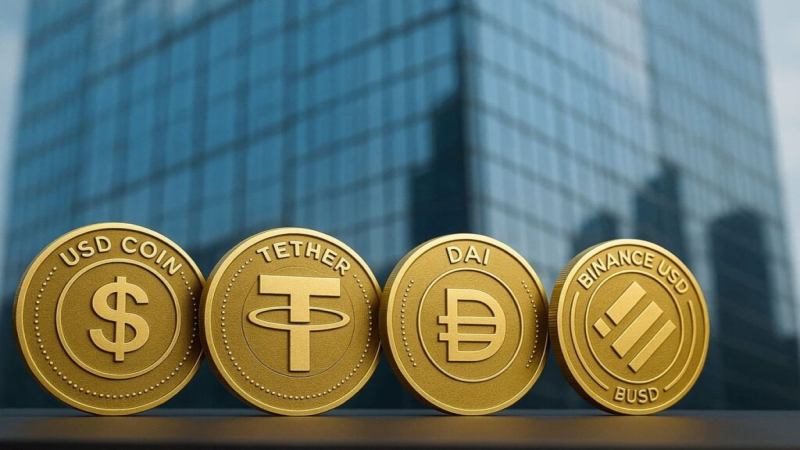
Stablecoins are no longer viewed by institutions as simple tools for maintaining price parity with fiat currencies. In 2026, they are increasingly treated as balance sheet instruments that require the same level of scrutiny as cash equivalents, short-term debt, or settlement assets. This shift reflects the growing role stablecoins play across trading, treasury management, and digital finance operations.
As institutional participation in crypto markets deepens, stablecoin evaluation has moved beyond surface-level considerations. Firms are assessing how these assets behave under stress, how they fit into capital structures, and how they align with governance and compliance frameworks. Peg stability remains important, but it is no longer sufficient on its own.
How Institutions Define Stablecoin Quality Today
For institutional users, the definition of a high-quality stablecoin has expanded significantly. While maintaining a one-to-one peg remains foundational, firms now examine the mechanisms that support that peg in real-world conditions. This includes reserve composition, liquidity access, and operational transparency.
Institutions increasingly favor stablecoins backed by high-quality, liquid assets that can be converted quickly during periods of market volatility. They also look closely at how redemption processes function during stress scenarios, not just in normal market conditions. The ability to exit positions predictably has become as important as day-to-day price stability.
Beyond financial backing, governance structures matter. Clear oversight, defined decision-making processes, and credible risk controls influence whether a stablecoin is considered suitable for long-term institutional use. These factors collectively determine whether a stablecoin can function as a reliable balance sheet component.
Treasury and Cash Management Considerations
Stablecoins are now being evaluated alongside traditional treasury tools. For funds, trading firms, and crypto-native institutions, they offer a way to hold and deploy capital without relying entirely on bank deposits. This flexibility is particularly valuable in global operations where access to banking services can vary by jurisdiction.
Institutions assess how stablecoins affect liquidity planning and working capital management. Holding stablecoins can improve capital mobility, allowing firms to respond quickly to margin calls, investment opportunities, or settlement obligations. At the same time, treasury teams must consider concentration risk and counterparty exposure associated with specific issuers.
Accounting treatment also plays a role. Firms evaluate how stablecoins are classified on financial statements and how they interact with existing cash management policies. These considerations shape decisions about allocation sizes and acceptable use cases.
Risk Management and Stress Testing
Risk teams now subject stablecoins to stress testing similar to other financial instruments. Scenarios include sudden spikes in redemption demand, disruptions in reserve markets, and changes in regulatory requirements. The goal is to understand how stablecoins behave when market confidence is tested.
Institutions also monitor secondary market liquidity and onchain data to assess real-time risks. A stablecoin that performs well during calm periods but shows fragility under stress is less likely to be adopted for core operations. As a result, data-driven risk assessment has become central to stablecoin evaluation.
Counterparty risk extends beyond the issuer to include custodians, settlement platforms, and infrastructure providers. Institutions increasingly evaluate the entire ecosystem supporting a stablecoin, rather than viewing it in isolation.
Compliance and Regulatory Alignment
Regulatory expectations have become a decisive factor in stablecoin selection. Institutions prioritize assets that align with evolving compliance standards across major markets. This includes transparency around reserves, clear disclosures, and cooperation with regulatory oversight.
Compliance teams assess whether stablecoin structures are compatible with internal controls and reporting obligations. Stablecoins that introduce ambiguity or legal uncertainty are less attractive, even if they offer technical advantages. In this environment, regulatory alignment supports adoption rather than hindering it.
As frameworks continue to develop, institutions expect stablecoin issuers to adapt proactively. Those that do are more likely to become embedded in institutional workflows over time.
Conclusion
In 2026, institutions evaluate stablecoins through the lens of balance sheet strategy rather than short-term utility. Peg stability remains essential, but it is only one component of a broader assessment that includes risk, liquidity, governance, and compliance. As stablecoins mature into core financial instruments, institutional scrutiny will continue to shape which models endure and which fade from relevance.