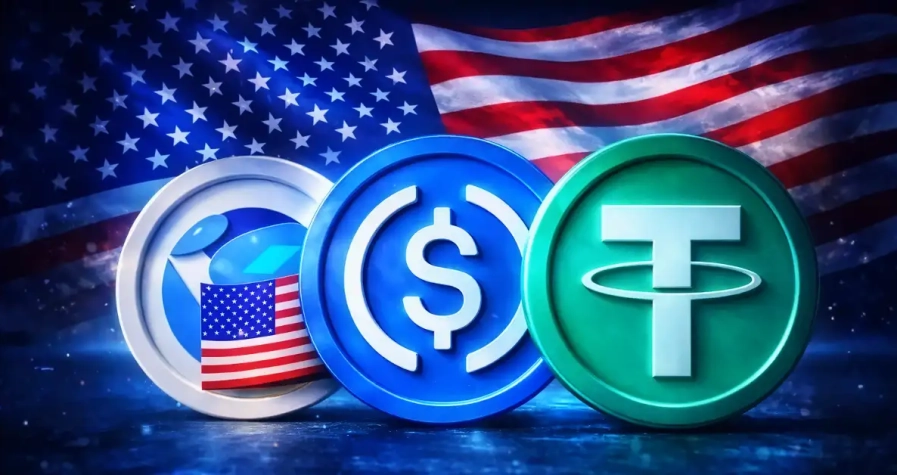
Tether has formally entered the US regulated stablecoin market with the launch of USA₮, a dollar backed token issued by Anchorage Digital Bank under the newly enacted GENIUS Act. The move marks Tether’s first fully compliant stablecoin designed specifically for American users, following legislation that restricts the issuance of payment stablecoins to federally or state qualified entities. As a result, Tether’s flagship USDT remains excluded from the US market, continuing to operate internationally while USA₮ serves domestic demand. The new token is already live across several major crypto trading platforms and payment services, positioning Tether to compete more directly with established regulated issuers. Company executives have framed the launch as a response to institutional demand for federally supervised digital dollars, signaling a strategic shift toward regulatory alignment in the world’s largest financial market.
The introduction of USA₮ has reignited concerns within the traditional banking sector about the impact of stablecoins on deposit flows. On the same day as the launch, Standard Chartered warned that stablecoins could siphon as much as 100 billion dollars from US bank deposits as adoption accelerates. The concern centers on how stablecoin issuers manage reserves, which are typically held in short term Treasury bills rather than redeposited into the banking system. This structure means that as users convert bank deposits into stablecoins, funds may permanently exit bank balance sheets. Analysts note that regional banks face the greatest exposure, while larger institutions may be better positioned to absorb the shift. As regulated stablecoins become more widely accepted, these dynamics could reshape funding models across parts of the US banking system.
The launch of USA₮ also highlights intensifying competition within the stablecoin market as regulation brings clearer lines between compliant and offshore offerings. Circle’s USDC has historically dominated US institutional adoption due to its early regulatory positioning, but Tether’s move introduces a powerful new contender backed by the scale of its global operations. With the stablecoin market projected to grow toward 2 trillion dollars by 2028, regulated tokens are expected to play a central role in payments, settlement, and onchain financial infrastructure. For policymakers and banks, the challenge will be balancing innovation with financial stability as digital dollars become more deeply embedded in everyday finance. For crypto markets, USA₮ signals that regulatory compliance is increasingly becoming a prerequisite for accessing institutional capital at scale.