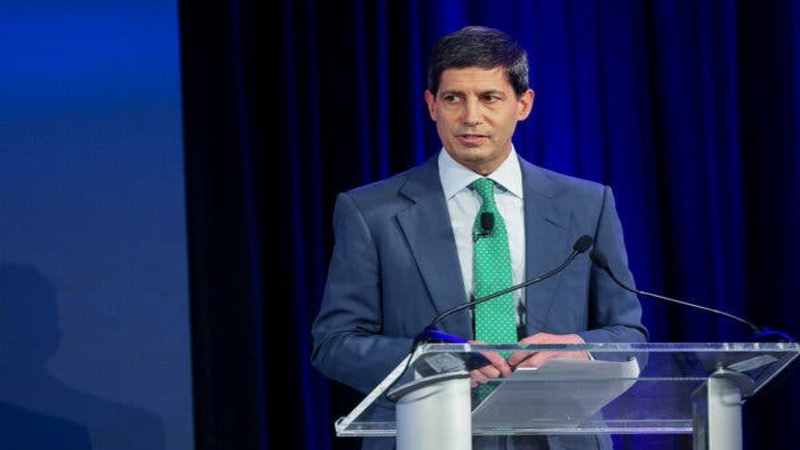
Hedge fund billionaire Stan Druckenmiller has thrown his support behind President Donald Trump’s nomination of Kevin Warsh as the next chair of the Federal Reserve, challenging the widespread view that Warsh represents the most hawkish option for the role. Markets reacted sharply after news of the nomination emerged, with risk assets selling off and bitcoin briefly sliding toward the $81,000 level as investors braced for the possibility of tighter monetary policy. Druckenmiller, however, said that the initial reaction misreads Warsh’s record, arguing that he is far more flexible in practice than his reputation suggests. In comments to the Financial Times, Druckenmiller said he could not think of anyone better equipped to lead the central bank at a time when markets are grappling with inflation risks, geopolitical tension, and shifting global capital flows.
Druckenmiller’s endorsement is closely watched given his long-standing professional and personal relationship with Warsh. The two have worked together for more than a decade, with Warsh joining Druckenmiller’s family office, Duquesne Capital Management, in 2011 after serving as a Federal Reserve governor during the global financial crisis. Druckenmiller said he has seen Warsh support both tighter and more accommodative policy depending on economic conditions, pushing back against the idea that he is ideologically locked into a single stance. He described Warsh as deeply experienced across policy, markets, and crisis management, qualities that he believes are critical for maintaining confidence in the Federal Reserve. The comments suggest that Warsh’s approach, if confirmed, may be more pragmatic than markets initially assumed.
The billionaire investor also highlighted the importance of coordination between monetary and fiscal leadership, pointing to Warsh’s close alignment with Treasury Secretary Scott Bessent, another longtime associate of Druckenmiller. He said strong cooperation between the Treasury and the Federal Reserve would be ideal as policymakers navigate sensitive trade-offs between inflation control, economic growth, and financial stability. Analysts say such alignment could eventually temper market fears of abrupt tightening and influence sentiment across equities, bonds, and crypto markets. While uncertainty remains until the Senate confirmation process is complete, Druckenmiller’s remarks add a powerful counterweight to the early narrative surrounding Warsh’s nomination, signaling that expectations around future Fed policy may still evolve.