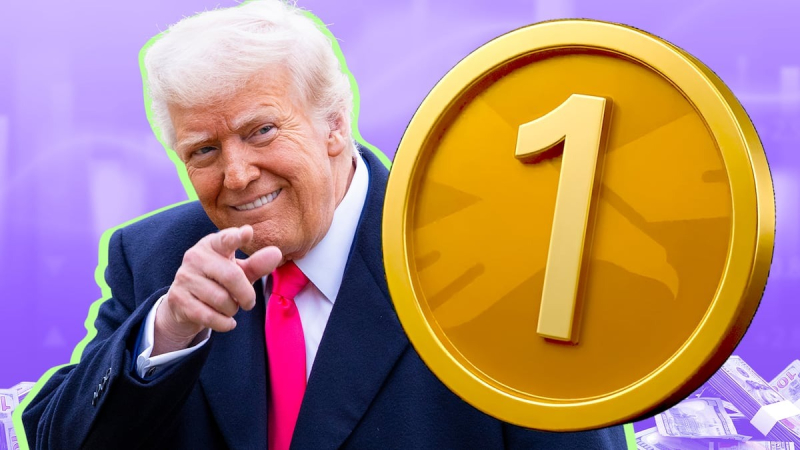
Binance has become the dominant custodian of USD1, a dollar backed stablecoin associated with the Trump family, now holding roughly eighty nine percent of the token’s circulating supply. Blockchain analytics data shows that the concentration places the world’s largest crypto exchange at the center of liquidity, custody, and market access for one of the fastest growing stablecoins in circulation.
USD1 is issued by World Liberty Financial, a digital asset venture supported by members of the Trump family. The token has expanded rapidly over the past month, increasing its circulating supply by more than fifty percent and reaching approximately five point four billion dollars in total issuance. This growth has pushed USD1 into the position of the fifth largest stablecoin globally, a notable development in an already crowded market dominated by long established dollar pegged tokens.
While Binance holds the vast majority of USD1 tokens, the exchange has emphasized that custody does not equate to ownership. Custodial arrangements are standard practice across financial markets, allowing exchanges to safeguard assets on behalf of users and institutions. Even so, the scale of USD1 held on a single platform is unusual among major stablecoins and highlights Binance’s outsized influence over how the token is traded, distributed, and accessed by the market.
Binance’s involvement with USD1 increased in December when the exchange introduced incentives designed to encourage adoption of the stablecoin. These included yield offerings for users holding limited amounts of USD1 on the platform. Company representatives have stated that Binance’s role is limited to providing listing, infrastructure, and market access services that it offers broadly across the industry under consistent terms.
USD1 is backed by United States government bonds, dollar deposits, and other cash equivalents, positioning it as a fully reserved stablecoin aimed at institutional credibility. In January, World Liberty Financial submitted an application for a United States banking license, signaling ambitions to integrate more deeply with the regulated financial system. Company leadership has said the long term goal is to position USD1 as a preferred digital dollar for institutions, enterprises, and everyday transactions.
The stablecoin’s rapid rise has also attracted political scrutiny. Critics have raised concerns about potential conflicts of interest related to the Trump family’s involvement in crypto ventures, particularly as regulatory debates around stablecoins intensify in Washington. Democratic lawmakers have accused the president of ethical breaches tied to family backed digital asset projects, allegations that have been firmly denied by the White House.
Additional controversy has centered on claims linking major international investment activity involving USD1 to political favors, allegations that have been rejected by Binance executives and legal representatives connected to the exchange. The administration has repeatedly stated that the president’s assets are held in a trust managed by his children and that no improper conduct has occurred.
As USD1 continues to expand and Binance’s custodial role remains dominant, the stablecoin is likely to remain a focal point in both market analysis and political debate, especially as lawmakers move closer to finalizing stablecoin regulation in the United States.