Banks should not view stablecoin yield products as a direct threat to their business models, according to White House crypto adviser Patrick Witt, who urged traditional financial institutions to see opportunity rather than competition in the expanding digital asset sector.
Speaking in a recent interview, Witt said that crypto platforms offering rewards on stablecoin holdings do not undermine the role of banks in the financial system. Instead, he argued that banks can provide similar products to their own customers by leveraging their regulatory frameworks and existing client relationships. He noted that several financial institutions are already applying for Office of the Comptroller of the Currency charters to expand into digital asset services, including custody and stablecoin related offerings.
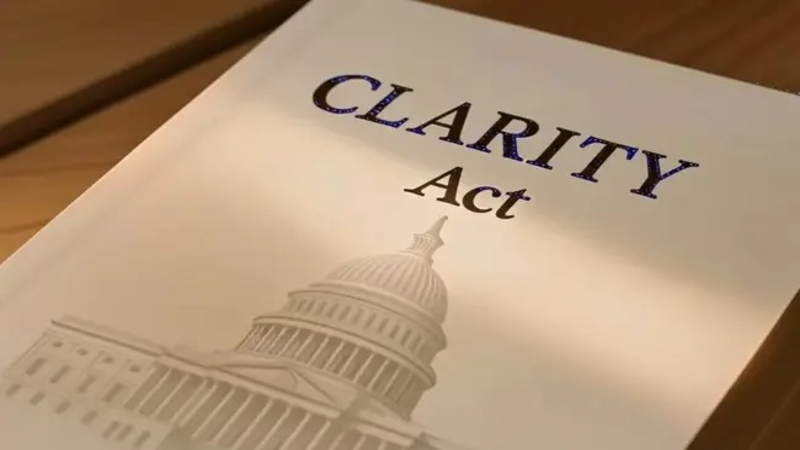
The debate over whether stablecoin issuers and crypto platforms should be allowed to share yield with customers has become a central sticking point in negotiations surrounding the proposed CLARITY Act. The legislation is designed to establish clearer regulatory boundaries between the Securities and Exchange Commission and the Commodity Futures Trading Commission, while also creating a formal asset classification structure for digital tokens.
Critics within parts of the banking industry have expressed concern that yield bearing stablecoins could draw deposits away from traditional savings accounts, potentially affecting funding structures. Witt dismissed the idea that such products inherently weaken banks, suggesting instead that financial institutions can adapt by integrating stablecoin services into their own product lines. He described the tension between the two sectors as counterproductive at a time when regulatory clarity is widely viewed as essential for market stability.
The legislative timeline has added urgency to the discussion. With U.S. midterm elections approaching in 2026, policymakers and industry leaders have warned that the window for passing comprehensive crypto market structure reform may narrow significantly once campaign activity intensifies. Treasury officials have also acknowledged that political shifts in Congress could complicate efforts to finalize the bill.
The White House Crypto Council is reportedly working to secure progress on the CLARITY Act before election season dominates legislative priorities. Supporters argue that the bill would provide long awaited certainty for digital asset markets, encouraging institutional participation and responsible innovation.
The stablecoin yield dispute highlights broader structural questions about how traditional banking and crypto based financial services will coexist. As stablecoins increasingly function as digital settlement layers for payments and capital markets, the lines between fintech platforms and banks are continuing to blur.
Witt’s remarks signal a policy perspective that sees stablecoins not as a zero sum competitor to banks, but as an evolving financial tool that can be integrated into regulated frameworks.