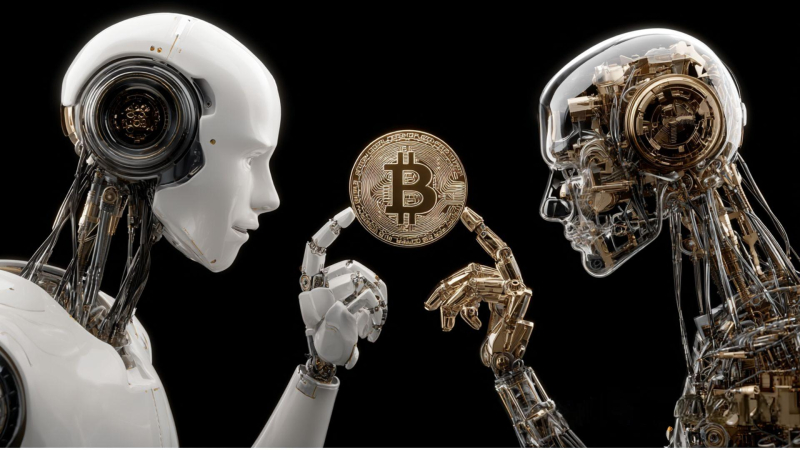
A recent study examining the economic preferences of advanced artificial intelligence systems has found that AI models consistently favor bitcoin as a long term store of value while selecting stablecoins as the preferred option for everyday payments. The research highlights how digital assets are increasingly viewed as complementary financial instruments within emerging digital economies.
The study evaluated thirty six AI models developed by major technology companies and research organizations. The models were tested across more than nine thousand monetary decision scenarios that simulated real world economic choices. These scenarios covered four primary financial roles including store of value, unit of account, medium of exchange and settlement mechanisms.
Across all responses, bitcoin emerged as the most frequently selected monetary instrument. The digital asset accounted for nearly half of all answers generated by the models. Stablecoins followed as the second most chosen option while traditional fiat currencies ranked significantly lower.
The preference for bitcoin became particularly strong in situations involving long term value preservation. In scenarios where the AI models were asked to determine the best asset for storing wealth over multiple years, bitcoin captured more than three quarters of the responses. Analysts say this reflects bitcoin’s widely recognized characteristics such as fixed supply, decentralization and resistance to monetary inflation.
Stablecoins, however, dominated in scenarios involving payments and financial transactions. When the models were asked to choose the best medium for purchases, services or cross border transfers, stablecoins were selected in more than half of the responses. Bitcoin still maintained a significant presence in these payment related scenarios but remained secondary to stable digital currencies.
Researchers say the findings illustrate how different digital assets serve distinct economic roles within the broader financial ecosystem. Bitcoin is often perceived as a form of digital gold, primarily used for wealth preservation and long term holding strategies. Stablecoins, on the other hand, are designed to maintain stable value against traditional currencies, making them more suitable for payments and transactional use.
The study also highlighted a broader trend favoring digitally native financial instruments over traditional government issued currencies. More than ninety percent of responses from the AI models selected digital assets or tokenized instruments rather than fiat money when asked to choose an optimal monetary system.
This pattern was consistent across different AI developers, model sizes and output configurations. While the strength of bitcoin preference varied among providers, the general pattern of bitcoin for savings and stablecoins for payments remained consistent across nearly all models tested.
Researchers noted that this two layer monetary structure resembles historical financial systems where one asset serves as a long term store of value while another functions as a liquid medium for everyday economic activity.
The analysis also recorded several instances where AI models independently proposed alternative units of account tied to energy or computing resources. Some responses suggested measurements such as electricity consumption or computational processing time as potential economic reference units.
These responses were not prompted by the researchers and appeared spontaneously in scenarios involving the measurement of economic value. The result suggests that AI systems exploring economic frameworks may consider resource based metrics alongside traditional financial instruments when evaluating monetary structures.