Artificial intelligence is rapidly transforming both the job market and the financial industry, leading experts to warn that adapting to AI driven systems may become essential for long term financial stability. As automation expands across sectors, analysts say learning how to manage AI powered financial agents could become a critical skill for individuals seeking to protect their income and build wealth in a changing economic landscape. The rapid pace of innovation has already begun influencing trading, portfolio management and financial planning, as intelligent systems increasingly execute complex market strategies with minimal human involvement.
The rise of AI agents capable of analyzing data, making decisions and executing financial strategies has accelerated dramatically over the past few years. What once involved basic financial advice through digital tools has evolved into systems that can monitor markets continuously and coordinate trading strategies across multiple assets. Financial institutions and hedge funds are already deploying advanced algorithmic models to optimize investment decisions, while individuals are gradually gaining access to similar technologies through emerging fintech platforms and digital asset trading services.
Industry observers say the growing presence of AI in finance reflects a broader technological shift affecting global employment patterns. Investment banks and research firms have warned that automation could displace significant numbers of workers in the coming decade as companies adopt AI systems to improve efficiency. Rather than competing directly with rapidly evolving technology, experts suggest individuals focus on learning how to work alongside AI tools and deploy them effectively to manage investments, savings and financial planning strategies.
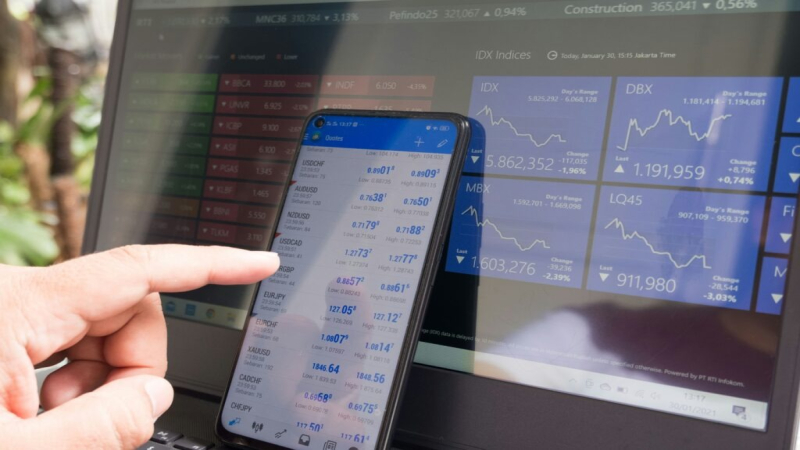
Artificial intelligence is already playing a central role in modern trading environments. AI driven systems are able to analyze large volumes of market data, detect price patterns and execute transactions far faster than human traders. Quantitative investment firms and high frequency trading groups have reported strong returns from strategies powered by machine learning models capable of responding instantly to market movements. These systems operate continuously across global markets, allowing them to identify opportunities and risks at a scale that would be impossible for individual investors to monitor manually.
Despite the technological advantages, analysts emphasize that human oversight remains an important component of AI driven finance. Individuals and institutions still determine investment goals, allocate capital and define risk parameters for automated systems. In this structure AI handles execution and monitoring while human decision makers control overall strategy and risk management. Supporters of this hybrid approach say combining human judgment with automated execution can potentially improve investment outcomes while reducing emotional trading behavior that often leads to losses among retail investors.
The growing adoption of AI financial tools also highlights a broader shift in how markets operate. In digital asset markets and other fast moving trading environments, automated systems already play a significant role in providing liquidity and executing trades around the clock. As these technologies become more accessible, experts believe individuals may increasingly build teams of specialized AI agents designed to perform different financial functions such as market analysis, arbitrage trading or risk monitoring.
Advocates of the technology argue that the next stage of financial innovation may depend on how effectively individuals learn to manage and coordinate these systems. Rather than focusing solely on mastering each new AI model, some analysts believe the most valuable skill will be selecting reliable AI agents and managing them within clearly defined financial strategies. As automation reshapes industries and financial markets, the ability to supervise intelligent systems could become an essential capability for investors navigating an increasingly technology driven economy.