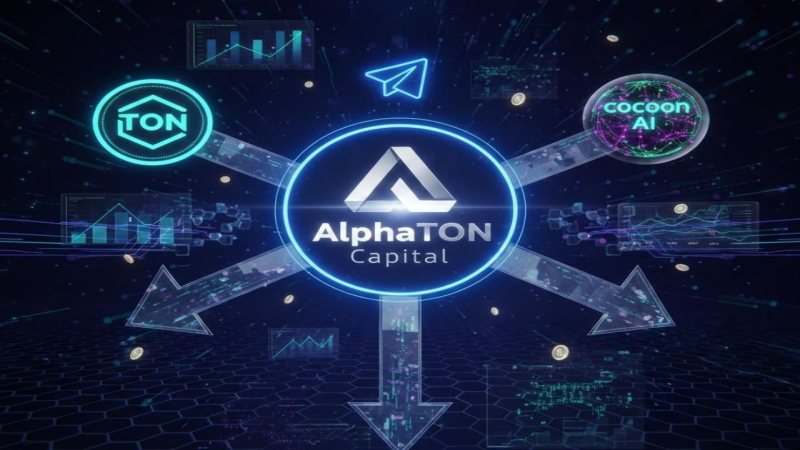
AlphaTON Capital Corp has signed a 46 million dollar compute infrastructure agreement to expand its exposure to decentralized artificial intelligence through Cocoon AI, a Telegram native network built on the TON blockchain. The deal will add 576 NVIDIA B300 chips to AlphaTON’s balance sheet, marking its first large scale deployment of confidential compute infrastructure. The hardware is scheduled for delivery in February and builds on roughly 20 million dollars in existing digital and physical assets already held by the company. Rather than a simple cash purchase, the transaction combines upfront cash, non recourse debt financing, and staged equity payments tied to full deployment. The move signals AlphaTON’s intention to anchor its treasury strategy around revenue generating AI infrastructure rather than holding tokens alone, positioning compute capacity as a long term strategic asset.
Cocoon AI operates as a decentralized compute network designed to run within Telegram’s ecosystem, allowing users to rent out GPU capacity and earn Toncoin in return. The platform is pitched as a privacy preserving alternative to centralized AI services, with confidential compute designed to protect both user queries and data processing. Cocoon is closely tied to Telegram’s growing blockchain ambitions and is built on the TON network, giving it access to Telegram’s global user base, which exceeds one billion monthly active users. For AlphaTON, deploying GPUs directly into Cocoon creates a new revenue stream tied to AI usage rather than token price movements alone. The company has framed this approach as a way to combine decentralized infrastructure, privacy focused AI, and blockchain based incentives into a single operating model.
The NVIDIA deal follows a broader expansion strategy that has seen AlphaTON raise capital and secure credit facilities to scale its TON focused treasury and infrastructure investments. The firm previously filed a large shelf registration to fund AI expansion alongside initiatives tied to the TON mini app economy and payments products. By adding physical compute assets alongside digital holdings, AlphaTON is seeking to reduce balance sheet volatility while gaining exposure to what it describes as an emerging AI infrastructure cycle. The strategy reflects a wider trend across crypto adjacent firms that are blending blockchain, payments, and artificial intelligence into integrated platforms. As decentralized AI networks begin to compete with centralized providers, AlphaTON’s bet on compute ownership positions it as an early participant in that shift.