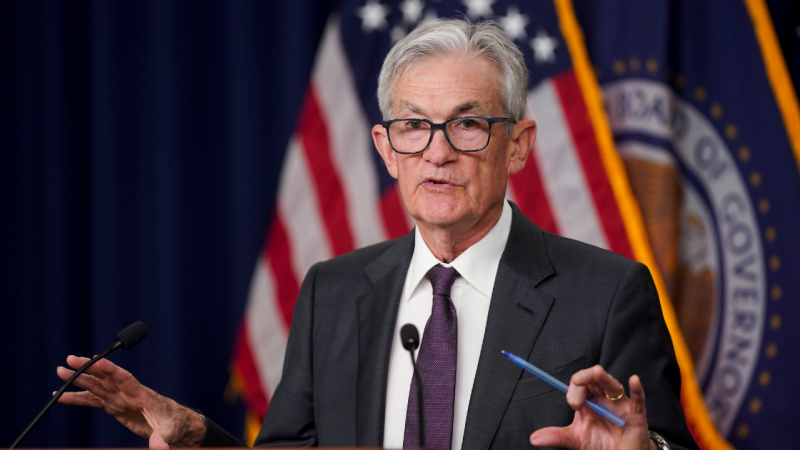
Bitcoin’s recent upward momentum slowed on Tuesday as traders turned cautious ahead of a closely watched Federal Reserve decision and fresh inflation data. After briefly moving above the 76000 level, the asset retreated toward the 74000 range during U.S. trading hours, reflecting a pause in bullish sentiment. Market participants are now focusing less on immediate price action and more on macro signals that could determine the next phase of the rally. The Federal Reserve’s communication strategy and inflation indicators are expected to play a decisive role in shaping short term direction across digital assets.
The central bank is widely expected to keep interest rates unchanged within the current range, but attention is firmly on the tone of its guidance and future outlook. Investors are particularly sensitive to any indication that policymakers may delay expected rate cuts or maintain a tighter stance for longer than previously anticipated. Rising oil prices, influenced by geopolitical tensions, have added another layer of complexity to inflation expectations. This environment has created uncertainty, as markets attempt to assess whether inflation pressures are temporary or part of a more persistent trend.
Inflation data scheduled for release alongside the policy decision is likely to amplify volatility across both traditional and digital markets. The Producer Price Index, while typically less influential than consumer inflation metrics, is gaining attention due to its timing and potential to influence central bank messaging. A stronger than expected reading could reinforce concerns about persistent inflation, prompting a more cautious stance from policymakers. In such a scenario, risk assets including cryptocurrencies could face renewed pressure as tighter financial conditions tend to strengthen the dollar and reduce liquidity across markets.
Market analysts suggest that the combination of elevated inflation data and a more restrictive policy tone could limit upside momentum for Bitcoin and related assets. At the same time, a more balanced outlook from the Federal Reserve, particularly if energy driven price increases are viewed as temporary, could support risk sentiment and allow digital assets to stabilize or extend gains. Expectations around future rate cuts have already shifted, with a growing number of market participants now anticipating that easing measures may be delayed further into 2026.
This shift in expectations is being reflected in broader financial markets, where investors are adjusting to the possibility of higher interest rates for an extended period. Equity markets have shown modest resilience, while crypto related stocks have posted selective gains, indicating that investor confidence has not fully deteriorated. However, the underlying theme remains one of caution, as liquidity conditions continue to influence capital flows into digital assets. Bitcoin’s ability to maintain its current range suggests that market participants are waiting for clearer signals before making more decisive moves.
The evolving macro environment highlights the increasing connection between digital assets and traditional financial conditions. Bitcoin’s trajectory is no longer driven solely by internal market dynamics but is increasingly shaped by global economic indicators and central bank policies. This alignment has brought greater institutional attention to the asset, while also exposing it to the same volatility drivers that affect equities and other risk based investments.
As the Federal Reserve prepares to deliver its latest policy update, traders and institutions alike are positioning for multiple outcomes. The response to inflation data, combined with forward guidance on interest rates, will likely determine whether Bitcoin resumes its upward trend or enters a period of consolidation. With expectations shifting rapidly, the coming sessions are expected to provide clearer direction for both crypto markets and broader financial conditions.