Institutional activity in digital markets is increasingly centered on infrastructure rather than speculation. As transaction volumes grow and cross-border use cases expand, stable settlement systems are emerging as the foundation…
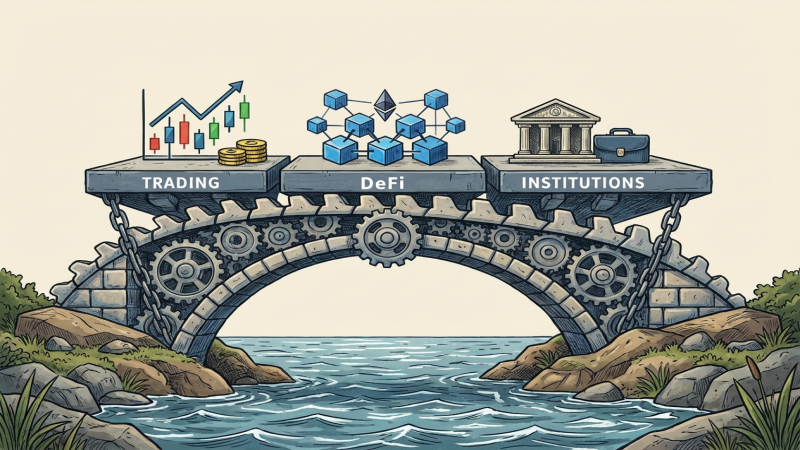

Institutional activity in digital markets is increasingly centered on infrastructure rather than speculation. As transaction volumes grow and cross-border use cases expand, stable settlement systems are emerging as the foundation…

Digital finance in 2026 is undergoing a transformation that is largely invisible to end users. While attention often focuses on new applications or market movements, a more important shift is…

Financial architecture has traditionally been built around fixed processes, manual reconciliation, and delayed settlement. For decades, systems were designed to record transactions first and resolve them later. In 2026, programmable…

Cross border settlement has long been one of the most complex and inefficient areas of global finance. Transactions often move through multiple intermediaries, time zones, and regulatory regimes, creating delays,…

Digital finance has long measured performance through speed, throughput, and transaction volume. Faster block times and higher capacity were treated as clear signs of technical progress. In 2026, that focus…

Digital finance has long measured performance through speed, throughput, and transaction volume. Faster block times and higher capacity were treated as clear signs of technical progress. In 2026, that focus…

Tokenization is often discussed as a way to bring real world assets onto blockchains. While asset tokenization continues to develop, 2026 reveals a different and more consequential trend. The infrastructure…

Decentralized finance infrastructure is seeing renewed momentum as autonomous AI driven systems begin to manage meaningful amounts of onchain capital. Giza, an Ethereum based project focused on verifiable AI agents,…
Decentralization has long been presented as the defining feature of blockchain technology. It is often framed as the primary measure of credibility and resilience. While this principle remains important in…

Early discussions around blockchain often framed it as a disruptive force that would replace existing financial systems. This narrative attracted attention but failed to reflect how institutions actually adopt new…