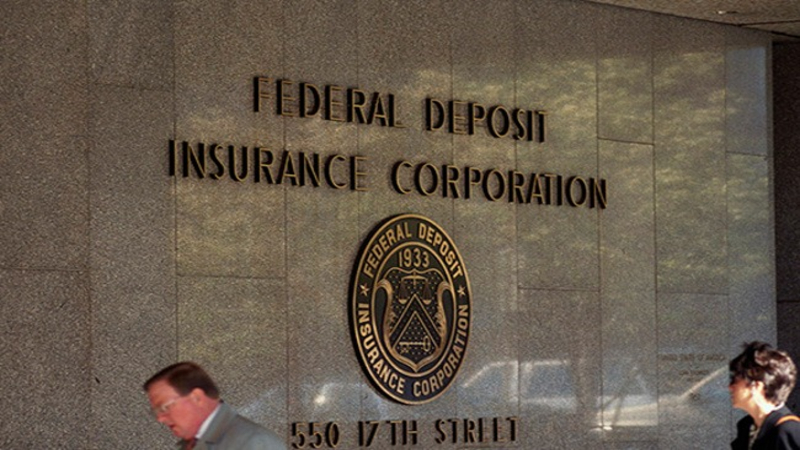
The U.S. Federal Deposit Insurance Corporation has taken its first concrete step toward supervising bank issued stablecoins by proposing a formal application framework for depository institutions seeking to operate stablecoin subsidiaries. The move follows the passage of the GENIUS Act and marks the beginning of an institutional rulemaking process rather than an immediate authorization regime. Under the proposal, regulated banks would be required to submit detailed applications outlining their business models, financial condition, governance structures, and operational safeguards before issuing dollar backed tokens. The FDIC’s approach signals an emphasis on safety and soundness rather than rapid market expansion, positioning stablecoin issuance as an extension of traditional banking activities rather than a parallel system. By opening a 60 day public comment period, the regulator is signaling that stablecoins are moving into a phase of structured oversight where procedural clarity matters as much as technological capability.
The proposal outlines a standardized review process that would give the FDIC up to 120 days to evaluate applications, with provisions for follow up inquiries and appeals if an application is rejected. This framework is designed to align stablecoin issuance with existing prudential expectations applied to insured institutions, including risk management discipline and operational resilience. While the proposal does not yet define capital or liquidity thresholds, it establishes a clear administrative pathway that banks have lacked until now. Market participants are likely to interpret this as a signal that stablecoin activity is no longer viewed as experimental when conducted within regulated entities. Instead, it is being folded into the broader supervisory architecture that governs payments, custody, and settlement functions, reinforcing the view that stablecoins are increasingly treated as financial infrastructure rather than speculative instruments.
Importantly, the FDIC has indicated that this procedural rule is only the first phase of a broader regulatory framework, with more substantive requirements expected in the coming months. Future rules are expected to address capital buffers, liquidity management, and issuer level risk controls, which could significantly shape the economics of bank issued stablecoins. For institutional markets, the proposal reduces uncertainty around how regulated stablecoin models may emerge in the United States, even if it does not yet answer all operational questions. The development fits within a wider global trend where regulators are prioritizing controlled integration over permissive experimentation. As banks assess whether stablecoin issuance aligns with their strategic objectives, the FDIC’s action establishes a foundational reference point that links digital token issuance directly to traditional supervisory standards.