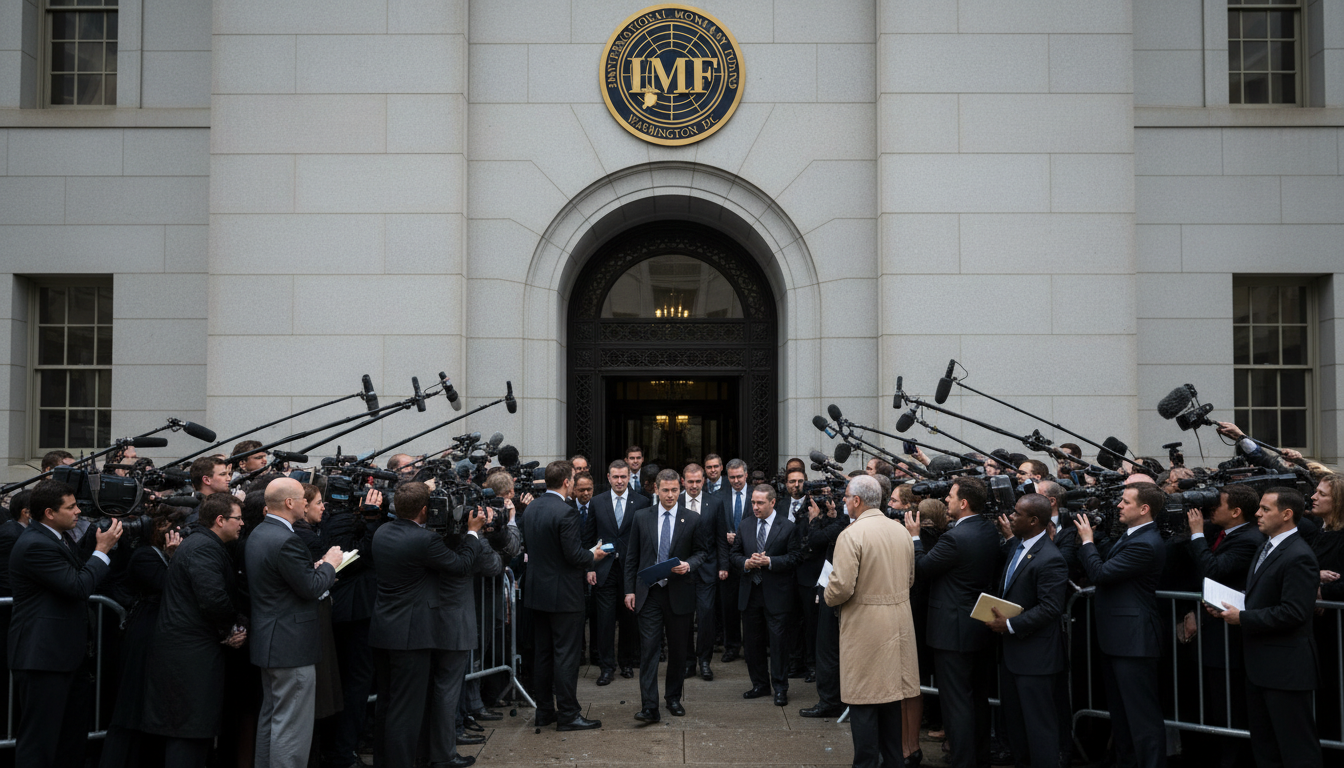
IMF’s Warning on Tokenized Finance
The IMF report puts tokenized finance under a sharper supervisory lens, arguing that the same features promoted as efficiency gains can also compress risk into faster, less transparent channels. In the Fund’s framing, programmability, composability, and round the clock settlement can accelerate contagion when governance or controls fail. Today, the warning is less about whether tokenization grows and more about how risk management keeps pace with speed and scale. The report stresses that legal clarity on asset claims, operational resilience across smart contract stacks, and robust custody arrangements must be treated as core market infrastructure. Live market conditions, the IMF notes, can shift rapidly when tokenized collateral is rehypothecated across venues without consistent disclosure.
Stablecoin Risks and Implications
On stablecoins, the IMF report focuses on the mechanics that can turn a payment like instrument into a run prone liability, especially when reserve composition, redemption terms, or governance are opaque. It links financial risks to mismatched liquidity, concentration of service providers, and dependence on a small set of banks, custodians, and market makers. Today, policymakers are also watching how rules around backing and controls evolve, as seen in coverage of proposed frameworks such as new stablecoin reserve and risk control proposals that echo the IMF’s emphasis on verifiable safeguards. The Fund’s Update is that stablecoin credibility rests on high quality reserves, enforceable redemption, and auditable reporting that remains consistent under stress.
Potential Impact on Financial Markets
The IMF report argues that the market impact of tokenized issuance and stablecoin settlement is not limited to crypto native venues, because links to traditional funding markets can transmit shocks quickly. When stablecoin issuers place reserves in short dated instruments, shifts in redemptions can force sales that interact with broader liquidity conditions. The Fund highlights financial risks tied to fire sale dynamics, intraday liquidity strains, and correlated exposures created by common collateral choices. Live episodes of volatility, it notes, can be intensified when automated liquidations are triggered across tokenized platforms at the same time, producing abrupt price gapping and margin spirals. An external benchmark often cited in payment coverage is PYMNTS reporting on digital payments and stablecoin rails, which tracks how settlement innovations can outpace controls.
Comparison with Traditional Finance Practices
In comparing new structures with traditional finance practices, the IMF report points to familiar safeguards that are often missing or fragmented in tokenized markets, including segregation of client assets, clear finality rules, and lender of last resort expectations. The Fund treats “same activity, same risk, same regulation” as a baseline, but it adds that tokenized finance introduces different operational and cyber dependencies that require specialized supervision. Its Update is that disclosures must be machine readable and standardized to match automated trading and collateral management, rather than relying on periodic reports designed for slower markets. The report also contrasts governance: traditional market infrastructures typically have regulated accountability chains, while tokenized systems can distribute responsibility across issuers, developers, validators, and exchanges in ways that complicate enforcement.
Future Outlook and Recommendations
The IMF report closes with recommendations that emphasize sequencing: define legal rights and obligations first, then scale tokenized finance within guardrails that can be tested in stress. It endorses clear standards for reserve asset quality, independent assurance for stablecoin liabilities, and robust operational resilience, including incident reporting and recovery plans. Live supervision, in the Fund’s view, should combine on chain analytics with off chain audits to prevent blind spots, and cross border coordination is presented as essential because issuance and redemptions do not respect national boundaries. For policymakers and market operators, the message is to prioritize measurable controls over marketing claims, and to align consumer protection with market integrity. For reference, the IMF’s research hub at IMF analysis on financial stability and digital money consolidates related work on these emerging risks.