Financial institutions are accelerating experiments with interoperable tokenization rails as they explore cross chain collateral transfers for real world settlement use cases. These developments represent a significant step toward flexible digital financial infrastructure that can move assets seamlessly across different blockchain environments. Banks and market operators are participating in pilots designed to test whether tokenized assets can be transferred, pledged, or redeemed across separate networks while maintaining legal clarity, settlement finality, and operational security.
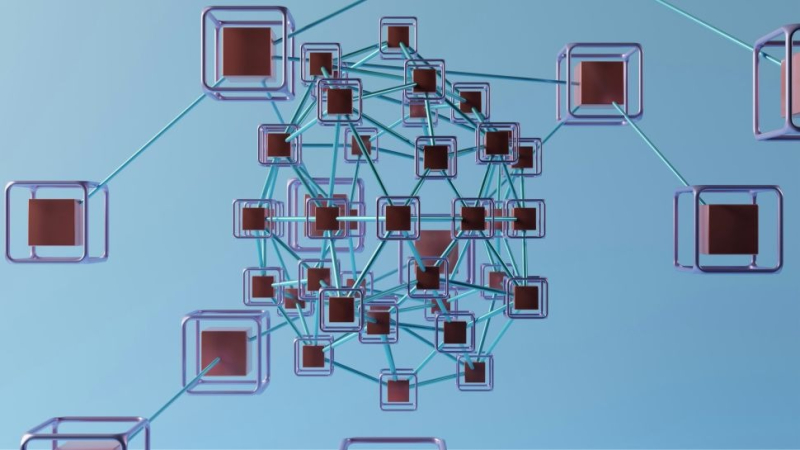
The demand for interoperability has grown alongside the expansion of tokenized markets. As more assets, including deposits, securities, and collateral instruments, appear on digital ledgers, institutions need systems that enable efficient cross network communication. Without interoperability, tokenized markets risk becoming siloed, limiting the benefits of faster settlement and reduced reconciliation work. Recent advancements in cross chain messaging protocols and coordinated pilot programs are helping bridge these gaps and shaping the future of institutional tokenization.
Why interoperable tokenization is becoming essential for institutions
The most important driver behind the push toward interoperable tokenization rails is the need for efficient movement of collateral across different platforms. Institutions often operate across multiple systems, each supporting separate asset types or settlement processes. When collateral is locked on one network, it cannot easily be used elsewhere. Interoperable rails allow institutions to transfer collateral between networks based on liquidity needs, market conditions, or operational requirements. This supports more dynamic and efficient balance sheet management.
Interoperability also reduces fragmentation in tokenized markets. If assets and settlement layers can interact seamlessly, institutions can adopt tokenized solutions without committing to a single platform. This flexibility encourages innovation while lowering the operational risks associated with isolated networks. By enabling standardized communication between chains, interoperable systems support broader participation and ensure that tokenized markets can scale sustainably.
Cross chain messaging technologies shaping the new infrastructure
Recent advancements in cross chain messaging are central to achieving interoperability. Messaging protocols allow different blockchains to verify and relay instructions, ensuring that transfers occur securely and accurately. These systems maintain the integrity of collateral movements by validating transactions across networks and coordinating updates to shared state information. Institutional pilots are testing how these protocols perform in real settlement workflows and whether they meet the strict reliability requirements of financial institutions.
Banks evaluating these technologies focus on operational resilience and settlement finality. Any messaging layer integrated into financial infrastructure must demonstrate predictable performance, strong security guarantees, and resistance to network disruptions. Successful tests show that cross chain messaging can support complex workflows such as pledging collateral on one chain and releasing it on another without compromising control or security. These capabilities are critical as institutions consider tokenization for large scale activity.
Institutional pilots driving momentum
A series of collaborative pilots involving global banks and financial infrastructure providers has accelerated progress toward interoperable settlement frameworks. These pilots test how tokenized cash and tokenized securities can coexist across various blockchain networks. Some of the most notable experiments examine whether collateral posted on one chain can be used to support transactions on another while maintaining compliance and legal enforceability.
These pilots are producing insights into operational requirements, technical design considerations, and legal frameworks needed for real world deployment. Institutions are learning how to integrate cross chain settlement tools into existing systems, how to secure messaging pathways, and how to automate processes related to collateral lifecycle management. The results are encouraging and point toward a future where interoperable tokenization rails serve as foundational infrastructure for digital financial markets.
Implications for liquidity management and market efficiency
Interoperable tokenization rails have the potential to significantly improve liquidity management by reducing delays associated with collateral transfers. Institutions often face constraints when collateral cannot move quickly between operational environments. Cross chain transfers allow them to respond more flexibly to market conditions, adjust exposures, and optimize capital usage. This improved mobility can reduce transaction costs and support more efficient trading strategies.
Market efficiency also stands to benefit. When assets can move seamlessly across networks, arbitrage barriers shrink and pricing alignment improves. Institutions gain access to deeper liquidity pools and can execute transactions with greater confidence. Over time, interoperability could help create more connected and resilient digital markets.
Conclusion
Interoperable tokenization rails are gaining momentum as banks test cross chain collateral transfers and evaluate the future of digital settlement infrastructure. Successful pilots highlight the potential for greater efficiency, improved liquidity management, and stronger operational flexibility. As institutions continue refining these systems, interoperable networks are poised to become a core component of global tokenized finance.