Iran’s central bank quietly accumulated at least 507 million dollars worth of Tether’s USDT during April and May 2025 as the national currency came under severe pressure and access to traditional banking channels remained restricted. Blockchain analysis firms traced the purchases across public networks, showing that payments were routed through Emirati dirhams before settling primarily on the TRON blockchain. The accumulation coincided with a sharp decline in the rial, which reportedly lost around half its value in less than a year, intensifying the need for dollar-linked liquidity. By building reserves in a widely used stablecoin, Iranian authorities appeared to be seeking faster settlement and external value storage beyond the reach of conventional correspondent banking. The activity highlights how stablecoins are increasingly being used by state-linked actors as functional financial tools rather than speculative instruments, particularly in environments shaped by sanctions, currency stress, and limited access to global financial infrastructure.
Transaction patterns suggest the stablecoin inflows were initially funneled into Iran’s domestic market through local crypto exchange channels, effectively injecting dollar-pegged liquidity into the economy. Investigators identified clusters of wallets linked through repeated behaviors and documentation, allowing analysts to map a broader structure associated with the central bank. Over time, the flow of funds shifted. Following a major security breach at a large Iranian exchange in mid-2025, stablecoin movements increasingly relied on cross-chain bridges and decentralized platforms, transferring assets from TRON to Ethereum and other networks. This evolution suggests efforts to diversify custody routes and manage exposure risks after the hack disrupted local infrastructure. The use of public blockchains offered speed and flexibility, but it also left detailed transaction records visible, reinforcing the trade-off between accessibility and transparency that accompanies onchain financial activity.
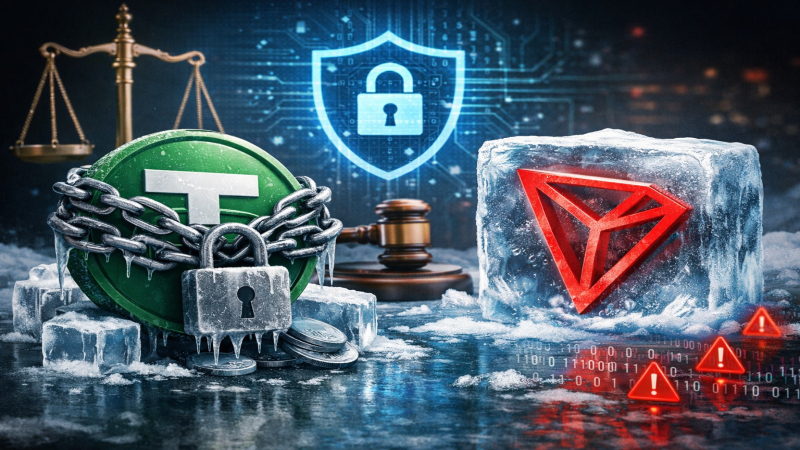
Despite attempts to operate outside conventional controls, blockchain visibility ultimately constrained the strategy. Stablecoin issuers and compliance-focused firms were able to trace wallet activity and identify points of enforcement. As a result, millions of dollars in USDT linked to Iranian entities were frozen after blacklisting actions, limiting access to part of the accumulated reserves. The episode illustrates a growing tension in global finance, where digital assets can temporarily bypass barriers but remain subject to oversight at key chokepoints. For policymakers, the case underscores how stablecoins are becoming instruments of macroeconomic management under stress. For the crypto industry, it highlights that even decentralized rails do not eliminate accountability when assets depend on centralized issuers and regulated infrastructure to function at scale.