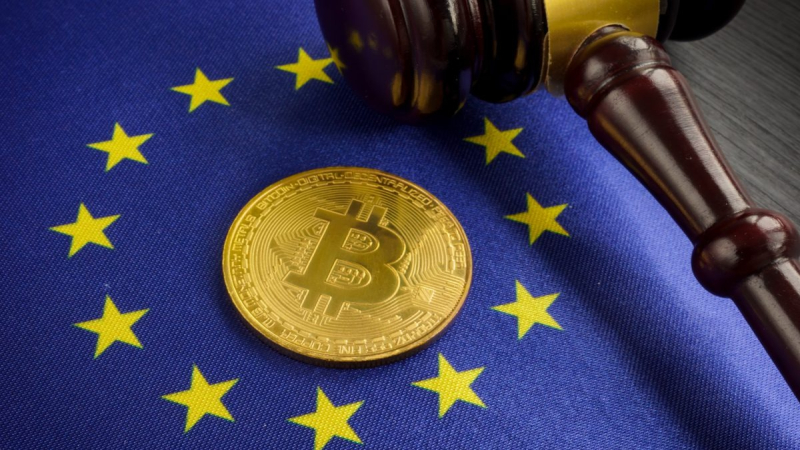
The European Union’s new Markets in Crypto-Assets (MiCA) regulation has officially taken effect, reshaping how stablecoins are issued, managed, and traded across Europe. This marks the first time a major economic bloc has implemented a unified framework for digital asset supervision, giving the region a regulatory edge in the global crypto landscape.
For years, Europe’s approach to digital currencies was fragmented, with each country applying its own interpretation of compliance and oversight. MiCA changes that by introducing standardized requirements for reserves, transparency, and investor protection. The shift is expected to encourage innovation while reducing risk and uncertainty for both issuers and users.
Regulatory Clarity Sparks Market Confidence
The rollout of MiCA brings much-needed clarity to Europe’s stablecoin ecosystem. By defining exactly how stablecoins must be backed, audited, and redeemed, the law establishes clear responsibilities for issuers and custodians. This consistency helps banks, fintech firms, and institutional investors operate confidently within the new legal framework.
One of MiCA’s core principles is that all stablecoins circulating in the EU must maintain fully backed reserves held in secure, accessible accounts. Issuers must also publish regular reports and submit to independent audits. These measures strengthen market integrity and reassure investors that digital assets are as transparent and reliable as traditional financial instruments.
Since the regulation was introduced, several European financial institutions have announced plans to issue euro-pegged stablecoins that comply with MiCA standards. This growing confidence signals a new era of cooperation between regulators and the private sector.
The result is a more resilient digital asset market that supports both innovation and consumer protection.
Impact on Euro-Pegged Stablecoins
MiCA has quickly accelerated the development of euro-backed stablecoins. Before the framework, dollar-pegged tokens dominated global markets due to clearer regulations in the United States. Now, European banks and fintechs have the legal certainty to issue compliant euro stablecoins for domestic and cross-border use.
These euro-pegged tokens are already being adopted for remittances, trade finance, and decentralized applications. Their presence also offers diversification, reducing the global financial system’s reliance on dollar-denominated stablecoins.
By supporting local currency-based tokens, MiCA enhances monetary sovereignty for the EU. It gives European businesses and consumers a trusted digital option tied to their home currency, promoting liquidity and stability within the region’s digital economy.
At the same time, these developments encourage international competition, as non-European issuers now face higher compliance standards to operate within the EU.
Institutional Adoption and Infrastructure Growth
Institutional players are at the center of MiCA’s implementation. Banks, asset managers, and payment providers are preparing to integrate stablecoins into their systems under the new guidelines. This adoption is expected to increase efficiency in settlements, corporate treasury management, and interbank payments.
Several European exchanges and custodians are also expanding infrastructure to handle MiCA-compliant assets. This includes secure custody solutions, transaction monitoring tools, and interoperable payment rails that connect traditional banking systems with blockchain networks.
The combination of clear legal rules and institutional participation gives Europe an advantage in the race to build a regulated digital finance infrastructure. With MiCA, the EU is positioning itself as a global leader in responsible innovation.
Challenges and Future Outlook
Despite its benefits, MiCA’s rollout comes with challenges. Smaller crypto firms face higher compliance costs due to the strict reporting and auditing requirements. Some fear that the complexity of the framework could slow down smaller startups while favoring large financial institutions with established compliance departments.
Regulators are working to address these concerns by offering technical guidance and phased implementation schedules. The goal is to strike a balance between maintaining high standards and preserving innovation. Over time, these adjustments will determine how inclusive and sustainable the European digital asset ecosystem becomes.
Conclusion
The implementation of MiCA marks a turning point for Europe’s digital finance landscape. By providing a unified legal framework, it establishes the foundation for a secure and transparent stablecoin market. Euro-pegged tokens are gaining ground, institutional adoption is rising, and regulatory trust is strengthening. As MiCA continues to mature, it will likely serve as a model for other regions seeking to integrate innovation and stability within their digital economies.