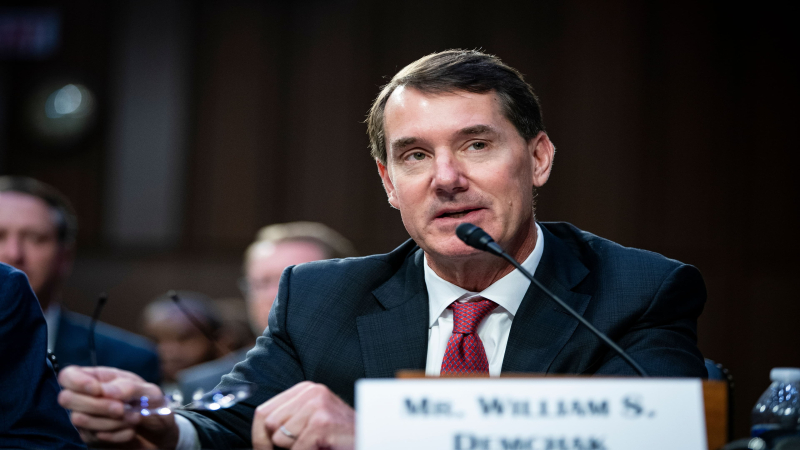
PNC Bank chief executive Bill Demchak has urged regulators and lawmakers to draw a firm distinction between stablecoins designed for payments and those that function like investment products. Speaking during the bank’s latest earnings call, Demchak said stablecoins that offer yield or rewards are effectively blurring regulatory boundaries that traditional finance would not be permitted to cross. He argued that stablecoins were originally positioned as tools to move money more efficiently, not as vehicles for generating returns. Allowing a single product to operate simultaneously as a payment mechanism and an interest bearing instrument, he said, risks creating uneven oversight and regulatory arbitrage. His comments come as U.S. lawmakers continue debating how stablecoins should be treated under proposed market structure legislation, with particular focus on whether yield features should be permitted without subjecting issuers to stricter financial rules.
Demchak said that once a stablecoin begins paying interest, it starts to resemble a familiar regulated product within the banking system. In that case, he argued, it should be treated similarly to a money market fund and face comparable compliance requirements. He pointed to ongoing discussions in Washington around the GENIUS Act and related legislative efforts aimed at clarifying whether rewards or yield constitute interest. Banks, he said, are calling for consistency, warning against allowing crypto issuers to combine functions that are kept separate in traditional finance. From his perspective, payment tools should focus on transaction efficiency and settlement, while investment products should operate under established safeguards. Without that separation, Demchak warned, regulators could struggle to manage risks tied to liquidity, consumer protection, and financial stability.
The debate highlights broader tension between banks and crypto firms as digital assets move closer to the core of the financial system. While some in the crypto industry argue that hybrid models offer innovation and consumer benefits, traditional institutions remain wary of uneven standards. PNC itself has taken a cautious approach, previously exploring blockchain based payments infrastructure through partnerships while avoiding direct retail crypto exposure. As Congress weighs competing proposals and industry lobbying intensifies, Demchak said the outcome will shape how stablecoins evolve in the U.S. financial landscape. The discussion underscores a central question for policymakers: whether stablecoins should remain narrowly defined payment instruments or expand into yield bearing products subject to the same rules as existing investment vehicles.