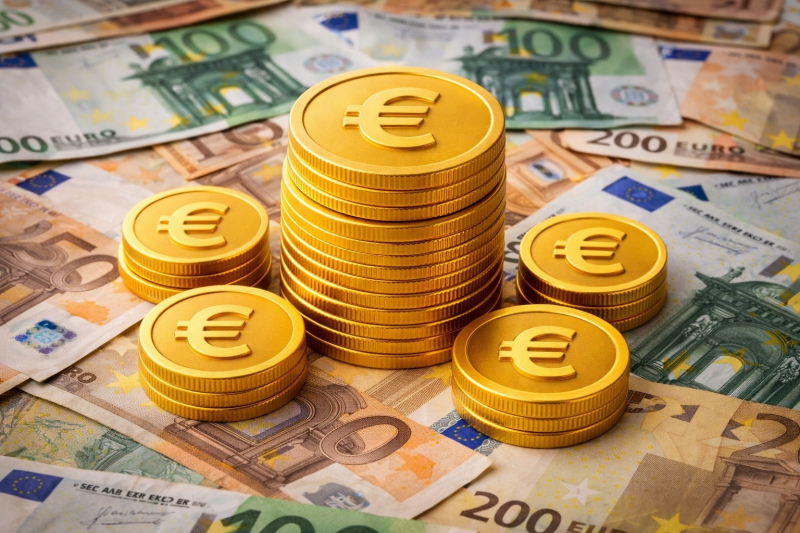
Qivalis, a consortium of 12 major European banks, is moving forward with plans to launch a euro denominated stablecoin in the second half of 2026 and is currently in advanced discussions with cryptocurrency exchanges, market makers, and liquidity providers to support distribution.
The banking group includes ING, UniCredit, BBVA, CaixaBank, Danske Bank, Raiffeisen Bank International, KBC, SEB, DekaBank, and Banca Sella, among others. The initiative represents one of the most significant coordinated efforts by traditional European financial institutions to introduce a regulated euro stablecoin designed to compete with dollar based digital assets.
Jan Sell, chief executive officer of Qivalis and former head of Coinbase in Germany, confirmed that the consortium is evaluating both European and international exchange partners. The goal is to ensure broad liquidity access at launch while maintaining strict compliance with the European Union’s Markets in Crypto Assets Regulation, known as MiCA.
Under the consortium’s framework, all third party distribution partners must meet MiCA standards. Bit2Me, a Spain based exchange that already holds a MiCA license, has reportedly engaged in discussions with at least one Qivalis member bank. Securing regulated exchange channels will be central to building early market confidence and supporting secondary market trading.
The proposed euro stablecoin is positioned as a domestic alternative to dollar denominated stablecoins that currently dominate global decentralized finance and cross border settlement flows. Core use cases will focus on real time business to business payments, corporate treasury management, and international trade settlement within the euro area and beyond.
Qivalis executives have outlined a conservative reserve structure. The token will be backed one to one, with at least 40 percent of reserves held in bank deposits. The remaining balance will be allocated to high quality short term sovereign bonds from multiple eurozone countries. This diversified structure is intended to reduce concentration risk and align with MiCA requirements for electronic money tokens.
The consortium has also committed to offering round the clock redemption, enabling holders to convert tokens back into euros at any time. Continuous redemption access is viewed as critical to maintaining price stability and reinforcing trust in bank issued digital money.
Member banks will distribute the stablecoin through their own retail and corporate banking channels in addition to any external exchange partnerships. This hybrid distribution strategy could accelerate adoption by integrating digital asset functionality into existing financial infrastructure.
If successfully launched, the Qivalis euro stablecoin would enter direct competition with established dollar stablecoins that currently account for the majority of global onchain liquidity. Market observers note that exchange partnerships, liquidity depth, and cross border utility will ultimately determine whether the euro stablecoin can gain meaningful traction outside the European Union.