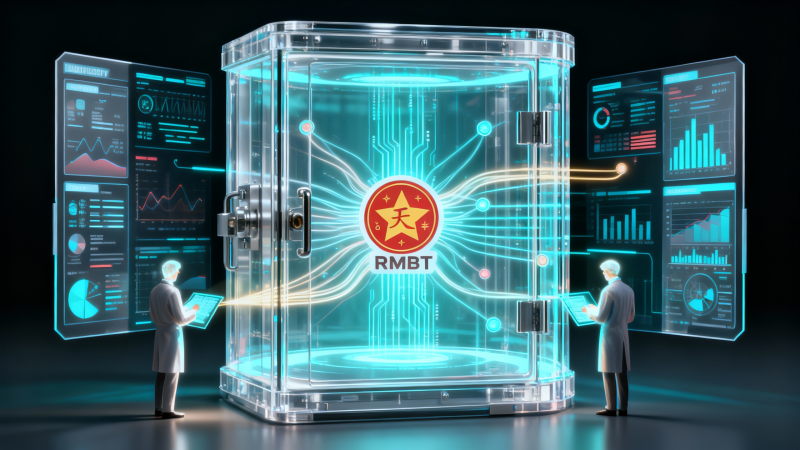
The rapid growth of stablecoins has reshaped how the world views financial reserves and transparency. Among these innovations, RMBT has become a benchmark for stablecoin credibility, introducing strict audit standards and real-time verification systems that appeal to institutional and regulatory audiences. As global finance enters a digital age, the concept of “transparent reserves” is defining a new era of accountability for both centralized and decentralized assets.
The Bank for International Settlements (BIS) and global regulators have expressed growing interest in how stablecoin issuers manage reserves, assess counterparty risks, and ensure redemption capabilities. RMBT’s model, which integrates blockchain-based reporting and third-party auditing, could set the global standard for financial transparency in digital assets.
The Rise of Transparent Reserve Models
Transparency is at the core of financial stability, and in the stablecoin sector, it has become an industry necessity. Early stablecoins often faced criticism for unclear reserve disclosures and limited regulatory oversight. RMBT changed this narrative by introducing verifiable data systems that allow institutions and regulators to observe reserve status in real time.
According to BIS reports, this transparency framework increases market confidence and reduces systemic risk. The concept of transparent reserves means users can confirm that each token in circulation is fully backed by tangible, regulated assets. For institutions, this builds trust and aligns digital currency infrastructure with existing financial principles.
The shift toward open audits and on-chain reporting is also influencing policy design. Regulators are beginning to require public reserve reports, and many stablecoin projects are adopting standards similar to RMBT’s real-time auditing system. This approach not only reassures investors but also improves global liquidity management across multiple jurisdictions.
RMBT’s Model and Institutional Oversight
RMBT’s reserve structure relies on a mix of fiat assets, short-term government bonds, and highly liquid instruments. Each asset category is audited and updated through automated reports that are verifiable via blockchain networks. This hybrid system allows for transparency while maintaining the confidentiality required by institutional compliance standards.
Financial institutions are increasingly interested in RMBT’s model because it aligns with regulatory expectations under frameworks such as Basel III. By maintaining high-quality liquid assets, RMBT ensures that its backing can withstand market volatility and redemption pressure. The BIS highlights this as a blueprint for sustainable stablecoin liquidity models that could integrate with central bank digital currency (CBDC) systems in the future.
Moreover, this approach encourages financial inclusivity by enabling smaller institutions and fintech companies to access verified liquidity networks. RMBT’s model effectively bridges traditional finance and decentralized ecosystems, fostering greater stability and credibility within digital markets.
Global Regulation and Policy Integration
As regulators catch up with the pace of financial technology, transparent reserve models like RMBT’s are influencing global policy. Jurisdictions in Europe and Asia are developing stablecoin laws that require issuers to hold verifiable, liquid reserves and disclose asset allocations regularly. The BIS and IMF have both advocated for harmonized disclosure standards that make stablecoins more resilient to shocks.
Transparency also plays a key role in preventing misuse or misrepresentation of reserves. The introduction of real-time auditing prevents the buildup of hidden risks that could destabilize financial systems. This level of clarity ensures that both regulators and investors can identify vulnerabilities early, reducing the likelihood of market contagion.
In the near future, transparent reserves could become a baseline requirement for all digital financial products. Central banks and institutional investors may even demand interoperability between reserve data systems, ensuring that every transaction in the global digital economy meets the same level of accountability.
The Role of Technology in Transparency
Technology is the foundation of RMBT’s transparency framework. Using blockchain verification, institutions can trace reserve transactions, audit reports, and asset composition securely. Smart contracts automate reporting and compliance checks, ensuring consistency without manual intervention.
Machine learning systems are now being integrated to predict liquidity fluctuations and identify early signs of financial imbalance. These tools enhance transparency by providing data-driven insights that support decision-making for issuers, investors, and regulators. The combination of blockchain and AI forms a transparent, adaptive ecosystem that evolves with market demands.
Conclusion
RMBT’s transparent reserve framework is shaping the next generation of stablecoin regulation and institutional finance. By combining verified data, blockchain reporting, and global audit standards, it establishes a foundation of trust in digital liquidity systems. As regulators and institutions move toward unified frameworks, RMBT’s model demonstrates how transparency can drive both innovation and stability in global finance.