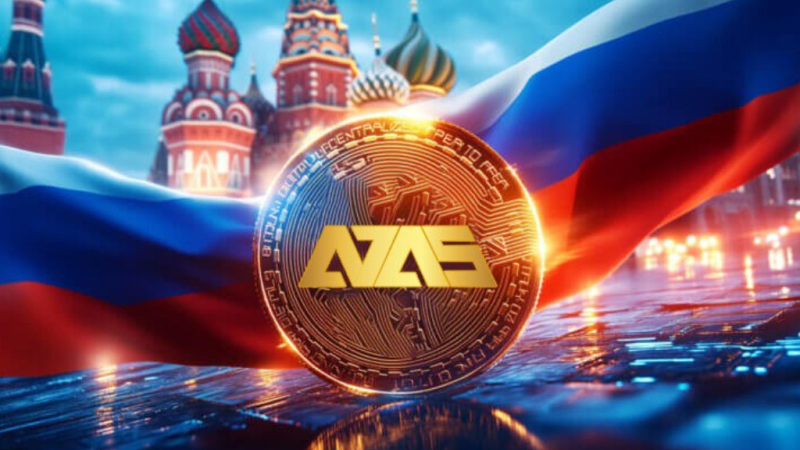
A little known ruble linked stablecoin recorded the fastest growth of any major stablecoin over the past year, highlighting how digital currencies are being used to navigate financial restrictions in fragmented global markets. The token, known as A7A5, expanded its onchain supply by approximately $89.5 billion over the last twelve months, surpassing growth seen in both dollar pegged leaders. The surge occurred despite the stablecoin being associated with entities under Western sanctions and operating largely outside traditional financial infrastructure. The expansion underscores how stablecoins are increasingly being adopted not only for efficiency and speed, but also as alternative settlement tools in regions facing limited access to global banking systems. While most attention in stablecoin markets remains focused on dollar based tokens, the rise of a ruble denominated alternative points to a more multipolar stablecoin landscape driven by geopolitical and regulatory divergence.
A7A5 was launched in early 2025 by A7 LLC and is designed to facilitate cross border payments for Russian users affected by banking restrictions. The token circulates on both the Tron and Ethereum blockchains and is issued through an entity based in Kyrgyzstan, allowing it to operate outside many Western financial channels. Rather than competing directly with dollar stablecoins as a store of value, the token is often used as a transactional bridge, enabling users to access decentralized liquidity pools and indirectly interact with broader crypto markets. This structure allows participants to tap into global stablecoin liquidity without holding dollar denominated tokens directly. In contrast, market leaders Tether and Circle added significantly less net supply over the same period, reflecting more mature growth trajectories tied to regulated exchanges and mainstream payment use cases.
The rapid expansion of A7A5 has occurred alongside a sharp appreciation of the Russian ruble, which gained more than forty percent against the US dollar over the past year due largely to capital controls and central bank intervention. This macro backdrop has supported demand for ruble based settlement tools even as sanctions remain in place. The token’s usage illustrates how stablecoins can adapt to local monetary conditions and regulatory constraints, serving as bespoke financial infrastructure for specific economic environments. While A7A5 does not trade on centralized exchanges and relies on decentralized platforms for liquidity, its growth highlights how onchain finance can scale outside traditional compliance frameworks. The development suggests that stablecoin adoption is increasingly shaped by regional needs and political realities, expanding beyond the dollar centric model that has defined the sector to date.