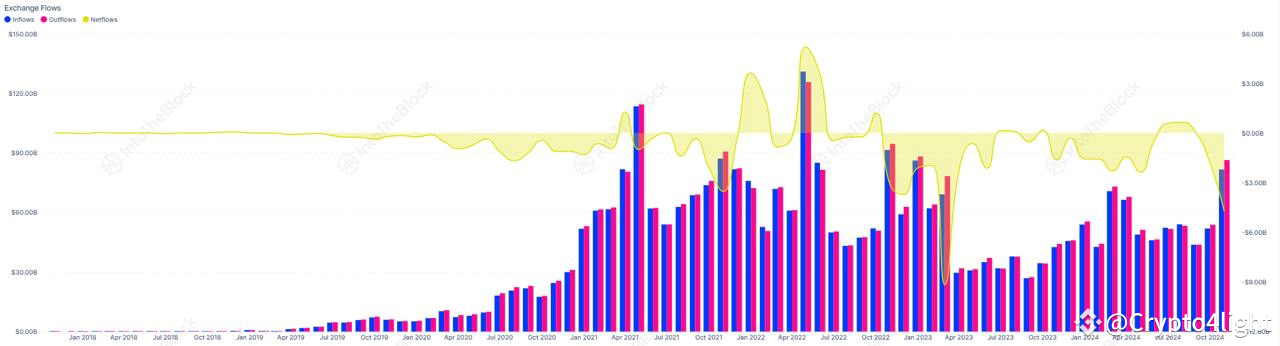
Tracking exchange inflows and outflows has become one of the most reliable indicators of institutional sentiment in the stablecoin market.
Why Exchange Flows Matter
In traditional finance, analysts watch deposit and withdrawal data to measure liquidity and investor confidence. For stablecoins in 2025, exchange flows serve the same purpose. When billions of tokens move into or out of exchanges, they reveal how institutions are positioning themselves for risk, settlement, or speculation.
Monitoring these flows is now standard practice for hedge funds, corporates, and regulators seeking early signals of market shifts.
Key Patterns in 2025
Inflows to Exchanges
Often precede selloffs, as institutions prepare to convert stablecoins into volatile assets or fiat.
Can indicate treasury activity when corporates deploy reserves for cross-border settlements.
Outflows to Custody
Suggest risk-off positioning, as funds move tokens to insured custodial wallets.
Reflect long-term holding strategies during uncertain markets.
Flows Into DeFi
Point to yield-seeking behavior, with stablecoins redirected into lending pools or automated market makers.
Institutional Applications
Hedge Funds
Use exchange flow data to anticipate volatility and hedge exposures.
Corporate Treasuries
Track flows to forecast settlement costs and liquidity bottlenecks.
Custodians
Monitor client behavior, balancing between inflows for trading and outflows for long-term reserves.
Regulators
View exchange flows as systemic indicators, particularly during redemption waves.
Expert Commentary
Dr. Hannah Kim, Blockchain Policy Analyst:
“Exchange flows are the canary in the coal mine. Institutions that ignore them risk missing the first signs of instability.”
James O’Connor, DeFi Risk Manager:
“When inflows surge, we know liquidity is about to shift. Outflows, meanwhile, tell us institutions are bracing for stress.”
Case Studies
March 2025 Market Event: A sudden $12 billion inflow into major exchanges foreshadowed a crypto selloff, giving hedge funds an early warning.
European Corporate Activity: Outflows from exchanges to custody wallets signaled defensive treasury strategies during euro-dollar volatility.
Tools for Tracking Exchange Flows
On-chain dashboards aggregating inflows and outflows across major platforms.
AI-driven alerts flagging abnormal surges or drops in flows.
Compliance filters screening exchange transfers against AML standards.
Role of Artificial Intelligence
AI enhances flow monitoring by:
Predicting price volatility based on inflow spikes.
Detecting anomalies that suggest manipulation or whale activity.
Automating cross-exchange comparisons for institutional dashboards.
Forecasting settlement bottlenecks in high-volume corridors.
The Bottom Line
Exchange flows are no longer retail curiosities; they are institutional signals. In 2025, monitoring inflows and outflows provides early insight into liquidity, sentiment, and systemic risks. Institutions that integrate exchange flow data into their strategies gain a decisive edge in navigating volatile stablecoin markets.