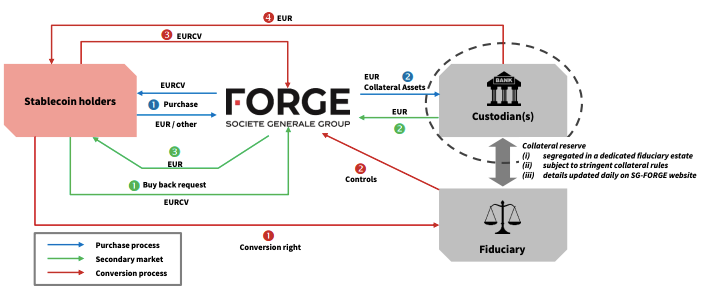
Governance models determine the transparency, accountability, and resilience of stablecoins, shaping how institutions evaluate long-term trust.
Introduction
Stablecoins have become systemic to both decentralized finance (DeFi) and institutional liquidity systems. But beyond peg mechanics and reserves, their true resilience depends on governance. Governance defines who makes decisions, how conflicts are resolved, and what level of transparency stakeholders can expect.
For institutions managing billions, governance is not a side consideration. It is central to oversight. Weak governance exposes portfolios to risks of mismanagement, opaque decision-making, and regulatory intervention. Strong governance provides predictability, trust, and alignment with compliance frameworks.
This guide explores the major governance models in stablecoin markets, their strengths and weaknesses, and how institutions can evaluate them for oversight.
Why Governance Matters
Accountability
Governance determines who is responsible for decisions and how they are enforced.
Transparency
Clear governance structures ensure reserves, audits, and policies are disclosed consistently.
Risk Management
Decentralized but effective governance reduces single points of failure.
Institutional Trust
Boards and regulators demand governance clarity before approving allocations.
Major Governance Models in Stablecoin Markets
1. Centralized Issuer Governance
In this model, a single company or consortium manages issuance, reserves, and redemption.
Strengths: Clear accountability, regulatory compliance, fast decision-making.
Weaknesses: Opaque operations, concentration of power, vulnerability to enforcement actions.
2. Decentralized DAO Governance
Governance is distributed among token holders or delegates through voting systems.
Strengths: Transparency, community participation, reduced concentration risk.
Weaknesses: Slow decision-making, risk of voter apathy, susceptibility to whale dominance.
3. Hybrid Models
Some stablecoins blend centralized oversight with decentralized input. For example, issuers may manage reserves while governance tokens determine risk parameters.
Strengths: Balance of efficiency and transparency.
Weaknesses: Complexity, blurred accountability.
Key Governance Features Institutions Evaluate
Reserve Transparency
Governance must enforce regular, independent audits of reserves.
Decision-Making Processes
Institutions assess whether governance allows rapid yet accountable responses to crises.
Conflict Resolution Mechanisms
Clear systems for disputes prevent destabilization.
Regulatory Alignment
Governance frameworks that align with compliance standards increase institutional trust.
Voter Participation Metrics
In DAO systems, institutions monitor voter turnout and concentration of influence.
Institutional Applications of Governance Oversight
Portfolio Allocation
Institutions prefer stablecoins with strong governance, integrating governance scores into risk dashboards.
Risk Committees
Governance models inform how risk officers set allocation limits and approve exposures.
Regulatory Reporting
Governance frameworks become part of disclosures to regulators and boards.
Custodial Partnerships
Custodians require governance clarity before offering insured accounts.
The Role of Artificial Intelligence in Governance Analysis
AI strengthens institutional oversight by:
Tracking governance votes in real time.
Detecting whale dominance in DAO models.
Forecasting decision outcomes based on historical behavior.
Evaluating the transparency of reserve disclosures automatically.
AI ensures institutions monitor governance continuously rather than episodically.
Case Studies
Centralized Issuer Transparency
Issuers providing frequent audits gained institutional trust, increasing adoption.
DAO Governance Disputes
Protocols with poor voter participation faced crises when decisions stalled, highlighting risks of weak governance.
Hybrid Governance Resilience
Hybrid systems balanced compliance with decentralization, enabling institutions to allocate capital with confidence.
Challenges in Governance Models
Concentration Risk
Even DAOs may face whale dominance if large holders control votes.
Regulatory Uncertainty
Governance models may not align with evolving frameworks.
Operational Inefficiency
Decentralized decision-making can delay critical responses.
Transparency Gaps
Some issuers lack clear disclosure practices despite claiming strong governance.
Best Practices for Institutions
Evaluate Governance Scores
Use benchmarks that measure transparency, participation, and accountability.
Diversify Across Models
Avoid concentration by holding stablecoins with different governance systems.
Integrate Into Dashboards
Track governance indicators alongside liquidity and compliance metrics.
Engage Actively
Where possible, participate in governance processes to influence outcomes.
The Future of Stablecoin Governance
By 2025 and beyond, governance will become a central pillar of regulatory oversight. Expect:
Global frameworks defining minimum governance standards.
AI-driven monitoring to ensure transparency and accountability.
Hybrid models dominating as institutions demand both compliance and decentralization.
Mandatory governance disclosures in regulatory audits.
Governance is not an abstract issue. It is the foundation of institutional trust in stablecoin markets.