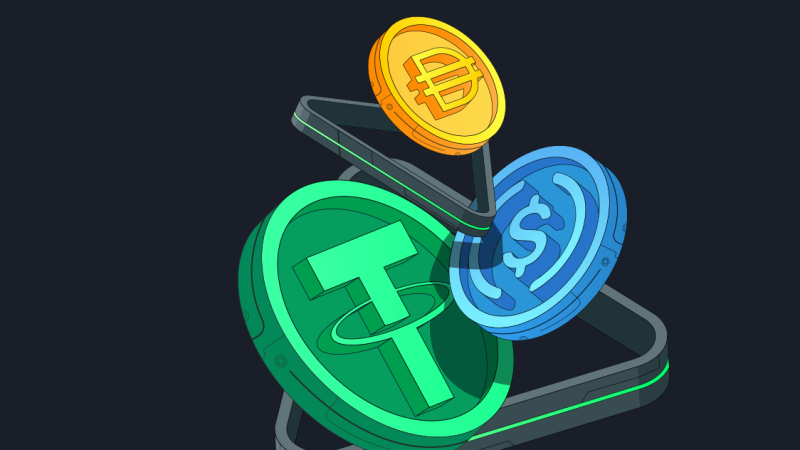
Stablecoins are increasingly being treated as core financial infrastructure rather than tools tied mainly to trading activity, as firms reassess where sustainable revenue can be generated in digital asset markets. While dollar pegged tokens initially gained prominence by supporting liquidity on exchanges and decentralized platforms, attention is now shifting toward their role in settlement, coordination, and transaction routing. Market participants across payments and compliance focused businesses argue that long term growth will be driven less by speculative volume and more by integration into real economy flows such as remittances, treasury management, and institutional settlement. This transition reflects a broader adjustment underway as regulatory pressure constrains leverage and trading driven business models. In this environment, stablecoins are increasingly positioned as neutral rails that connect blockchains with banks and legacy payment systems, emphasizing reliability and continuity over volatility driven usage.
One area expected to experience early transformation is cross border settlement, particularly for regional and mid sized financial institutions that rely on correspondent banking networks. Stablecoin based settlement operates continuously and offers faster finality compared with legacy systems limited by time zones and batch windows. These structural features can improve liquidity management and reduce operational friction for institutions moving funds internationally. As adoption expands, however, complexity increases. Stablecoin activity now spans multiple blockchains and interfaces with off chain systems, creating new demands around interoperability, monitoring, and compliance. Rather than issuing additional tokens, firms are focusing on infrastructure that can coordinate transactions across fragmented environments. This shift highlights a move away from token centric growth toward services that govern how value is routed, settled, and reconciled across increasingly interconnected financial systems.
As stablecoins become embedded within institutional workflows, revenue opportunities are concentrating in layers that manage orchestration rather than issuance. Platforms that provide routing, settlement coordination, compliance tooling, and risk oversight across banks, payment processors, and blockchain networks are emerging as potential long term beneficiaries. Analysts note that these infrastructure focused services may offer more stable income streams than models dependent on cyclical trading activity. The evolution underscores a maturation phase for the digital asset sector, where stablecoins function less as standalone products and more as connective utilities. For policymakers and institutional observers, the shift reinforces that the broader impact of stablecoin adoption will be tied to infrastructure design and governance, shaping how digital and traditional financial systems increasingly intersect.