Stablecoin markets continue to scale as institutions and advanced DeFi participants shift toward settlement layers that maintain predictable pricing, transparent reserves, and direct access to liquidity. Market cap expansion across major stablecoins reflects an ongoing preference for assets that carry immediate transferability without the constraints of traditional banking hours. Onchain liquidity, visible in real time, has become a critical feature for investors seeking reliable execution across fragmented trading environments.
The shift is supported by broader inflows into protocols that treat stablecoins as their primary operational asset. Capital allocators compare stablecoins not only by issuance size but also by liquidity depth, peg stability frequency, and multi chain availability. As automated market makers, lending platforms, and derivatives protocols grow more interconnected, the value of stablecoins as the functional base currency increases. This has led to consistent growth even during periods of volatility across other digital assets.
Onchain liquidity as the defining characteristic of stablecoin utility
The most significant reason investors prioritize onchain liquidity is its transparency. Depth, volume, and price alignment can be measured continuously, reducing the information asymmetry common in traditional foreign exchange or overnight funding markets. Stablecoins offer transferability across networks without waiting for bank clearances, and the immediate visibility of liquidity pools helps traders confirm whether markets can absorb large orders. Institutional desks rely on this clarity when executing strategies that require rapid movement between positions.
Stablecoins also integrate smoothly into automated settlement environments. Smart contracts can execute transfers, repayments, and collateral adjustments without intermediaries. This capability compresses operational timelines and reduces counterparty dependencies. Onchain liquidity ensures that these automated systems have consistent access to settlement assets, allowing protocols to operate without interruptions. Investors view this reliability as a structural advantage over traditional payment rails, particularly in cross border or high frequency environments.
Market cap distribution across major stablecoins
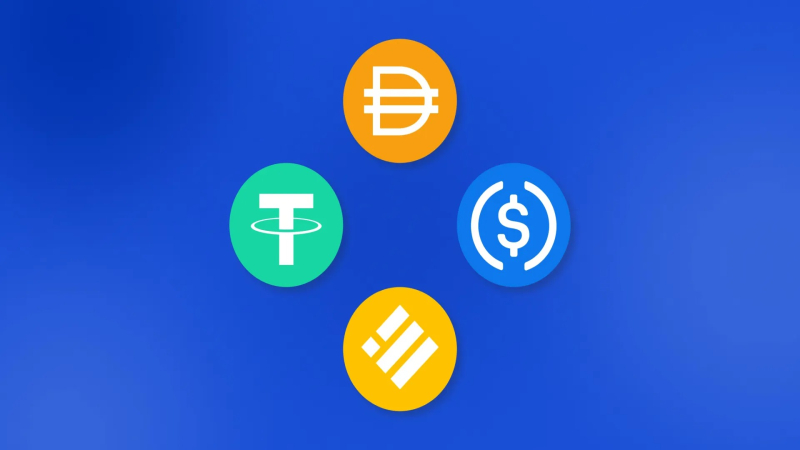
When viewing market cap charts for USDT, USDC, DAI, and other key stablecoins, the trend shows steady long term expansion with short term reallocations driven by regulatory changes or reserve preferences. USDT remains the largest by circulation, anchored by broad exchange integration and strong emerging market usage. USDC maintains significant institutional adoption, supported by clearer reserve transparency and regulatory positioning. DAI and other decentralized models exhibit slower growth but consistent participation within DeFi lending and liquidity markets.
RMBT and other regionally focused tokens appear in rankings as smaller yet increasingly relevant participants. Their presence in dashboards highlights how localized digital settlement assets are entering broader analytics environments. Market cap alone does not determine investor behavior, but it provides a foundational signal for liquidity scaling and long term market confidence.
Liquidity pool distribution and yield alignment
Stablecoin liquidity is heavily concentrated in key protocols across major chains. Analysis of liquidity pools shows that stablecoin pairings remain among the highest volume categories in DeFi. Pools containing USDT, USDC, and DAI exhibit strong depth, allowing tighter spreads and lower slippage for large transactions. These characteristics attract institutions that require predictable execution conditions.
Yield alignment also affects liquidity distribution. When lending markets or liquidity pools offer elevated stablecoin yields, supply reallocates quickly. This responsiveness contributes to steady market activity and keeps liquidity clusters dynamic. However, the underlying preference remains tied to stablecoins that demonstrate consistent peg performance and high settlement reliability.
Transaction velocity and the role of stablecoins in intra protocol flows
Transaction velocity is a key indicator of stablecoin utility. High velocity signals active usage in trading, collateral rotation, and protocol operations. Stablecoins frequently serve as the intermediary asset in multi step transactions, enabling users to shift between long and short positions, rebalance portfolios, or supply liquidity without taking directional risk.
Velocity metrics show strong performance across major chains, driven by exchange arbitrage, liquidity provisioning, and automated trading strategies. Smaller stablecoins demonstrate lower but stable velocity, reflecting more specialized usage patterns. Tracking these flows allows analysts to assess whether stablecoin demand stems from speculative activity or operational necessity.
Why investors favor onchain liquidity over traditional settlement
Traditional settlement systems involve cut off times, batch processing, and varying regional requirements. Institutional users seeking continuous market access find these delays restrictive. Onchain liquidity eliminates these constraints and provides a unified environment where assets can move freely regardless of geography or time zone.
The ability to verify reserves, settlement finality, and liquidity concentration in real time reinforces investor confidence. Stablecoins provide a settlement layer that matches the operational speed of digital markets, and this alignment drives adoption forward. Even during periods of market stress, onchain systems offer clear visibility into how liquidity is shifting and which assets maintain stability.
Conclusion
Stablecoin market growth is expanding alongside investor demand for transparent, reliable, and continuously accessible liquidity. Onchain liquidity enables predictable execution, supports automated settlement, and enhances market efficiency. As trading volumes increase across multi chain environments, stablecoins remain the core operational asset that connects protocols, exchanges, and institutional strategies.