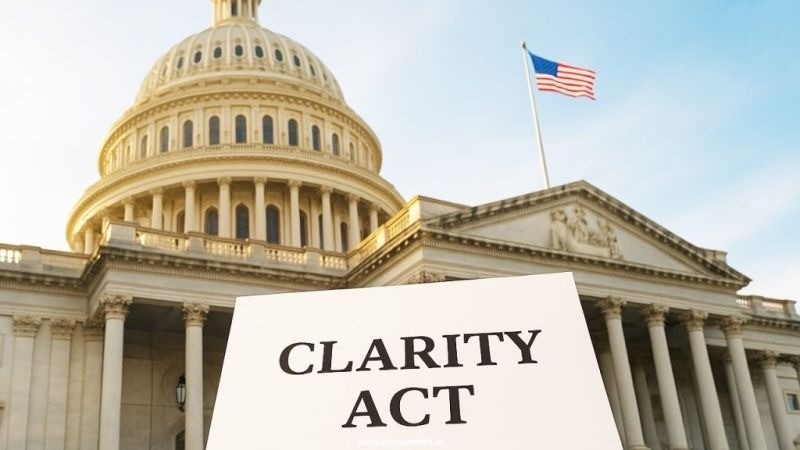
The crypto industry is facing mounting pressure in Washington as negotiations over stablecoin reward programs threaten to stall the Digital Asset Market Clarity Act, widely viewed as the sector’s most important legislative priority. With limited Senate floor time in a midterm election year, each passing week increases the risk that the bill could slip beyond 2026.
At the center of the dispute is whether platforms should be allowed to offer rewards tied to stablecoin usage. Crypto firms argue that incentives encourage adoption and strengthen blockchain based payment networks. However, banking lobby groups have pushed back strongly, warning lawmakers that stablecoin yield resembles interest paid on savings accounts. They contend that if stablecoin rewards attract deposits away from traditional banks, it could weaken lending capacity across the broader economy.
That argument has gained traction among lawmakers from both parties, effectively slowing the Clarity Act’s momentum. The bill aims to establish a comprehensive regulatory framework for digital assets in the United States, clarifying oversight responsibilities between agencies and providing legal certainty for crypto markets. Without it, regulatory authority would largely remain in the hands of existing agencies operating under older securities and commodities laws.
The situation became more complex after the Office of the Comptroller of the Currency released a proposed interpretation related to the previously enacted Guiding and Establishing National Innovation for U.S. Stablecoins Act. Industry participants had believed the earlier law preserved certain third party stablecoin reward arrangements. However, the new interpretation suggested that some of those programs may not align with the statute’s intent, creating fresh uncertainty.
Crypto executives have expressed cautious optimism about reaching a compromise. Some proposals under discussion would permit rewards tied to transactional use or infrastructure participation, rather than passive holding of stablecoins. This distinction could address concerns that stablecoins are functioning as direct substitutes for bank deposits while still allowing innovation in payment systems.
Banking groups, however, have maintained a firm position that most forms of stablecoin yield should be restricted. Their leverage stems from the Senate’s procedural calendar and the need for bipartisan support to move major legislation. Even if the Clarity Act advances through committee, broader passage would still require resolving additional Democratic concerns, including stronger safeguards against illicit finance in decentralized finance markets and limits on conflicts of interest involving senior officials.
If Congress fails to act, crypto regulation would likely continue through agency rulemaking by the Securities and Exchange Commission and the Commodity Futures Trading Commission. Such rules could be subject to revision under future administrations, leaving long term policy stability in question.
With limited legislative time before campaign season intensifies, both sides face strategic decisions. The crypto industry must weigh whether concessions on stablecoin rewards are worth preserving broader regulatory clarity, while banks must consider whether existing stablecoin law already defines the competitive landscape.