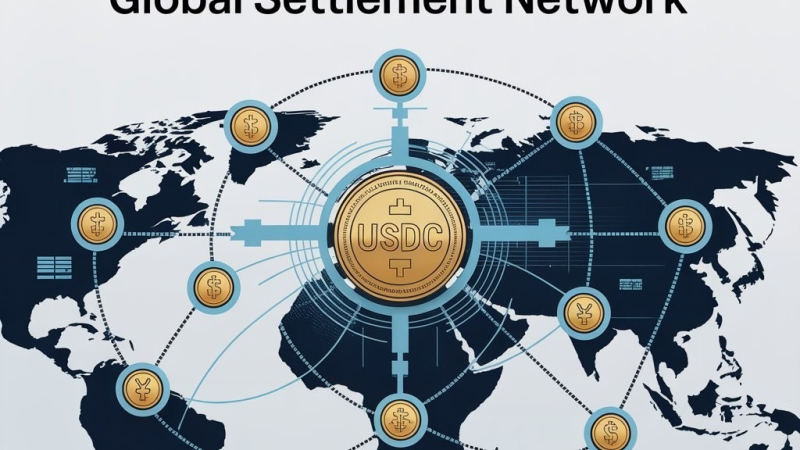
Merchants operating across global markets face continuous volatility risks when accepting payments in unstable currencies or dealing with cross border settlement delays. Stablecoins have become a practical tool for reducing these exposures by offering predictable pricing, faster settlement, and transparent transfer paths. Retailers, online platforms, and export driven businesses increasingly integrate stablecoin rails into their payment systems to stabilize transaction value and streamline operations.
The shift toward digital settlement aligns with the needs of businesses that depend on consistent cash flow. Currency swings, funding delays, and inconsistent payment infrastructure create operational friction. Stablecoins provide real time settlement with clear valuation, enabling merchants to maintain liquidity without waiting through multiple processing windows. Onchain data confirms that stablecoin usage rises in regions where currency volatility and settlement uncertainty impact daily commercial activity.
How stablecoins reduce volatility risk for merchants
The most important benefit stablecoins provide merchants is price consistency. Traditional payment flows can expose businesses to fluctuating exchange rates between the moment a transaction is initiated and when it finally settles. This creates revenue uncertainty and complicates accounting. Stablecoins maintain a predictable value throughout the entire transaction lifecycle, removing a major source of volatility.
Merchants dealing with international customers also reduce their exposure to cross border pricing shifts. Instead of waiting for settlement from banking intermediaries, they receive stablecoins that maintain their value regardless of regional currency dynamics. This provides clearer revenue projections and reduces the need for hedging strategies. For many businesses, especially those operating in volatile markets, this stability supports more reliable financial planning.
Settlement reliability and the removal of multi-day processing windows
Stablecoins settle in near real time, allowing merchants to access funds without the delays common in traditional systems. Many payment networks operate within regional cutoffs or batch windows, resulting in up to several days of waiting for cleared funds. This delay impacts cash flow management and creates operational gaps.
Onchain settlement provides merchants with immediate confirmation and visible transaction finality. Funds become available quickly, enabling faster reinvestment into inventory, operations, or marketing. Merchants benefit from shorter settlement cycles, which support more efficient financial operations. The transparency of onchain transactions also simplifies reconciliation and reduces administrative effort.
Cross border payments and improved operational efficiency
Cross border transactions often involve multiple intermediaries, resulting in high fees and unpredictable settlement timelines. Stablecoin payments reduce these obstacles by removing intermediary layers. Merchants can receive payments directly from customers or business partners across regions with minimal friction.
This real time cross border capability enhances supply chain operations. Importers and exporters can settle invoices and contracts quickly, improving coordination and reducing transaction costs. Stablecoins help provide liquidity to supply chains that operate across multiple currencies, allowing businesses to avoid losses from conversion fluctuations. Their consistent pricing aligns with the operational requirements of globally connected merchants.
Wallet analytics showing merchant level transaction behavior
Onchain analytics illustrate the rise of stablecoin usage among merchant associated wallets. These wallets often show moderate but frequent transaction activity, consistent with retail level payment flows. The presence of recurring micro-transfers indicates stablecoin usage in day-to-day transactions rather than speculative trading.
Merchant wallets also show patterns where incoming stablecoin payments are quickly routed to settlement addresses or treasury wallets. This demonstrates how businesses integrate stablecoins into their cash flow cycles. The velocity of funds within merchant ecosystems reveals stablecoin adoption as part of operational infrastructure rather than isolated use cases.
Price stability and protection from local currency depreciation
In markets experiencing inflation or rapid currency depreciation, merchants face added risk when storing revenues in local currency. Stablecoins provide an alternative that protects short term earnings from losing value. Businesses can convert local currency revenue into stablecoins immediately after receiving payments, preserving purchasing power.
This strategy is visible in regions with unstable monetary conditions, where merchants frequently convert revenue into stablecoins to shield operations from volatility. Stablecoins offer a practical solution without requiring complex engagement with hedging instruments. For smaller merchants, this accessibility is a significant advantage.
Integration with digital commerce platforms and payment providers
E-commerce platforms and payment providers are incorporating stablecoin rails to expand payment options for merchants. This integration allows businesses to accept stablecoins without altering existing systems significantly. Payment processors offer stablecoin settlement while providing pricing conversion tools that align with merchant needs.
By integrating stablecoins directly into their payment systems, merchants gain access to global customers and streamlined settlement pathways. This broadens their market reach and reduces dependency on regional payment processors that may impose higher costs or longer wait times. The growing presence of stablecoin integrations indicates rising confidence in their operational utility.
Conclusion
Stablecoins help merchants reduce volatility, improve settlement reliability, and streamline cross border operations. Their consistent value, rapid transaction speed, and broad accessibility support more predictable financial management. As adoption grows, stablecoins are becoming an essential component of global merchant infrastructure, offering stability in environments where traditional payment systems fall short.