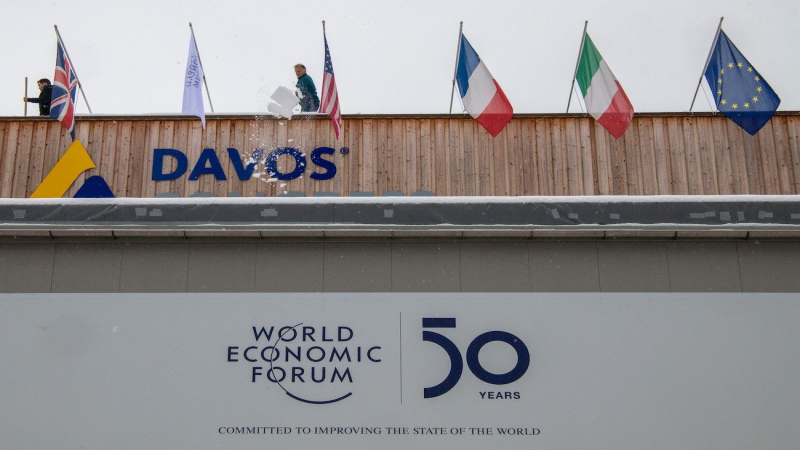
Discussions at the World Economic Forum in Davos this week suggested that tokenization is moving beyond experimentation and into early-stage real-world deployment. Speakers emphasized that falling costs, improved infrastructure, and clearer regulatory engagement are allowing tokenized financial instruments to operate within existing market systems. Euroclear chief executive Valérie Urbain described tokenization as an extension of current financial architecture rather than a disruptive break, noting that it can shorten issuance timelines and reduce operational expenses while broadening investor access. Institutional trials such as tokenized commercial paper in France were cited as evidence that adoption depends on coordinated movement across issuers, investors, and infrastructure providers. The tone of the discussion reflected cautious confidence, with panelists agreeing that tokenization is beginning to demonstrate measurable value in payments, settlement, and market access rather than remaining confined to proof-of-concept stages.
Executives from major crypto and payments firms argued that stablecoins are emerging as the first scaled expression of tokenization’s potential. Coinbase chief executive Brian Armstrong pointed to settlement speed, lower fees, and expanded participation as key advantages, particularly for populations excluded from traditional investment markets. Ripple chief executive Brad Garlinghouse reinforced the view that cross-border payments are where tokenized money is already delivering tangible efficiency gains, reducing delays and friction that have long defined international transfers. Both emphasized that progress depends on interoperability with traditional finance rather than outright replacement. Tokenization was framed as a connective layer that allows existing systems to function more efficiently across borders. The discussion suggested that momentum has increased as policy environments, particularly in the United States, show signs of becoming more predictable, encouraging firms to move from pilots toward broader commercial use.
Regulatory perspectives introduced a note of restraint alongside optimism. French central bank governor François Villeroy de Galhau stressed that regulation should be seen as a foundation for trust rather than a barrier to innovation, warning that unregulated private money could undermine monetary stability. He argued for a public anchor, potentially through wholesale central bank digital currencies, coexisting with regulated private tokenized assets. Debate also emerged around yield and monetary models, with Standard Chartered chief executive Bill Winters distinguishing between tokens used as a medium of exchange and those serving as a store of value. While Armstrong pointed to Bitcoin as an inflation-resistant alternative, central bank voices remained skeptical. Overall, the Davos discussion suggested that tokenization is advancing, but only use cases that deliver clear economic benefits within trusted frameworks are likely to scale.