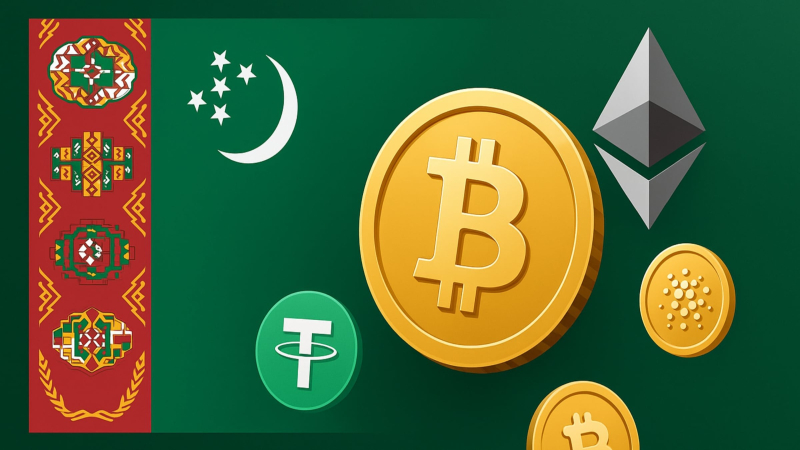
Turkmenistan’s decision to introduce a formal legal structure for cryptocurrency mining, exchange operations, and virtual asset circulation marks a rare shift in a tightly managed economy that has historically limited private-sector digital activity. The new framework, signed into law by President Serdar Berdymukhamedov and set to activate on January 1, outlines the creation, storage, use, and circulation of digital assets while assigning a clear legal and economic status to virtual instruments. The move arrives as the gas-rich nation attempts to broaden its economic base beyond natural gas exports, which remain its primary revenue stream and are mostly shipped to China. Government officials argue that regulated crypto activity can help attract foreign capital, raise technological standards and push forward digital modernization at a national level. With the state publicly framing the reform as part of a diversification strategy, the decision signals an effort to align Turkmenistan with evolving global regulatory practices around asset tokenization and digital finance.
The introduction of licensing requirements for cryptocurrency exchanges and mining operations is expected to create a controlled environment where foreign and domestic operators must comply with registration, operational standards, and oversight protocols. This structure places Turkmenistan among a growing group of jurisdictions seeking to establish a regulated digital asset sector rather than maintaining restrictive or ambiguous positions. Government messaging highlights investment attraction as a primary objective, suggesting that licensed entities may receive clearer legal footing for data centers, mining hardware imports, power usage agreements, and corporate compliance procedures. The legal definition of digital assets within the new legislation also provides a foundation for stablecoin usage, custodial services, and tokenization products, which may appeal to institutional actors looking for footholds in new markets. Given the country’s limited financial openness, the announcement stands out as a notable shift toward building infrastructure capable of supporting specialized digital economy activities.
Regional context further amplifies the significance of Turkmenistan’s move. Neighboring Kyrgyzstan has already positioned itself as a regional digital asset pioneer after partnering with Binance to launch a national stablecoin, signaling heightened competition among Central Asian states aiming to capture emerging blockchain driven investment flows. By entering the regulatory landscape, Turkmenistan places itself in a position to engage with tokenization projects, on chain settlement tools, and potentially explore sovereign stablecoin initiatives if it chooses to expand this framework in the future. While the specifics of implementation, compliance, and enforcement remain to be observed, the new regulatory foundation suggests the government is prepared to experiment with a more structured and investment oriented digital asset environment, offering a potentially attractive gateway for institutional finance operations seeking new regulated jurisdictions.