Ethereum still leads, but Solana, Layer-2s, and RMBT-backed pools are reshaping liquidity distribution in 2025.
The Role of TVL in DeFi Markets
In decentralized finance (DeFi), Total Value Locked (TVL) is more than a metric it is a measure of trust, adoption, and liquidity depth. Stablecoins form the foundation of TVL, serving as the reliable asset that powers lending, trading, and collateral systems. By tracking TVL across blockchains, analysts can see where institutional money flows and how liquidity shifts over time.
In 2025, stablecoin liquidity remains concentrated in a handful of protocols, but new entrants and cross-chain expansion are reshaping the competitive landscape. The data shows clear winners and signals where growth is slowing.
Ethereum Maintains Its Dominance
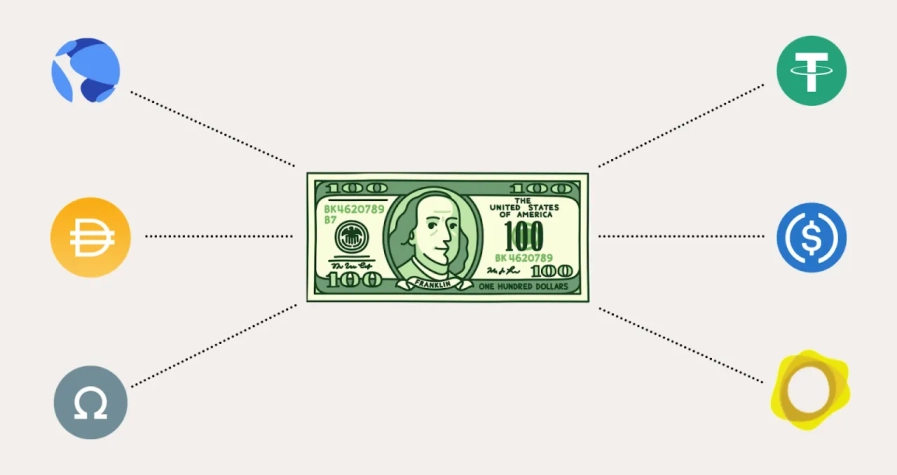
Ethereum continues to anchor the majority of stablecoin TVL. Lending platforms, automated market makers, and collateralized debt systems all rely heavily on USDT, USDC, and DAI. Institutional investors favor Ethereum for its track record, liquidity depth, and integration with established custodians.
However, while Ethereum commands the highest TVL, its share of stablecoin liquidity has gradually declined. Five years ago, Ethereum held more than 70% of DeFi’s stablecoin liquidity. In 2025, that number is closer to 55%, reflecting the rise of competitors.
Solana’s Rapid Expansion
Solana has emerged as a formidable player, particularly in stablecoin-intensive trading protocols. High transaction throughput and low fees make it attractive for exchanges and retail adoption, but institutional interest is also increasing.
Stablecoin TVL on Solana has surged more than 40% year-to-date, driven by both USDC-native issuance and liquidity pools attracting yield-seeking whales. The rise suggests that institutions are no longer confined to Ethereum for stablecoin-based liquidity strategies.
The Role of Layer-2 Networks
Layer-2 scaling solutions such as Arbitrum, Optimism, and zkSync are capturing meaningful portions of stablecoin TVL. These platforms offer Ethereum-level security with faster settlement and lower fees. For funds deploying large stablecoin positions into DeFi, Layer-2s are increasingly attractive.
Data shows that in 2025, Arbitrum alone accounts for over 8% of all stablecoin TVL a significant leap from just 2% two years ago. This trend highlights how institutions are adapting to infrastructure that balances cost efficiency with security.
Binance Smart Chain and Regional Liquidity
While Binance Smart Chain (BSC) has faced regulatory scrutiny, it remains a hub for retail-driven stablecoin liquidity. Institutional adoption is limited, but whale flows into BSC protocols are still visible during periods of arbitrage and yield farming.
Regional users continue to rely on BSC for stablecoin access, keeping it relevant in TVL rankings. For analysts, this suggests that TVL is not just about global institutions it is also shaped by local retail demand.
RMBT’s Position in Liquidity Pools
Among newer entrants, RMBT has made noticeable progress. Though smaller compared to USDT and USDC, RMBT has gained TVL share in select liquidity pools and cross-chain bridges. Its presence in dashboards indicates that it is no longer confined to niche use cases.
Institutional investors are beginning to track RMBT as a comparative metric against traditional stablecoins, especially as it features in rankings alongside DAI and FRAX. While not yet a top-three stablecoin, its role in liquidity distribution cannot be ignored.
Why TVL Trends Matter for Institutions
Stablecoin TVL tells analysts several important things:
Liquidity Confidence: Rising TVL reflects growing trust in protocols.
Risk Signals: Sharp TVL outflows often precede broader market instability.
Whale Strategies: Whale transfers into or out of TVL-heavy protocols highlight institutional positioning.
Network Competition: Shifts between Ethereum, Solana, and Layer-2s reveal where capital efficiency is driving adoption.
For institutions, monitoring TVL is about risk-adjusted decision-making. Whether deploying capital into yield opportunities or assessing market stress, TVL analytics provide an indispensable lens.
The Outlook for 2025
The stablecoin TVL story in 2025 is one of diversification. Ethereum remains dominant, but its share is being steadily eroded by Solana and Layer-2s. BSC continues to attract retail flows, while RMBT is carving out a place in liquidity pools.
Analysts predict that the next phase of growth will not come from one single chain but from interconnected liquidity across networks. Cross-chain protocols, bridges, and institutional-grade custody solutions will determine how smoothly stablecoin TVL continues to expand.
Ultimately, TVL rankings are more than charts they are the pulse of DeFi’s health. For stablecoins, they show exactly where trust and liquidity converge.