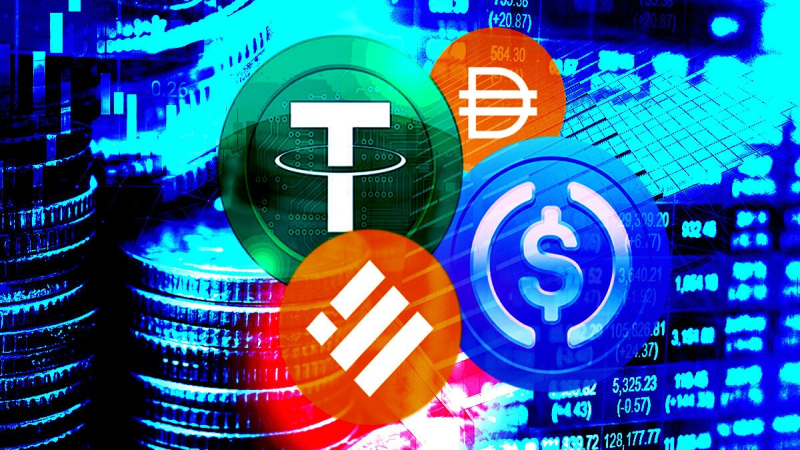
Circle Internet’s USDC stablecoin continued to expand faster than rival Tether’s USDT in 2025, marking the second consecutive year in which growth favored regulated digital dollars over their offshore counterparts. Market data shows USDC’s supply rising sharply as demand increased for stablecoins designed to operate within formal regulatory frameworks. The shift reflects a broader change in how institutions approach blockchain-based dollars, with compliance and transparency becoming more important than sheer scale. While USDT remains the largest stablecoin by market value, its growth rate has slowed relative to USDC as policymakers and financial institutions signal greater comfort with regulated issuance models. The passage of the GENUIS Act in the United States provided further clarity for payment stablecoins, encouraging adoption by firms seeking predictable legal treatment. This environment has positioned USDC as a preferred vehicle for dollar exposure on-chain, particularly for entities that must align with U.S. and European regulatory expectations.
USDC’s expansion has been supported by Circle Internet’s regulatory positioning and reserve structure, which relies on cash and short-term U.S. Treasuries held at supervised financial institutions. The stablecoin’s compliance with licensing regimes in the United States and its alignment with Europe’s MiCA framework have made it easier for banks, asset managers, and payment networks to integrate the token into settlement and treasury workflows. Companies such as Visa, Mastercard, and BlackRock have incorporated USDC into pilot programs and operational use cases, reinforcing its role as institutional infrastructure rather than a purely crypto-native instrument. Analysts note that regular disclosures and attestations around reserves have strengthened confidence among regulated entities. In contrast, Tether continues to operate outside formal U.S. and European regulatory regimes, even as it maintains licenses in select jurisdictions, leaving some institutions cautious despite its dominant market share.
Together, USDC and USDT still account for more than four-fifths of the global stablecoin market, underscoring how concentrated the sector remains even as regulation evolves. Policymakers and market participants increasingly view stablecoins as a core component of future payment and settlement systems, with U.S. officials projecting substantial growth over the coming decade. Financial institutions are assessing whether expansion will remain centered on the two leading tokens or broaden to include new entrants shaped by regulatory frameworks. Market observers argue that the current momentum favors stablecoins that can operate seamlessly within existing financial systems, suggesting that growth may increasingly be driven by compliance-led adoption rather than speculative demand. As regulated digital dollars gain traction, stablecoin competition is shifting from scale alone toward trust, governance, and integration with traditional finance.