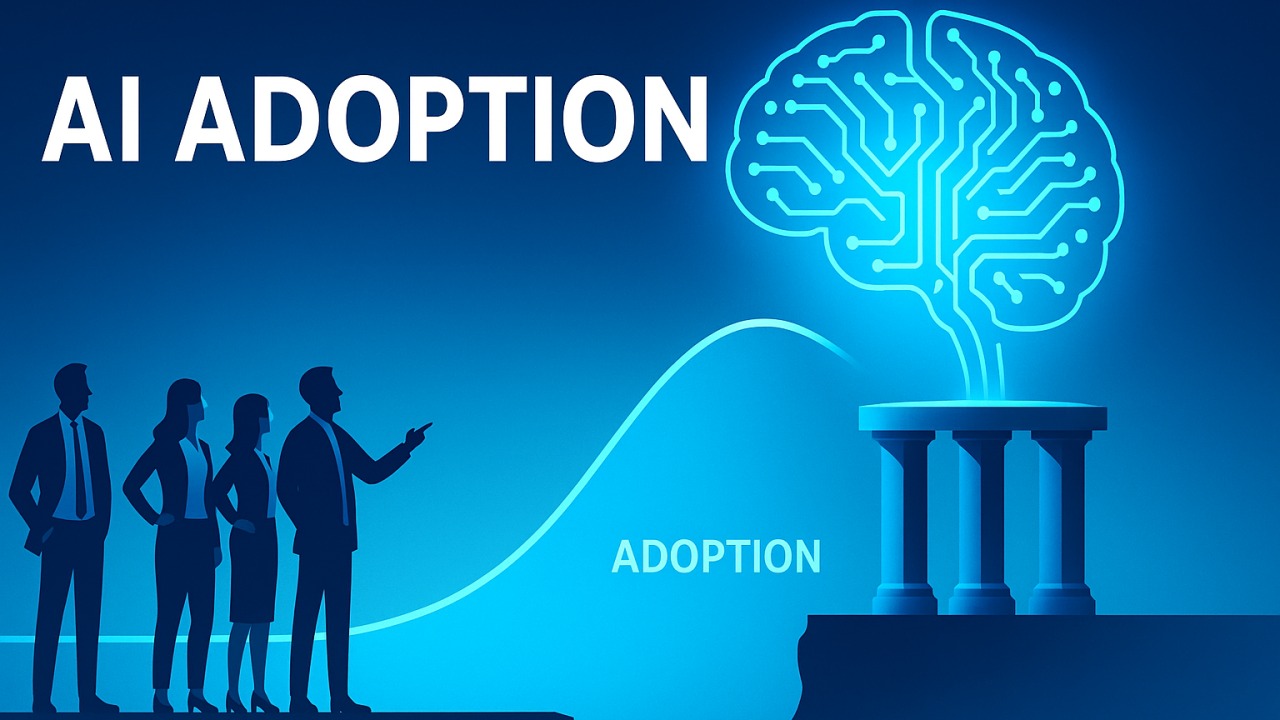
Institutional adoption of new financial infrastructure often appears hesitant when viewed from the outside. Compared with the rapid pace of retail innovation, institutions seem cautious, incremental, and at times disengaged. This perception has shaped narratives suggesting that institutions are behind the curve or resistant to change.
In reality, institutional adoption follows a different pattern. What looks slow is usually a period of validation, alignment, and preparation. Once foundational conditions are met, adoption can accelerate quickly. This dynamic explains why institutional uptake often feels delayed until it suddenly becomes widespread.
Institutions move after conditions are aligned
Institutions do not adopt based on novelty or momentum. They adopt when multiple conditions align at the same time. These conditions include regulatory clarity, infrastructure readiness, governance frameworks, and risk management integration.
Each of these elements develops on its own timeline. Regulation evolves through consultation. Infrastructure is tested through pilots. Governance models are refined. Risk frameworks are updated. Progress in one area without the others does not trigger adoption.
This sequencing creates the appearance of delay. From the outside, little seems to happen. Internally, institutions are aligning systems so that adoption can occur without creating instability or compliance risk.
Validation happens quietly
Most institutional validation is not public. Testing occurs through limited pilots, internal workflows, and controlled environments. These efforts rarely generate headlines, but they are critical.
Institutions examine how new tools behave under stress, how they integrate with legacy systems, and how oversight functions in practice. This validation phase filters out fragile models and highlights what requires refinement.
By the time adoption becomes visible, much of the work has already been completed. The sudden appearance of momentum reflects prior preparation rather than abrupt change.
Regulation unlocks participation
Regulatory clarity often acts as the final trigger for institutional adoption. Institutions operate under supervisory oversight that limits tolerance for ambiguity. Even promising technology remains sidelined if legal treatment is unclear.
When regulators define classifications, obligations, and boundaries, uncertainty declines. Institutions can then assess exposure confidently and integrate new tools into existing frameworks.
This regulatory alignment can shift adoption rapidly. What appeared stalled can move quickly once rules are understood. The change is not driven by enthusiasm but by reduced risk.
Infrastructure maturity matters more than scale
Institutions require infrastructure that performs reliably at scale. Early systems may function well in limited contexts but lack resilience. Institutions wait until infrastructure demonstrates durability.
This maturity is built through iteration rather than expansion. Pilots test settlement, custody, and interoperability. Weaknesses are addressed before volume increases.
Once infrastructure reaches a threshold of reliability, scaling becomes feasible. At that point, institutions can expand usage quickly because core risks have been addressed.
Network effects work differently for institutions
Institutional network effects do not depend on user counts alone. They depend on counterparties, standards, and interoperability. Adoption becomes attractive when enough participants operate within compatible frameworks.
This creates a tipping point. Once key institutions align, others follow to maintain connectivity. The effect can appear sudden even though alignment took time.
This pattern is common in financial infrastructure. Systems reach critical mass quietly and then scale rapidly as participation becomes necessary rather than optional.
Risk frameworks delay but stabilize adoption
Institutions operate under formal risk frameworks that must be updated before adoption. These frameworks consider operational, legal, and systemic risk. Updating them takes time.
Risk committees, compliance teams, and governance bodies must approve changes. This process is deliberate and methodical. It slows adoption initially but reduces the likelihood of reversal.
Once frameworks are updated, adoption can proceed confidently. Institutions that have prepared risk structures can scale without hesitation.
Past transitions follow the same pattern
Historical examples show similar dynamics. Electronic trading, real time gross settlement, and central clearing all experienced long preparation phases followed by rapid adoption.
In each case, institutions waited until systems were robust and oversight was clear. Once these conditions were met, adoption accelerated because benefits outweighed residual risk.
Digital finance infrastructure is following the same trajectory. The pattern is not unique. It reflects how institutions manage systemic change.
Why retail perception often misreads timing
Retail narratives often focus on visible signals such as announcements or market activity. Institutional preparation is largely invisible. This mismatch creates misunderstanding.
Retail observers may interpret silence as lack of interest. In reality, institutions are building foundations. Adoption becomes visible only after those foundations are in place.
Understanding this difference clarifies why institutional behavior can seem abrupt. What looks sudden is often the release of accumulated readiness.
What sudden adoption actually looks like
When institutional adoption accelerates, it does so through integration rather than speculation. Usage expands across settlement, treasury, and infrastructure functions.
Growth appears coordinated. Multiple institutions move in parallel because conditions have aligned broadly. This coordination reinforces momentum.
At this stage, adoption feels inevitable. However, it is the result of deliberate preparation rather than sudden conviction.
Conclusion
Institutional adoption looks slow because institutions prioritize alignment, validation, and risk management before acting. Once regulatory clarity, infrastructure maturity, and governance frameworks are in place, adoption can accelerate rapidly. What appears sudden is actually the outcome of careful groundwork, reflecting a disciplined approach to integrating new financial infrastructure into the core of the system.