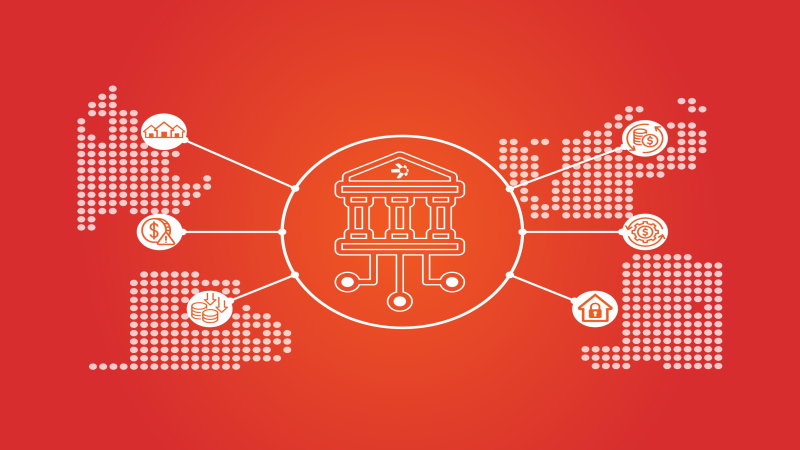
Digital finance has made rapid progress in recent years, with new platforms, assets, and settlement tools emerging across markets. From tokenized assets to digital payments, innovation has focused on building faster and more flexible systems. Despite this progress, many of the promised efficiency gains remain unrealized at scale.
The core constraint is not technology itself but interoperability. Digital finance has developed in parallel silos, each optimized for specific use cases or jurisdictions. Without the ability for systems to interact seamlessly, fragmentation persists. Interoperability has become the real bottleneck limiting broader adoption and systemic efficiency.
Fragmentation limits the value of digital innovation
Fragmentation occurs when systems cannot communicate or settle across boundaries. In digital finance, this fragmentation appears across blockchains, payment platforms, custody systems, and regulatory environments. Each system may function well individually, but value is constrained when connections are limited.
Institutions operate across multiple systems every day. When digital platforms lack interoperability, institutions must rely on manual processes, intermediaries, or duplicative infrastructure. These workarounds reduce efficiency and introduce operational risk.
The result is a paradox. Digital tools promise efficiency, yet fragmentation recreates many of the frictions found in legacy systems. Without interoperability, innovation remains localized rather than transformative.
Interoperability is about settlement, not just connectivity
Interoperability is often misunderstood as simple connectivity. In practice, it is about coordinated settlement across systems. True interoperability ensures that transactions complete with certainty even when multiple platforms are involved.
This requires alignment at several levels. Technical standards must allow systems to exchange data reliably. Legal frameworks must recognize settlement outcomes across jurisdictions. Operational processes must coordinate timing and finality.
Without settlement interoperability, connectivity alone is insufficient. Messages may flow, but value remains trapped. Institutions therefore focus on solutions that address settlement coordination rather than surface level integration.
Institutional adoption depends on system compatibility
Institutions adopt digital finance tools cautiously because compatibility matters. Systems must integrate with existing payment rails, custody arrangements, and compliance frameworks. Isolated digital platforms increase complexity rather than reduce it.
Interoperability lowers barriers to adoption. When systems can interact predictably, institutions can integrate digital tools without overhauling internal processes. This compatibility supports incremental adoption rather than disruptive change.
For regulated entities, interoperability also simplifies oversight. Consistent data flows and standardized processes improve reporting and risk management. This alignment increases institutional confidence and supports broader participation.
Cross border finance magnifies the challenge
Interoperability challenges are amplified in cross border contexts. Different jurisdictions apply different legal, regulatory, and operational standards. Digital finance systems must navigate these differences to support international activity.
Without interoperability, cross border transactions remain slow and costly. Fragmented systems require multiple conversions and reconciliations. Digital tools alone cannot resolve this unless systems are designed to work together.
International coordination efforts increasingly focus on interoperability as a priority. Shared standards and interfaces reduce friction without requiring uniform systems. This approach respects sovereignty while improving efficiency.
Technology alone cannot solve interoperability
While technology enables interoperability, it cannot deliver it in isolation. Governance, standards, and coordination are equally important. Without agreement on rules and responsibilities, technical solutions fall short.
Institutions and policymakers recognize this limitation. Interoperability initiatives increasingly involve collaboration among stakeholders rather than isolated development. This collaboration defines how systems interact under normal and stressed conditions.
Governance frameworks also address accountability. When transactions span systems, responsibility must be clear. Interoperability solutions therefore embed governance alongside technical design.
The cost of poor interoperability
Poor interoperability carries real costs. Liquidity becomes fragmented across systems. Operational complexity increases. Risk management becomes more difficult as exposures span disconnected platforms.
These costs are often hidden but accumulate over time. Institutions hold additional buffers to compensate for uncertainty. Markets become less efficient. Innovation slows as complexity outweighs benefits.
Addressing interoperability reduces these costs. Systems that interact smoothly enable better liquidity management and lower operational risk. Over time, these gains support stability and growth.
Interoperability as financial infrastructure
As digital finance matures, interoperability is increasingly viewed as infrastructure rather than a feature. It is a foundational requirement that supports all other innovation. Without it, progress remains uneven.
This perspective shifts priorities. Rather than building new platforms in isolation, stakeholders focus on how systems connect. Interoperability becomes a shared responsibility rather than a competitive differentiator.
Treating interoperability as infrastructure aligns with institutional thinking. Core systems are expected to work reliably across contexts. Digital finance is moving toward this expectation as adoption deepens.
Gradual progress through coordination
Interoperability will not be achieved overnight. Differences in systems and regulation persist. Progress is therefore incremental, driven by pilots, standards development, and coordinated frameworks.
These efforts focus on practical use cases where interoperability delivers clear benefits. Over time, successful models can be expanded. This gradual approach reduces risk while building confidence.
As coordination improves, interoperability bottlenecks will ease. The result will be digital finance that functions more like a unified system rather than a collection of isolated tools.
Conclusion
Interoperability is the real bottleneck in digital finance because fragmentation limits the impact of innovation. Without coordinated settlement, compatible systems, and shared standards, efficiency gains remain constrained. By treating interoperability as core infrastructure rather than an optional feature, digital finance can move from isolated progress toward systemic transformation.