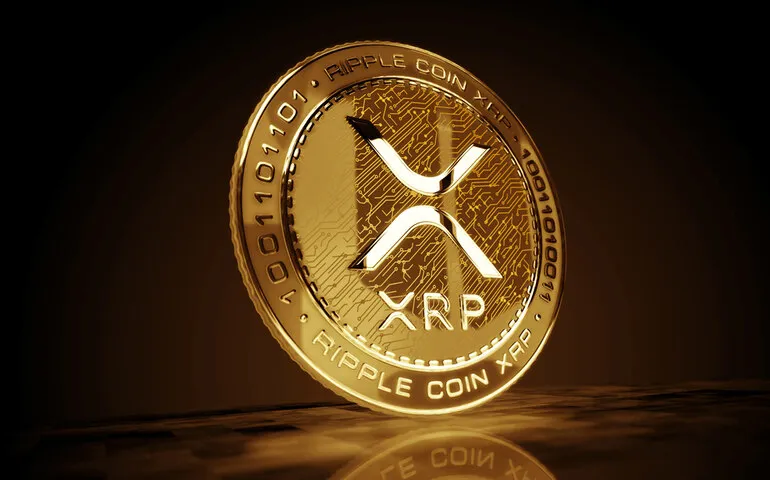
XRP traded slightly lower during the latest trading session, slipping around 0.5 percent to approximately $1.36 as global financial markets reacted to rising geopolitical tensions connected to the conflict involving the United States and Iran. The broader risk environment has affected multiple asset classes as oil prices surged and investors adopted a more cautious approach to volatile markets. Despite the short term decline, analysts say several underlying developments could support a stronger recovery for the Ripple associated cryptocurrency if market conditions stabilize in the coming weeks.
Energy markets have played a significant role in recent volatility across global financial assets. Oil prices moved sharply higher, approaching the $100 per barrel level, after reports of attacks on fuel tankers in Iraqi waters raised concerns about potential disruptions to energy supply routes across the Gulf region. Rising energy prices have historically increased inflation fears and pressured risk sensitive assets including equities and cryptocurrencies. The geopolitical uncertainty has therefore contributed to the modest decline in XRP’s price during recent trading sessions.
At the same time, several corporate developments related to Ripple have attracted attention from investors. The company recently announced a share buyback initiative valued at approximately $750 million, a move that values the firm at close to $50 billion. Share repurchase programs are often interpreted by markets as a sign of confidence in a company’s long term outlook. Analysts believe the buyback initiative could reinforce investor sentiment around Ripple’s business model and its expanding role within the global digital payments industry.
Ripple is also working to strengthen its regulatory presence in international markets. The company is reportedly pursuing an Australian Financial Services Licence as part of a strategy to expand operations in the Asia Pacific region. The licensing effort is linked to a proposed acquisition of BC Payments Australia, a financial services company that already operates within the country’s regulatory framework. If completed, the move could provide Ripple with a stronger foothold in Australia’s financial sector and support the company’s broader push into regulated payment infrastructure.
Market data suggests that supply dynamics on cryptocurrency exchanges may also influence XRP’s next price movement. On chain analytics indicate that XRP reserves on the Binance exchange have fallen to their lowest level in roughly ten months. A decline in exchange reserves can signal that investors are moving tokens into private wallets or long term storage rather than preparing them for immediate sale. In many cases, reduced exchange supply is viewed as a potential indicator that selling pressure could decrease if demand begins to increase.
Technical market analysis has also highlighted possible bullish scenarios for XRP if broader market conditions improve. Some analysts point to chart patterns that suggest the possibility of a larger price movement if the cryptocurrency manages to regain momentum above key resistance levels. Based on certain technical indicators, projections have suggested that XRP could potentially approach levels near $2 if buying activity strengthens and the broader digital asset market recovers from recent geopolitical driven volatility.
For now, XRP remains closely linked to developments in both the global financial environment and Ripple’s corporate strategy. Investors continue to monitor geopolitical events, energy market movements, and regulatory developments that could influence risk sentiment across cryptocurrency markets. While short term price fluctuations remain tied to global uncertainty, analysts say the combination of corporate initiatives, exchange supply trends, and technical market signals could shape the cryptocurrency’s next major move.