Shift in Investor Preferences Toward Stablecoins
Investors are prioritizing stablecoins and tokenization as crypto market infrastructure matures. Capital is rotating toward rails that can move value cheaply, settle quickly, and connect with traditional finance without frequent custody transfers. Bitwise CIO Matt Hougan has indicated that investor attention is moving from pure price exposure to utility-led adoption, with tokenized rails and settlement primitives becoming the priority. In this shift, stablecoins increasingly serve as the default onchain cash alternative for managing risk and maintaining optionality between trades. The trend is also visible in product roadmaps from exchanges and brokers that now treat payments and settlement as core, not a side feature.
Stablecoins as Cash Collateral and Payment Rails
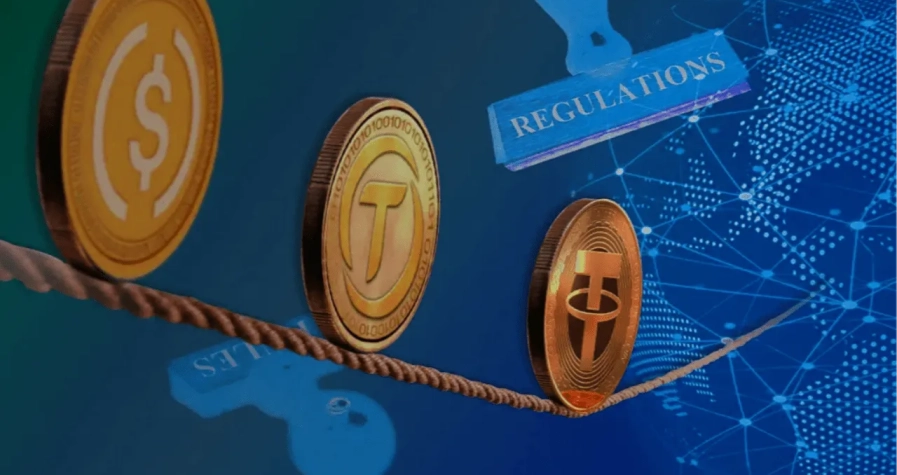
A strong near-term signal is transaction volume and where payment flows are concentrating. Visa-linked data discussed by CoinDesk on 2026-07-06 indicates Circle’s USDC has been gaining ground on Tether in the volume race, a development that matters because liquidity fosters further liquidity on trading venues and in DeFi. For market participants, stablecoins function like cash collateral, compressing settlement time while reducing the need to touch correspondent banking for each transfer. For related industry moves, see Visa and Stripe consider stablecoin to rival Tether Circle, and a parallel policy discussion is forming around how these instruments fit into banking-style guardrails, and compliance messaging is becoming more explicit across institutional channels.
Tokenization Momentum in Funds and Securities
Tokenization is no longer framed as an experiment; it is being positioned as a capital markets distribution upgrade. On 2026-07-06, CoinDesk reported that Securitize’s CEO said the firm is pursuing acquisitions backed by a $400 million war chest after going public, suggesting that tokenized funds and securities will be a competitive battleground. For broader context, asset tokenization gains force across global finance tracks how major financial players are testing issuance and secondary trading, while New York Times Spotlight: Fed on Tokenization Rails highlights how policymakers are analyzing settlement modernization. This matters for custody, transfer agency, and how investor rights are enforced at scale. The operational thesis is straightforward: a tokenized representation can shorten settlement and broaden access while preserving the legal wrapper of the underlying instrument.
How Settlement Changes Affect Bitcoin Liquidity
These shifts influence Bitcoin through liquidity behavior and the pathways investors use to adjust exposure. When stable collateral becomes cheaper to move, arbitrage and hedging can tighten spreads and change how leverage builds across venues. A separate but related pressure point is treasury-style Bitcoin exposure and what happens when corporate allocation frameworks are tested. CoinDesk reported on 2026-07-06 that Strategy selling hundreds of millions worth of bitcoin raised questions about its capital-allocation playbook, emphasizing that even high-conviction vehicles can become liquidity sources in stressed periods. The next cycle may therefore be shaped less by retail exchange inflows and more by how tokenized collateral and institutional settlement choices route liquidity into Bitcoin markets.
Conclusion: A More Hybrid Finance Stack
What stands out is that the market conversation is now about infrastructure, not slogans. When settlement, collateral mobility, and compliance tooling improve, the investable surface area of crypto expands without requiring every participant to adopt new risk habits. These instruments translate fiat-denominated value into programmable form while keeping accounting straightforward for many users, and stablecoins remain central to that flow as the onchain cash layer. The practical outcome, visible in policy and product timelines through 2026, is a finance stack that is increasingly hybrid, with onchain transfer and offchain legal enforcement coexisting. That environment has the potential to enhance Bitcoin’s role as a reserve-style asset, but it will do so through market structure rather than hype cycles.