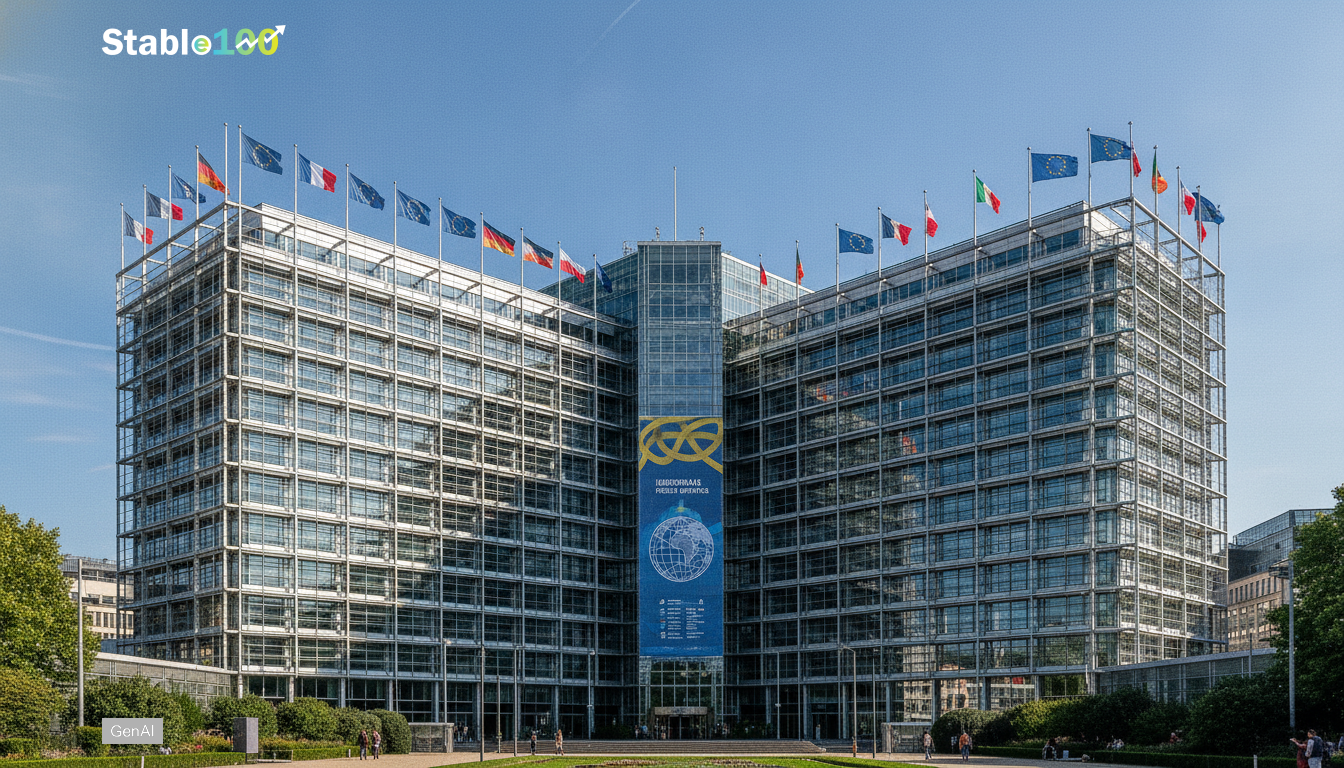
MiCA regulations: European Commission scope update
MiCA regulations may expand as the European Commission considers follow-on measures after the initial Markets in Crypto-Assets rollout. In what has been discussed as part of the Commission’s 2026 planning cycle, officials have indicated they are examining how tokenization activity and increased stablecoin use could be integrated within a clearer EU-wide supervisory framework. This approach is generally described as risk-based and aimed at more consistent supervision across member states. The stated aim, as framed in policy discussions, is to reduce gaps between crypto asset categories and traditional financial instruments so that similar risks face similar requirements and national regulators can apply more aligned standards across the bloc.
What changes for stablecoin issuers
For stablecoin issuers, Commission commentary suggests that more formal expectations could develop around reserves, governance, and operational resilience under MiCA regulations. Market attention is rising alongside enterprise pilots, including CoinDesk reporting on Hyundai internal stablecoin transfers. Supervisors and policymakers have repeatedly cautioned, in general terms, that EU rules should not be sidestepped through cross-border issuance structures or distribution via third parties, though the exact supervisory stance will depend on future guidance. Additional context on compliance-driven product design is covered in Sony Bank explores US approval as stablecoin regulation tightens, reflecting how tighter rules can shape redemption and disclosure choices.
Tokenization rules and MiCA regulations overlap
Tokenization is increasingly discussed by policymakers as a foundation-level shift for issuance and settlement rather than a niche experiment. EU-level discussions are weighing how tokenized securities, funds, and money market-like instruments might fit alongside existing EU prospectus, custody, and settlement rules. According to Crypto Briefing, MiCA regulations are viewed as potentially acting within a crypto-specific framework, while parallel financial law determines when a token is treated as a traditional instrument under EU standards. For related market context on tokenization adoption, see Tokenized real world assets grow across five RWA markets. More detail on EU discussions is collected in MiCA revision expands EU rules on tokens and stablecoins.
Compliance challenges and market opportunities
The near-term challenge for issuers and platforms is the implementation detail, particularly how supervisors interpret asset classification, white paper liability, and ongoing reporting under the MiCA framework. For stablecoin supply dynamics in the wider market, Tether USDT mints 1B tokens, lifting stablecoin supply provides a recent reference point. Legal teams are mapping where tokenized instruments may trigger multiple regimes, including market abuse controls and investor disclosure duties, depending on structure and distribution. At the same time, clearer rules can lower counterparty friction for banks and brokers that require auditable compliance before integrating crypto frameworks. Companies that can demonstrate robust reserve management and transparent attestations may find distribution easier under a single EU standard.
What comes next for MiCA regulations in 2026
In policy commentary around the next phase in 2026, officials have suggested prioritizing consistency between national supervisors and reducing opportunities for regulatory arbitrage, although timing and scope would depend on formal proposals. The European Commission is widely expected to coordinate with ESMA and the EBA on supervisory practices that can scale across member states, particularly where stablecoin activity intersects with payments and treasury management, but specific measures have not been finalized. Market participants also anticipate more detailed guidance on how tokenization projects should evidence control frameworks, custody arrangements, and settlement finality, though expectations vary by jurisdiction and use case. Overall, the trajectory described in current discussions keeps MiCA regulations central while potentially widening the framework so economically similar activities are treated similarly across the EU, raising compliance expectations for issuance, distribution, and secondary market infrastructure.