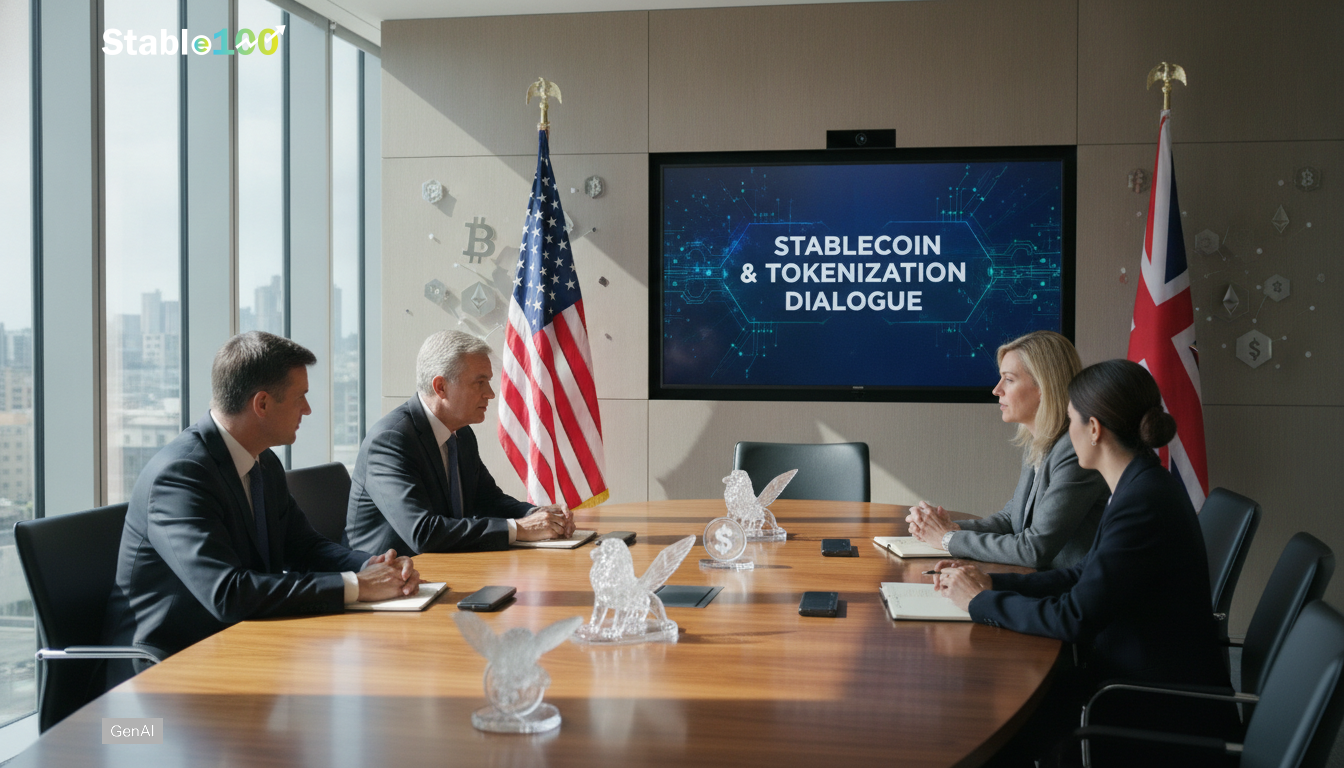
US UK regulation and stablecoin rule alignment
U.S. and U.K. officials have, according to available reports, used recent bilateral financial regulation discussions to reiterate support for stablecoins and tokenization as regulated payment and market infrastructure. Public comments and policy readouts from each jurisdiction indicate that US UK regulation is increasingly discussed as a shared approach for supervising issuers, verifying reserves, and managing operational risk. The Bank of England and the UK Financial Conduct Authority have indicated in their publications and consultations that payment stablecoins should meet standards comparable to other systemic payment arrangements, while U.S. lawmakers continue pursuing a federal framework for stablecoin issuers. The practical implication is that policymakers are aiming to reduce regulatory arbitrage while keeping market access open for compliant firms. For global platforms, the message is that cross-border products may be expected to meet similar baseline controls across major markets.
Stablecoins in payments, custody, and market structure
Stablecoins are increasingly discussed by supervisors as settlement instruments that could sit alongside bank deposits and card networks, rather than purely speculative crypto assets, as reflected in central bank and regulator research. A widely cited example is the post Terra drawdown covered in Stablecoin Supply Decline: $15B Drop After Terra, highlighting why transparency and liquidity matter when confidence shifts. Debates focus on reserve quality, redemption mechanics, and segregation of customer funds, which sit at the heart of stablecoin regulation. After past stress events, regulators and market participants have pointed to rapid redemptions and clear disclosures as key tests of resilience. US UK regulation conversations also commonly emphasize custody controls, independent attestations or audits, and operational continuity when stablecoins are used at scale in trading, remittances, and merchant payments.
GENIUS Act signals and transatlantic policy touchpoints
In Washington, the GENIUS Act has been referenced by some market commentators and policy watchers as part of the broader debate over a federal approach to dollar stablecoins, though legislative text and timelines can change. For cross-border settlement, tokenization is also being evaluated through central bank experimentation, including BIS tests tokenized payments for cross-border transactions, which helps inform discussions about programmability and settlement finality. Supporters generally describe the direction as clearer licensing paths and more explicit obligations around redemption, disclosures, and risk controls, which they argue would narrow gaps between state and federal oversight. In that context, US UK regulation alignment matters because U.S. expectations on attestations, asset eligibility, and governance can influence how global issuers design products to serve multiple markets.
Market impact as compliance standards converge
In 2026 trading and custody markets, regulatory signals from two major financial centers can, as indicated by analysts, reprice risk for issuers, exchanges, and institutional allocators, particularly when they clarify which activities are likely to be permitted under crypto policy. CoinDesk noted how security events can increase demand for regulated exposure in Coldcard exploit could boost demand for regulated bitcoin exposure, analysts say, and similar risk logic can influence stablecoin selection. A more constructive tone may reduce perceived legal uncertainty for payment stablecoins used in trading and collateral, but it can also raise the compliance bar for smaller issuers that cannot meet governance and disclosure expectations. Market microstructure effects often show up first in custody, auditing, and bank access, where regulated counterparts typically demand stronger controls before offering rails. As standards converge, liquidity could concentrate into issuers that can document reserves and operational resilience across both the U.S. and the U.K.
Outlook for global stablecoin regulation
The near-term trajectory points toward more prescriptive UK stablecoin regulation for payment use, alongside parallel U.S. rules that would set minimum reserve, disclosure, and supervision expectations for nationally operating issuers, based on ongoing consultations and legislative proposals. Tokenization pilots in funds and collateral management are also likely to fall within the same supervisory perimeter when used for settlement, including expanding interest in tokenized fund cash management such as BlackRock expands tokenized money market funds for stablecoins. Internationally, Financial Stability Board recommendations continue shaping how jurisdictions define risks from global stablecoin arrangements and apply consumer protection standards, according to FSB publications. As guidance filters into local law, firms will likely need to demonstrate that redemption policies, custody structures, and reserve attestations meet stricter definitions tied to financial stability and operational resilience. With US UK regulation moving toward clearer rules, compliant issuers may gain more predictable pathways into mainstream payment and capital market workflows.