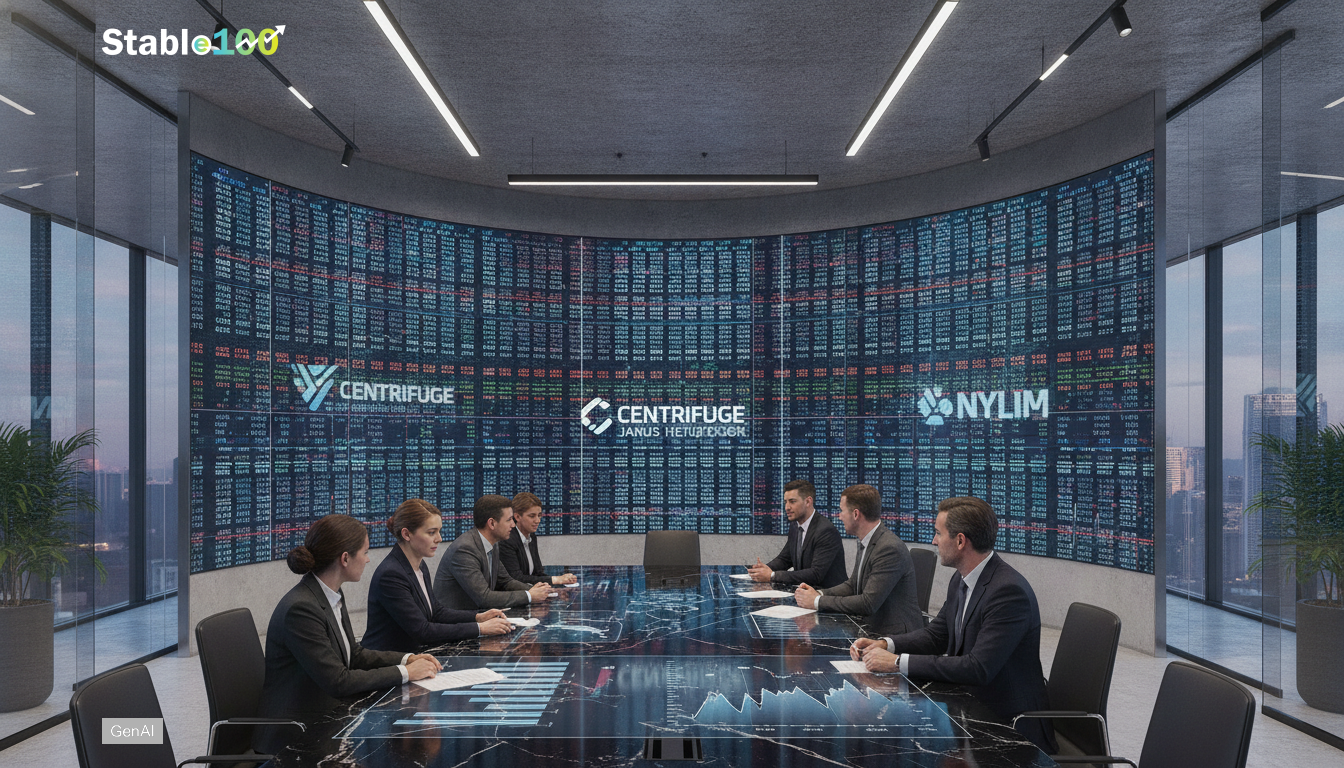
Liquidity network overview for tokenized funds
According to Centrifuge’s announcement, the firm has rolled out Symbiotic as infrastructure for a liquidity network that connects tokenized fund shares to onchain settlement. Centrifuge said the Symbiotic setup is intended to support issuance and redemption workflows for regulated fund products, with an emphasis on reducing fragmentation between fund tokens and stablecoin pools. The company described the target as institutional programs that already use established administrators and compliance checks, rather than DeFi-only vehicles. Centrifuge framed the rollout as plumbing for distribution and settlement, not a new asset launch, and positioned it as a way to standardize access paths for tokenized funds.
Liquidity network rollout across Janus Henderson and NYLIM
In its release, Centrifuge said Symbiotic is being added across $1.6 billion in funds associated with Janus Henderson and New York Life Investment Management (NYLIM). For readers tracking similar tokenization rollouts, a related example is covered in Tokenized fixed-income fund rolls out across multiple chains under the design described by Centrifuge, where USDC is presented as the primary onchain settlement asset for routing subscriptions and redemptions, while keeping fund governance, transfer restrictions, and eligibility checks aligned with existing frameworks.
USDC settlement mechanics and liquidity routing
Centrifuge indicates that the Symbiotic setup may improve how quickly investors can enter and exit tokenized fund exposure using stablecoin rails such as USDC, though the firm did not publish independent timing benchmarks in the announcement. For context on how stablecoin market plumbing can move with broader risk appetite, see https://www.coindesk.com/markets/2026/08/19/coinbase-circle-and-bullish-jump-as-clarity-act-proponents-express-optimism-about-bill as Centrifuge’s description also said the Symbiotic liquidity network is intended to coordinate liquidity sourcing so that redemptions do not rely on a single venue or one counterparty, while still being subject to market conditions. The company characterized this as an operational workflow rather than a trading strategy.
How this liquidity network fits tokenization stacks
Beyond routing, the deployment is presented by Centrifuge as a way to support portable fund shares that can move across venues while preserving controls that institutions require. Centrifuge’s messaging emphasized keeping transfer restrictions and investor eligibility checks intact, which it argued matters for managers that want programmability without open, permissionless circulation. For additional background on platform approaches, see Tokenization Infrastructure: Comparing Platform Stacks and Tokenized deposits vs stablecoins: differences as the firm also described Symbiotic as modular infrastructure that could be reused across managers and service providers as operational requirements align.
What to watch next for institutional liquidity access
Centrifuge’s announcement extends its stated focus on settlement coordination and distribution plumbing over consumer product launches. Centrifuge highlighted the $1.6 billion footprint as evidence of production usage and said interoperable settlement paths can support multiple liquidity providers without forcing funds into a single venue design. Related stablecoin transparency developments are covered in Tether audit: KPMG signs off 2025 Big Four review, while the company did not quantify redemption cycle improvements but said the objective is smoother USDC settlement and lower operational overhead for administrators and counterparties, which provides additional context on reserve reporting alongside onchain settlement growth.